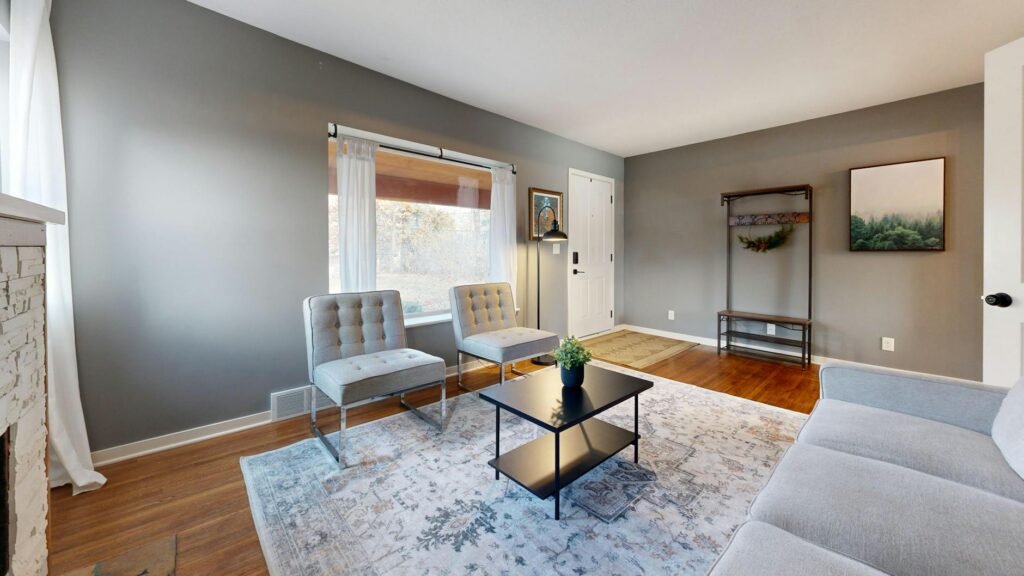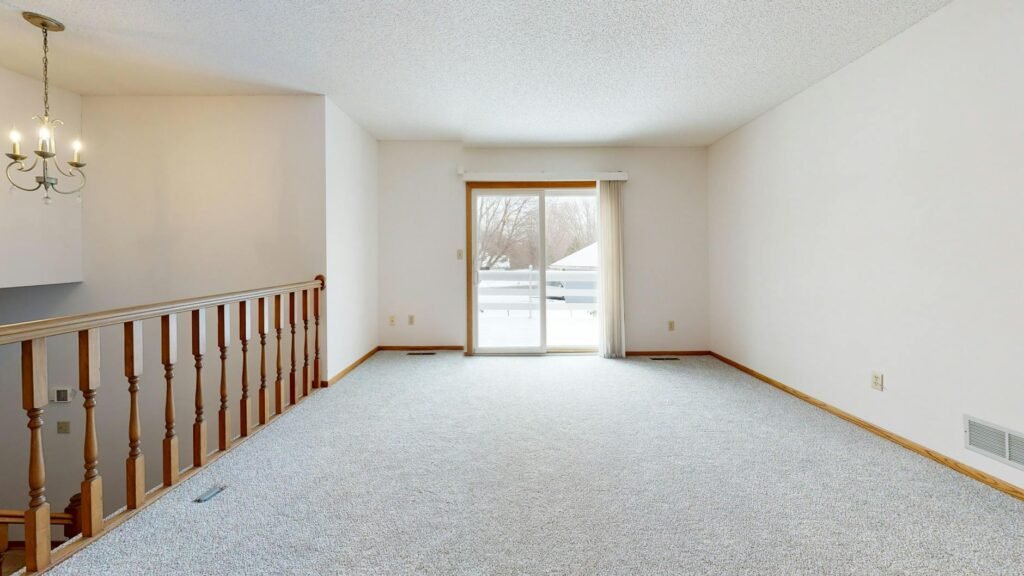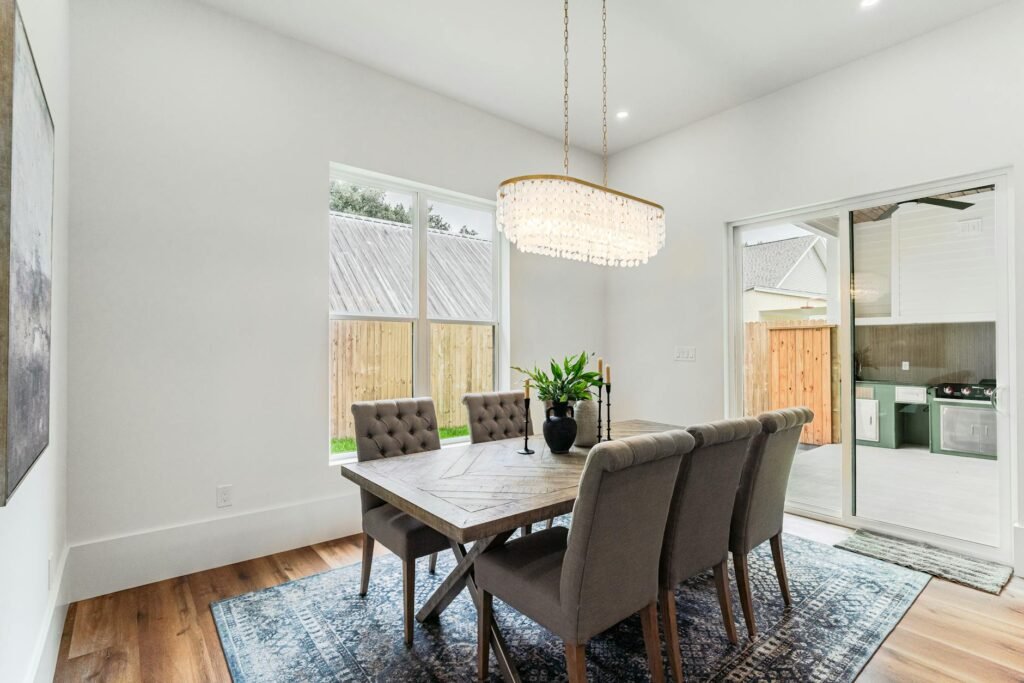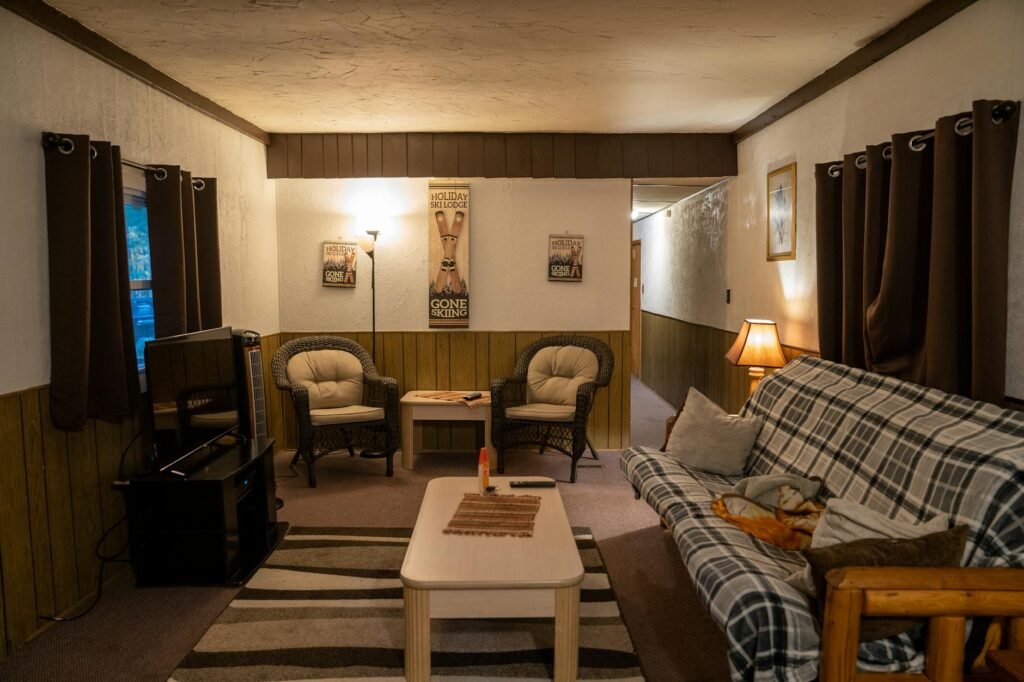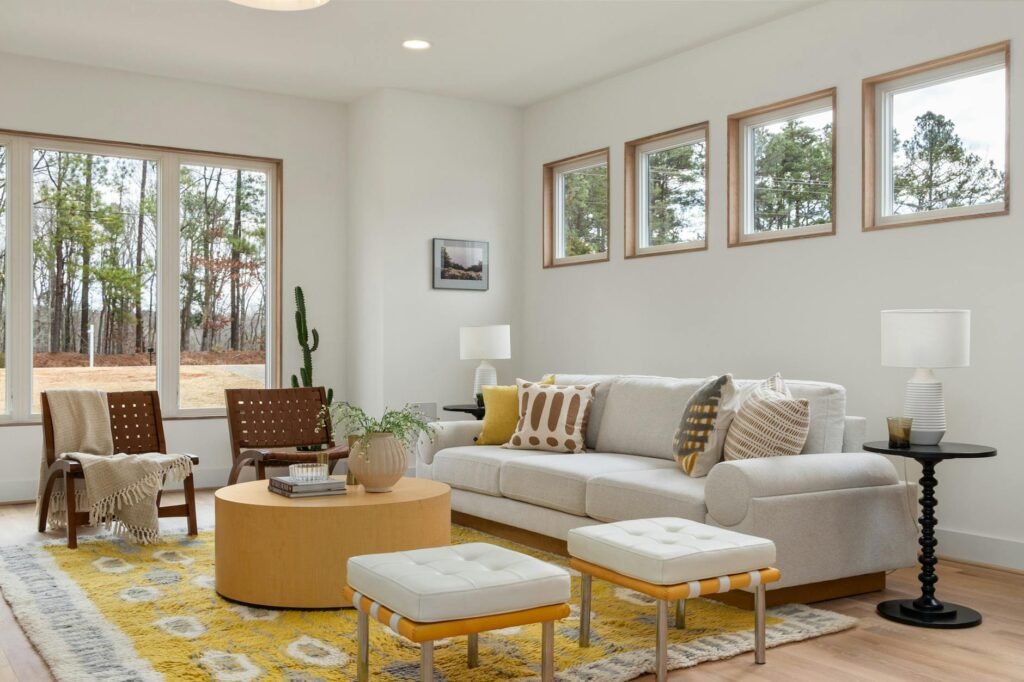
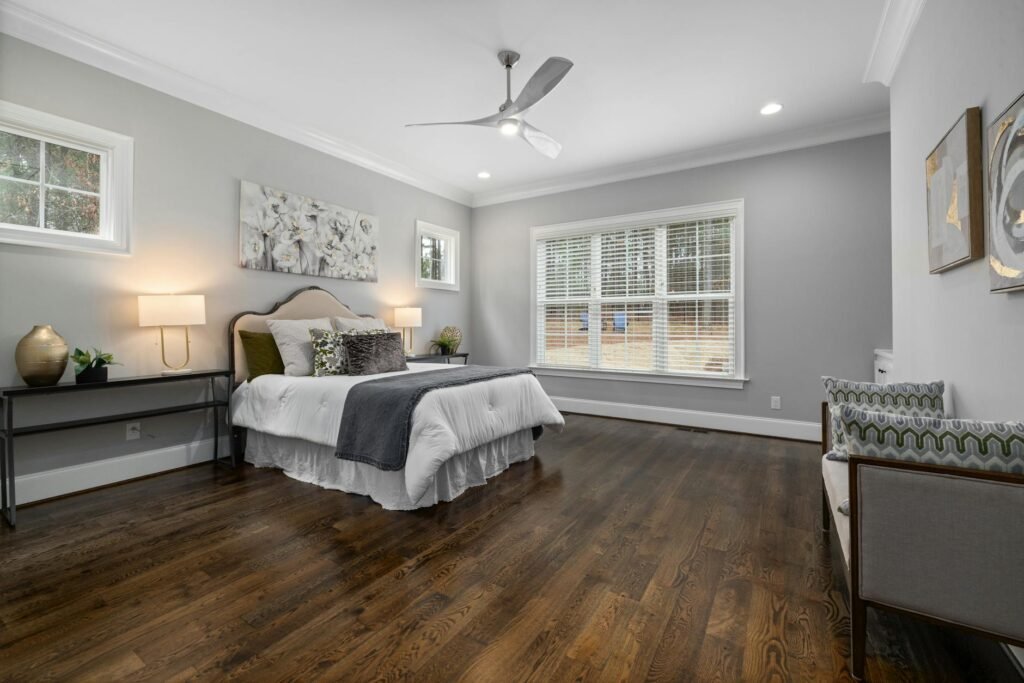
Even if a home has been thoroughly cleared of clutter, staged to the fullest extent possible, and looks immaculate; it can still present simply like most other homes. This is often what causes sale preparation efforts to stop. When staged at an average level, this home would be “clean enough.” However, when staged at an “estate” level, it would appear “peaceful,” and “refined,” and would be worthy of additional examination. Most of the difference is not more items in the house, but rather the last layer of staging: matching lighting, sized area rugs, bedding that has substance, surfaces that are not cluttered, finishes that have some repetition, and the utility-type items are not visible!

That finishing layer matters because staging is not just cosmetic theater. In the National Association of REALTORS® 2025 staging data, 29% of agents said staging increased the dollar value offered by 1% to 10%, and 49% said it reduced time on market. That does not make every decorative purchase a smart one. It does mean sellers should treat presentation as a serious marketing decision instead of a last-minute shopping trip. (nar.realtor)

Warning

Treat staging spend as a marketing budget with variable results, not a guaranteed return. Market, price point, condition, and pricing strategy still do most of the heavy lifting, so confirm priorities with a local agent or stager before buying large items. (nar.realtor)

TL;DR

  • Prioritize the living room, primary bedroom, and kitchen first; those are the rooms agents most often say matter to buyers. (nar.realtor)
  • Estate-level presentation usually comes from matched lighting, better scale, quieter surfaces, and consistent finishes, not from adding more accessories.
  • Use the Estate-Finish Audit before you buy anything, so you fix the room’s weak point instead of shopping blindly.
  • If the home has odor, worn flooring, dated paint, or obvious maintenance issues, styling alone will not close the gap.
  • Verify the work with phone photos before professional photography, because buyers start online and react to pictures first. (zillow.com)

Estate-level does not mean expensive-looking clutter

When it comes to presenting a property at the estate level, we refer to “discipline”. The space has a single focal point. The scale of furniture is consistent. The colour palette is limited. The styling finishes off the room without being overly styled, allowing the architecture, and the square footage to speak for itself. Thus, you will see some homes feel elevated with very little in them and other homes looking busy after considerable decoration expenditure.

Staging typically only addresses the most visible issues, such as family photos and cluttered countertops. Estate-level staging goes beyond this. It considers the first impressions the eyes see and then edits out additional subtle signals that reduce perceived value, including small rugs, un-fulfilled bedding, varies color bulbs, isolated finishes, cords or everyday items that are sitting in a primary visibility line.

That visual control matters even more because buyers shop with photos before they ever step into the house. Zillow says 79% of recent buyers shopped online to find a home, and nearly half said professional photos were extremely or very important to the experience. If the room does not read clearly in two dimensions, it is already underperforming before the showing begins. (zillow.com)

Use the Estate-Finish Audit before you buy anything

Below… I’ve indicated how to evaluate whether the space is only staged (appearing as if polished), using simple criteria; each classification is scored from 2 down to 0 based on whether the item has been deliberately set in its position, whether or not the placement of the item in relation to the area around the item looks authentic as viewed from overhead, camera angle and actual view distance from the item. The lower the value assigned to an item (0 being the lowest), then the higher the perceived level of refinement; therefore, 7+ points will normally reflect an average level of refinement, 8-10 points will reflect refined levels of finished, and 11-12 points will reflect estate levels of finished.

  • Sightline: Stand in the doorway. Do you see one focal point, clear floor edges, and no traffic jam of small objects near the entry?
  • Scale: Does the rug actually anchor the seating? Is the art wide enough for the furniture under it? Are lamps and greenery large enough to register in photos?
  • Light: Are all bulbs the same warm temperature, and does the room use layered light instead of a single harsh overhead source?
  • Surface control: Are counters, dressers, and tables mostly open, with the remaining items grouped instead of scattered?
  • Finish repeat: Do metal finishes, wood tones, and accent colors appear more than once, so nothing looks random?
  • Silence: Are cords, remotes, pet items, toiletries, cleaning supplies, magnets, and strong scents out of view?

Simple rule in practice: only spend on category(s) that scored 0 or 1. Additional decorations in a room should not be purchased if that room passed the scale test. A room that does not pass the light level or sound will determine how to spend budget dollars. This will prevent sellers from wasting their money on decorative pieces that do not solve the actual problem of the room.

A staged living room with a large rug, warm layered lighting, and minimal clutter.
The expensive look usually comes from proportion, lighting, and visual quiet. Credit: Photo by Max Vakhtbovych on Pexels. Source

Where a finishing dollar usually works hardest

Decision table: high-leverage finishing details
Detail Why it changes the perception Best room Planning band Skip when
Bulb swap and lamp shade refresh Matched light instantly makes the room feel calmer and more deliberate. Living room, primary bedroom, dining room Low Skip only if lighting is already layered and matched.
White or light neutral bedding with fuller pillows Beds photograph larger, cleaner, and more hotel-like. Primary bedroom Low to moderate Skip if existing bedding is crisp, plain, and fits properly.
Correct-size rug An undersized rug makes furniture look temporary. A larger rug makes the room feel established. Living room, bedroom Moderate Skip if the room is already anchored correctly.
One large art piece or mirror A single substantial focal point is usually stronger than several small accents. Entry, dining room, primary bedroom Moderate Skip if the wall already has a clear focal point.
Bathroom textile reset Fresh towels, a clean mat, and a plain curtain make the bath feel maintained. Primary bath, hall bath Low Skip if textiles already look new and neutral.
Hardware swap or paint touch-up A tired finish can often be cleaned up without a remodel. Kitchen, powder room, front door Moderate Skip if you cannot repeat the new finish consistently.
Planters or greenery at the entry First impression improves quickly when the approach looks tended. Front porch, patio, foyer Low to moderate Skip if landscaping is messy enough to require actual yard work first.

That order is not arbitrary. NAR’s 2025 staging report shows living rooms, primary bedrooms, dining rooms, and kitchens are the rooms agents most commonly stage, while decluttering, whole-home cleaning, and curb appeal remain the first recommendations before decorative polish. In other words, the expensive look usually starts with fundamentals, then gets finished where buyers actually pay attention. (nar.realtor)

A realistic example: a $1,675 polish budget used with discipline

Consider a seller preparing a 2,300-square-foot house expected to list around $825,000. The home is clean, freshly painted in key areas, and furnished well enough to live in, but the listing photos still look flat. A full, furniture-heavy staging package could make sense in some markets, but this seller already has decent basics. NAR reported a median $1,500 spend when using a staging service and $500 when the seller’s agent handled the staging directly, so a targeted polish budget is a reasonable middle path for a home that does not need a complete reset. (nar.realtor PDF)

  • $180 to replace mixed cool-white bulbs and two tired lamp shades.
  • $325 for a duvet, insert, Euro shams, and pillows that actually fill the cases.
  • $290 for a larger living-room rug bought secondhand.
  • $145 for two framed prints large enough for the dining wall.
  • $110 for fresh bath towels, a new bath mat, and a plain shower curtain.
  • $225 for matching planters and simple greenery at the front walk and rear entry.
  • $400 for touch-up paint, a deep clean, and a handyman hour to tighten loose hardware and hide visible cords.

That totals $1,675. If better presentation improves the accepted offer by just 0.25% on an $825,000 listing, that is about $2,063, enough to cover the spend. If it does not materially change the sale, the seller still avoided a much larger decorative outlay and bought mostly portable items. That is the right financial frame: measured upside, controlled downside, and no emotional overspending to chase a vague luxury look.

The small details that lift the room

Light that matches

Luxury rooms rarely have one icy bulb in the ceiling, one amber bulb in a lamp, and a burned-out sconce on the wall. Match the bulb temperature, replace yellowed shades, and use every practical light source for photos. The goal is not maximum brightness. It is soft, even light that removes shadows and makes surfaces look intentional. Because buyers react to photos first, lighting problems show up fast. (zillow.com)

Scale that looks intentional

The reason some rooms appear low budget is that their furniture selection is too small rather than lacking decorative pieces. Rugs fall way short of the seating area, artwork is often hung as an afterthought, nightstands appear small, and lamps are under whelming. Estate-level designed spaces have fewer but larger pieces to create a framework. A properly sized rug in the living room can have more impact on the appearance of the space than buying an accessory. Properly sized lamps and artwork in the bedroom provide the bed wall with a finished appearance rather than an improvised one.

A staged primary bedroom with neutral bedding, matching lamps, and one large artwork above the bed.
Correct scale and crisp textiles do more than extra decor in a primary bedroom. Credit: Photo by Curtis Adams on Pexels. Source

Textiles that read crisp instead of fussy

The buyer doesn’t need designer linens; instead, they want bedding that fits, has loft, and won’t look like a wrinkled puddle at midday. Use an unadorned duvet, fuller inserts, shams that will stay standing up, and a throw properly folded rather than hanging loosely. In the bathroom, fresh white or light neutral towels are typically preferred over towels with monograms, novelty colors, or too much style on their countertops.

Surfaces with breathing room

A high-end room leaves visual margin. Coffee tables get one composed grouping, not six little objects. Kitchen counters show mostly workspace. Bathroom vanities show almost nothing. A good working rule is 70/20/10: roughly 70% open surface, 20% truly useful items, and 10% styling. NAR’s seller-side staging recommendations reinforce the same idea: decluttering and cleaning are still the first moves before anything decorative. (nar.realtor)

A staged kitchen with mostly clear counters and repeated metal finishes.
Clear work surfaces and consistent finishes help a home read as higher-end. Credit: Photo by Curtis Adams on Pexels. Source

Finishes that repeat instead of compete

Rooms on estate level must not have randomness. If an item has a brushed brass hardware piece, then there should be another use of that brass in the lamp base, mirror frame or picture light. Likewise, if the room has metal and it leans more toward the black finish, then that finish should be repeated by use of another object close by. While perfect matching of objects is not the goal, visual repetition is the goal. The use of one item with a different finish than the other items in that room is the item that usually makes the entire room appear to be put together rather than designed.

Silence: the details people remember without realizing it

Calmness can be defined by the lack of friction, as seen with a non-visible charge dock or entry tray that is full. You do not see a feeding area for pets in your first line of vision and there is no strong scented candle to mask an odour. You don’t see the television cable dipping down below the TV console, for example, all these little things contribute to your feelings of either calmness or busyness, regardless of whether or not your home appears to be maintained or carelessly maintained/constructed. That emotional assessment is how high end presentation control functions.

A room-by-room reset you can do in one weekend

If time is tight, work in the order buyers tend to notice most: living room, primary bedroom, kitchen, then baths and dining. That mirrors what agents say matters most in staging. (nar.realtor)

  1. Start outside. Sweep the approach, wipe the front door, remove faded mats, and add one healthy planter pair or a single strong container if the entry is small.
  2. Reset the living room next. Pull furniture into a conversation area, correct the rug, remove side-table clutter, and turn every lamp on before photos.
  3. Rebuild the primary bedroom around the bed wall. Crisp bedding, fuller pillows, clear nightstands, and symmetrical lighting go further than extra decor.
  4. Strip the kitchen back to function. Leave only a few grouped essentials, hide countertop appliances if possible, and clear papers, magnets, and soap clutter.
  5. Refresh the bathrooms with plain towels, a clean mirror, and zero personal products left out. Shut toilet lids and remove floor-scale clutter.
  6. Walk each doorway with the Estate-Finish Audit in hand. Fix the sightline, then the light, then the silence issues.
  7. Take phone photos at chest height. If the room still looks flat, address scale before buying anything small.
A clean front entry with planters, a swept walkway, and tidy front door details.
Small curb-appeal details shape the price point before buyers walk inside. Credit: Photo by Rachel Claire on Pexels. Source

When polish stops working

Some homes are not suffering from weak styling. They are suffering from condition, smell, or price. Estate-level finishing cannot hide worn flooring, smoke or pet odor, dated orange-toned paint, damaged grout, old caulk lines, or a list price that asks buyers to ignore the obvious. NAR’s data supports that reality: many sellers’ agents are more likely to recommend decluttering and correcting faults than full staging for every listing. (nar.realtor)

  • If the house is empty and echoing, partial furniture rental in the living room and primary bedroom may do more than buying small decor.
  • If the layout is awkward, define the room’s purpose with clear furniture placement before adding accessories.
  • If maintenance issues are visible, spend first on paint touch-ups, cleaning, caulk, hardware tightening, and repair.
  • If the budget is limited, stage only the rooms that will dominate photos and first impressions.
  • If the seller is still living in the house, create hidden reset zones so the property can be showing-ready in 15 minutes.

Common mistakes that flatten the price point

  • Using many small accessories instead of one larger anchoring piece.
  • Leaving an undersized rug in place because replacing it feels optional.
  • Styling the bed with limp pillows and bedding that does not fit the mattress.
  • Mixing bulb colors from room to room.
  • Treating every flat surface as display space.
  • Keeping family photos, calendars, pet supplies, or medications visible during showings.
  • Installing new hardware or decor in a finish that appears nowhere else.
  • Trying to solve odor with fragrance instead of removing the source.

How to verify the advice before photos and showings

Verification matters because staging often fails in photos before it fails in person. Since buyers begin online and care about photography, the test is not whether the room feels nice when you stand in it for five minutes. The test is whether it reads clearly in a quick image from the doorway. (zillow.com)

  1. Take wide phone shots from the doorway and from the far corner of the room.
  2. Convert one shot to black and white; contrast and clutter problems stand out faster.
  3. Zoom in on mirrors, nightstands, counters, and floor edges to catch utility clutter.
  4. Compare your photos side by side with active listings at a similar price point in your area.
  5. Ask your agent or stager one blunt question: what still looks ordinary here?
  6. Run a 15-minute showing drill by putting away daily-life items and timing how long the reset takes. If it takes 40 minutes, the staging plan is not practical.
Info

Zillow says professional real estate photography often runs about $150 to $200, depending on market, and that 22 to 27 photos is a strong target range. That makes a final styling pass before the camera arrives well worth the effort. (zillow.com)

Bottom line

Staging a house to sell is normally at the stage of being clean and in decent presenting condition however, to get the “estate-type” visual, you will do little more than just clean. The “estate-type” visual, as the name implies, will give you more precision with regards to the following: you will create sightlines, you will scale properly, you will balance light and dark, you will minimize visual distraction and you will repeat visual characteristics so that your house appears orderly. In terms of personal-finance interpretation of advice, the goal is to pay for those elements that will accommodate expectations will lead to an “enhanced perception” of your home thru photographs and first impressions, NOT on decorative “volume”. Ensure that budget will remain within limits, check the image on camera, and create a calm environment in order to achieve an “expensive look”.

FAQ

Do I need full professional staging to get an estate-level look?

Not necessarily. If the home already has strong foundational furniture, a targeted finishing pass can do the job. NAR reported a median $1,500 spend when using a staging service and $500 when the seller’s agent handled staging personally, which suggests many homes are getting lighter-touch staging rather than a full luxury install. Results vary by market and condition. (nar.realtor PDF)

Which rooms should I prioritize if I only have one weekend?

Start with the living room, primary bedroom, and kitchen. Those rooms rank highest in buyer importance in NAR’s 2025 staging data, and they also dominate listing photos. (nar.realtor)

Is white bedding always the best move?

Bedding should be made from plain, lightweight material and should fit snugly and have enough of the same to look great. White bedding smells fresh and clean, has a hotel feel, and will be seen clearly. If your room requires a warmer color in order to achieve the desired look, consider using light beige, oatmeal, or very pale gray.

Should I replace cabinet hardware before selling?

If existing hardware is at all worn out in appearance or when portrayed in an unpleasantly dated manner – the new finish needs to be able to match the existing finish to provide a complete look, but if your existing hardware currently requires repair/touch up/price adjustment, you should not be replacing them with new hardware or any other polished item instead.

Can strong candles or diffusers make a home feel more luxurious?

Usually not. Heavy fragrance often makes buyers suspect an odor problem. Clean air, clean textiles, and a neutral smell are safer than a scent strategy.

What if I am still living in the home while it is listed?

When creating a staging plan, focus on resetting quickly (15 mins). Use one/each bath for hiding items, lidded bins at doorways, quick drop zones for children’s & pets’ things. It is not about keeping things perfectly organized all day long, it is about achieving an acceptable level of order within the allotted time.

References

  1. National Association of REALTORS® – NAR report reveals home staging boosts sale prices and reduces time on market – https://www.nar.realtor/newsroom/nar-report-reveals-home-staging-boosts-sale-prices-and-reduces-time-on-market
  2. National Association of REALTORS® – 2025 Profile of Home Staging (PDF) – https://www.nar.realtor/sites/default/files/2025-05/2025-profile-of-home-staging-05-06-2025.pdf?utm.com=
  3. Zillow – How to Get Your House Ready to Sell – https://www.zillow.com/learn/getting-house-ready-to-sell/
  4. Zillow – Real Estate Photography Tips for Home Sellers – https://www.zillow.com/learn/real-estate-photography-tips/