
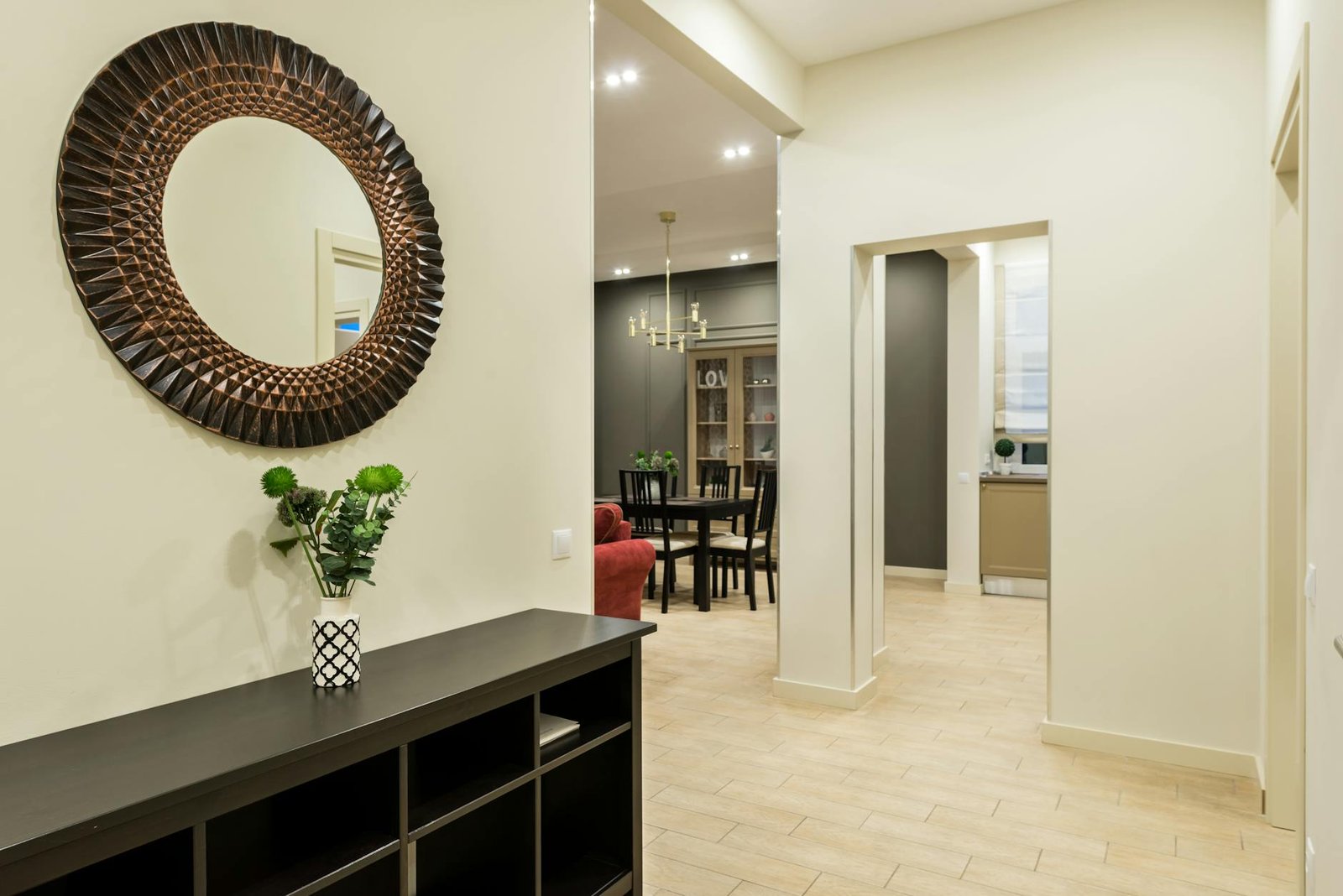
An entryway rarely sells a house by itself. What it does is just as important: it tells buyers, almost immediately, whether to keep walking in with confidence or start mentally discounting what they see next. Zillow notes that weak curb appeal can make buyers judge the inside more critically, while the National Association of REALTORS® found in its 2025 staging report that 83% of buyers’ agents said staging helps buyers picture a property as their future home. (zillow.com)
TL;DR
- The entryway’s job is not to look expensive. It is to signal care, space, and an easy next step into the house.
- Start with clutter, lighting, repair cues, and the first sightline. NAR says agents most often recommend decluttering, whole-home cleaning, and curb-appeal improvements before listing. (nar.realtor)
- Use the FRESH-10 score below. Anything under 8 out of 10 needs work before photos or showings.
- If your budget is tight, improve the entry transition and the first main room buyers see. In NAR’s 2025 data, the living room ranked as the most important room to stage. (nar.realtor)
What the first 10 seconds actually decide
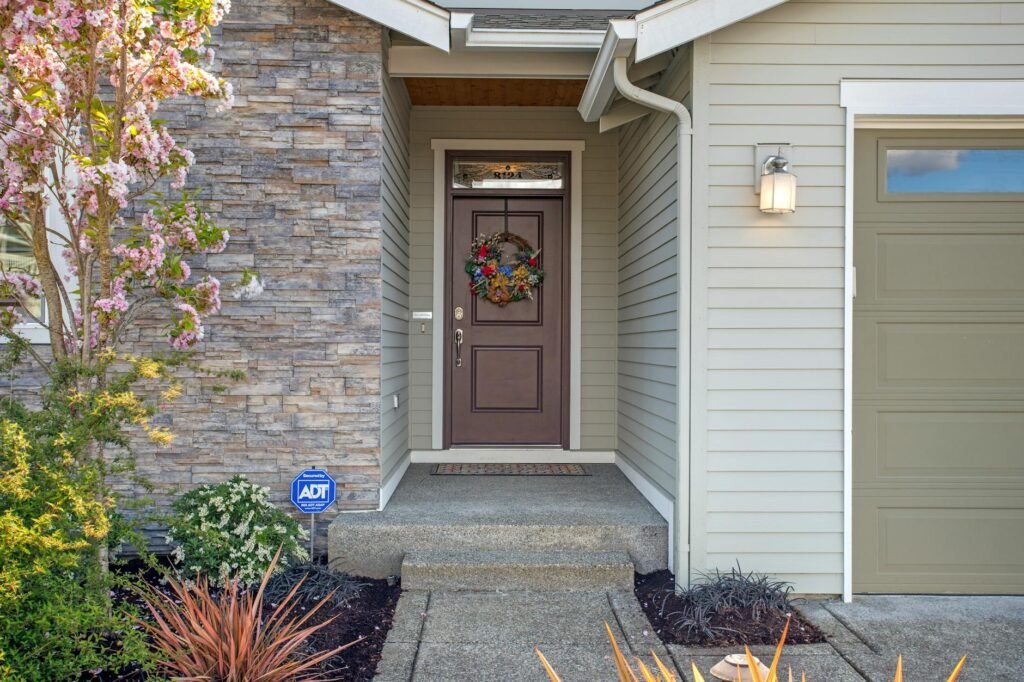
The first 10 seconds are not about a final yes-or-no decision. They shape the lens buyers use for the rest of the tour. If the doorway feels bright, edited, and maintained, buyers often read the home as cared for. If it feels crowded, dark, or neglected, they may start looking for confirmation that the house has bigger problems. That framing helps explain why Zillow highlights entryways as one of the high-impact areas that benefit from neutral updates before listing, and why NAR’s staging data continues to show that presentation affects how buyers read value and condition. (zillow.com)
- Do I feel welcomed or interrupted?
- Does this house feel maintained or deferred?
- Can I move naturally into the next space?
- Can I imagine my life here, or am I still processing the seller’s stuff?
That is why the best entryway staging is usually simple. Buyers are not looking for a designer moment at the threshold. They are looking for an easy, low-friction start to the showing.
Use the FRESH-10 Entryway Score
A basic way to evaluate entry photos prior to listing; showing; or open house is by using a scoring system called FRESH indicating Flow Explaining Repairs Editing Soft light Handoff (View) By doing a normal walk in to rate each category between 0-2 without stopping to discuss what you see will yield scores of 0 to 4 meaning there is friction with the entrance. Score of 5 to 7 indicates acceptable although generic &score of 8 to 10 indicates helping the selling process.
| Category | 0 points | 1 point | 2 points |
|---|---|---|---|
| Flow | The path feels blocked, narrow, or awkward. | The path works, but it feels tighter than it should. | The path from the door to the next space feels obvious and easy. |
| Repairs | Chipped paint, dirty glass, loose hardware, sticky locks, or scuffed trim are obvious. | Minor wear is visible, but not dominant. | The door, trim, glass, and hardware read as clean and solid. |
| Edit | Shoes, coats, mail, pet gear, or random baskets dominate the space. | Some clutter is removed, but the area still feels busy. | Only one or two intentional items remain; the space feels calm. |
| Soft light | The area is dark, harsh, or mismatched in color temperature. | The light is adequate, but flat. | The space is bright, warm, and evenly lit. |
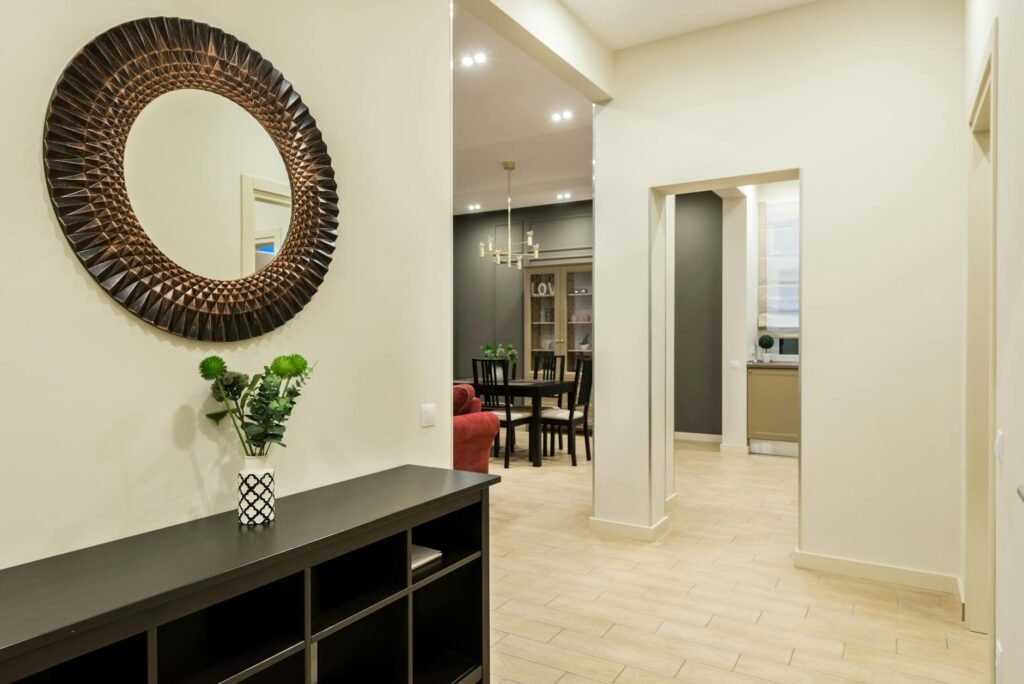
| Handoff view | Your eye lands on clutter, a blank wall, or another obvious problem. | The next room is visible, but not especially appealing. | Your eye lands on the home’s best next feature. |
When one of your categories is zero, focus on fixing that first. Sellers frequently divide their effort across 5 small improvements and then do not touch on the one evident problem. Conversely, buyers will remember the obvious problem.
A budget-first decision table
| If the entryway problem is… | Spend first on… | Skip for now… | Priority |
|---|---|---|---|
| Scuffs, chipped trim, tired door hardware | Cleaning, touch-up paint, tightening hardware, freshening the door | Statement art or decorative accessories | Highest |
| A dark foyer or hallway | Brighter bulbs, matching bulbs, one additional light source if needed | A new rug before the lighting is fixed | Highest |
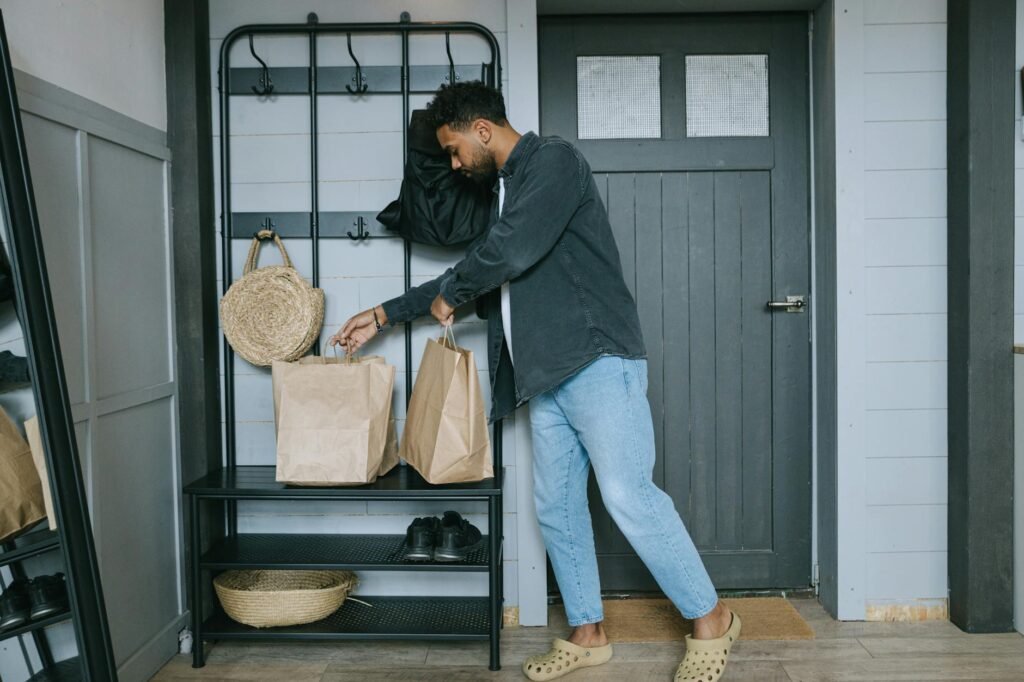
| Shoes, coats, backpacks, and pet items at the door | Removing 70% of visible items and limiting storage to one controlled drop zone | Extra bins, hooks, or furniture that add visual bulk | Highest |
| A small but empty-looking space | One right-sized anchor piece, or no furniture at all if the space is too tight | Oversized benches, deep consoles, or multiple accent pieces | Medium |
| Bold, personal, or trendy decor | A neutral edit: less color, fewer personal items, cleaner lines | Trying to impress buyers with a strong style statement | Medium |
| A neat entryway that opens to a messy living room | The first visible room after the door | More money on the threshold itself | Highest |
A realistic example: suppose you are listing a $425,000 house and the entry scores 4 out of 10. Instead of paying for full-service staging first, you spend $340 on paint supplies, a new mat, brighter bulbs, patching, and two simple planters, and you raise the score to 8. NAR’s 2025 profile says the median spend for a staging service was $1,500, while sellers’ agents who personally staged a home spent a median $500. The same report found that 19% of sellers’ agents saw staged homes increase offers by 1% to 5%. On a $425,000 sale, 1% is $4,250. That does not mean your $340 reset will produce that exact gain. It does suggest that a modest first-impression fix can make financial sense when the alternative is either doing nothing or over-improving the wrong area. (nar.realtor)
Common mistakes sellers make at the door
- Treating the entry as storage overflow. If the first thing buyers see is overflow, they start thinking about storage shortages instead of the home.
- Using furniture to fill space instead of guide it. A bulky bench or deep console can make a narrow entry feel tighter.
- Decorating to a narrow personal taste. In NAR’s 2025 report, buyers’ agents were more likely to see value when decor fit buyer taste, and some said the opposite when it worked against buyer taste. Neutral is usually the safer bet at the front door. (nar.realtor)
- Ignoring repair cues because you plan to sell as-is. Selling as-is does not require advertising neglect.
- Trying to solve odor with fragrance. A clean, unscented entry is usually better than a heavily perfumed one.
- Polishing the threshold but forgetting the next room. The handoff matters more than the wreath.
When an entryway refresh is not enough
An improved entryway can buy you some goodwill, but it cannot carry a weak showing by itself. If buyers step inside and immediately see worn flooring, a cramped living area, loud paint, or visible deferred maintenance, the doorway fix only buys you a little time. NAR’s 2025 report is useful here: the living room was the most important room to stage, followed by the primary bedroom and kitchen. So if you can only improve two zones, make them the entry transition and the first main room buyers actually experience. (nar.realtor)
There is also a cost-control lesson here. NAR says the most common pre-listing recommendations are still decluttering, whole-home cleaning, and curb-appeal work. That is a reminder not to confuse staging with shopping. If your house needs cleaning, paint touch-ups, and a better first sightline, those usually deserve the money before decorative upgrades. If the home is vacant, Zillow notes that empty rooms can blend together online and that virtual staging can be a more affordable way to help listing photos make an impression. (nar.realtor)
A 45-minute pre-show reset
- Start outside. Walk to the door as a buyer would. Notice the mat, handle, trim, glass, and what you see the second the door opens.
- Remove anything that looks like daily spillover: shoes, packages, kids’ gear, pet supplies, folded bags, and loose mail.
- Wipe everything at hand level. Buyers touch doors, latches, rails, and light switches.
- Turn on every relevant light and replace mismatched bulbs. The entry should not feel dimmer than the room beyond it.
- Reduce decor to one anchor moment. That might be a plant, a narrow table, or a mirror if the wall can handle it. It is rarely all three.
- Fix the handoff view. Stand in the doorway and clean, straighten, or simplify the next visible zone.
- Record a 10-second phone video walking in. Watch it once without sound. If your eye gets stuck on clutter or darkness, buyers probably will too.
How to verify that the test is working
Do not ask friends whether they “like” the entryway. Ask tighter questions after a 10-second walk-in: What was the first word that came to mind? What repair or clutter cue did you notice? Where did your eye go next? Then compare those answers with your listing media. That audit matters because buyers form impressions online before they arrive. NAR reported that 43% of buyers started their home search on the internet in 2024, and a 2026 NAR article says 81% of buyers rated listing photos as the most useful online feature. If the photos promise calm and the doorway delivers chaos, you create distrust before the showing really starts. (nar.realtor)

Bottom line
Buyers do not decide every detail in the first 10 seconds, but they often decide how hard the house will have to work from there. A strong entryway signals that the home is cared for, easy to understand, and worth seeing with optimism. A weak one nudges buyers toward skepticism. For most sellers, the highest-return plan is simple: declutter, clean, brighten, repair, and improve the first sightline before buying more decor. That lines up with what agents say matters most before listing, and it keeps your money focused on signals instead of stuff. (nar.realtor)
Does this test still apply if my home does not have a formal foyer?
Sure, the test is more about hitting a certain threshold rather than the amount of square footage, so smaller areas like an entryway, a linear open concept living area and an entry mudroom can all be designed successfully provided access is maintained and sight lines are controlled.
If I can only improve one area, should it be the entryway or the living room?
Start with whichever space buyers experience first, but do not separate the two in your mind. NAR’s 2025 staging report ranked the living room as the most important room to stage, which is why the best entryway work usually includes the first visible living area too. (nar.realtor)
Should I buy new furniture for a small entryway?
Usually not. Most small entries improve more from subtraction than addition. Clean surfaces, better light, repaired trim, and one controlled drop zone tend to do more than a new bench or table.
What if buyers actually enter through a garage door, mudroom, or side entrance?
Test the real entrance buyers will use. If an open house funnels people through the garage-adjacent mudroom, that is your entryway for staging purposes, even if the front door looks better in photos.
Can virtual staging solve a weak entryway?
It can help listing photos, especially in vacant homes. Zillow notes that empty rooms can make less of an impression online and that virtual staging can be a more affordable option than full physical staging. But the in-person showing still has to feel honest and coherent when buyers arrive. (zillow.com)
References
- National Association of REALTORS®: 2025 Profile of Home Staging – https://www.nar.realtor/sites/default/files/2025-05/2025-profile-of-home-staging-05-06-2025.pdf?utm.com=
- Zillow: How to Improve Curb Appeal Before Selling – https://www.zillow.com/learn/how-to-improve-curb-appeal/
- Zillow: How to Get Your House Ready to Sell – https://www.zillow.com/learn/getting-house-ready-to-sell/?msockid=23876cad202f66f016a47a4a213a6724
- Zillow: How to Boost Your Home’s Digital Curb Appeal – https://www.zillow.com/learn/digital-curb-appeal/
- National Association of REALTORS®: 2024 Profile of Home Buyers and Sellers Highlights – https://www.nar.realtor/sites/default/files/2024-12/2024-highlights-from-the-profile-of-home-buyers-and-sellers-12-10-2024.pdf?_bhlid=fc8ebb7400cc1315917efeff3825a17643a00712
- National Association of REALTORS®: How to Maximize Online Visibility for Every Listing – https://www.nar.realtor/magazine/real-estate-news/sales-marketing/how-to-maximize-online-visibility-for-every-listing