
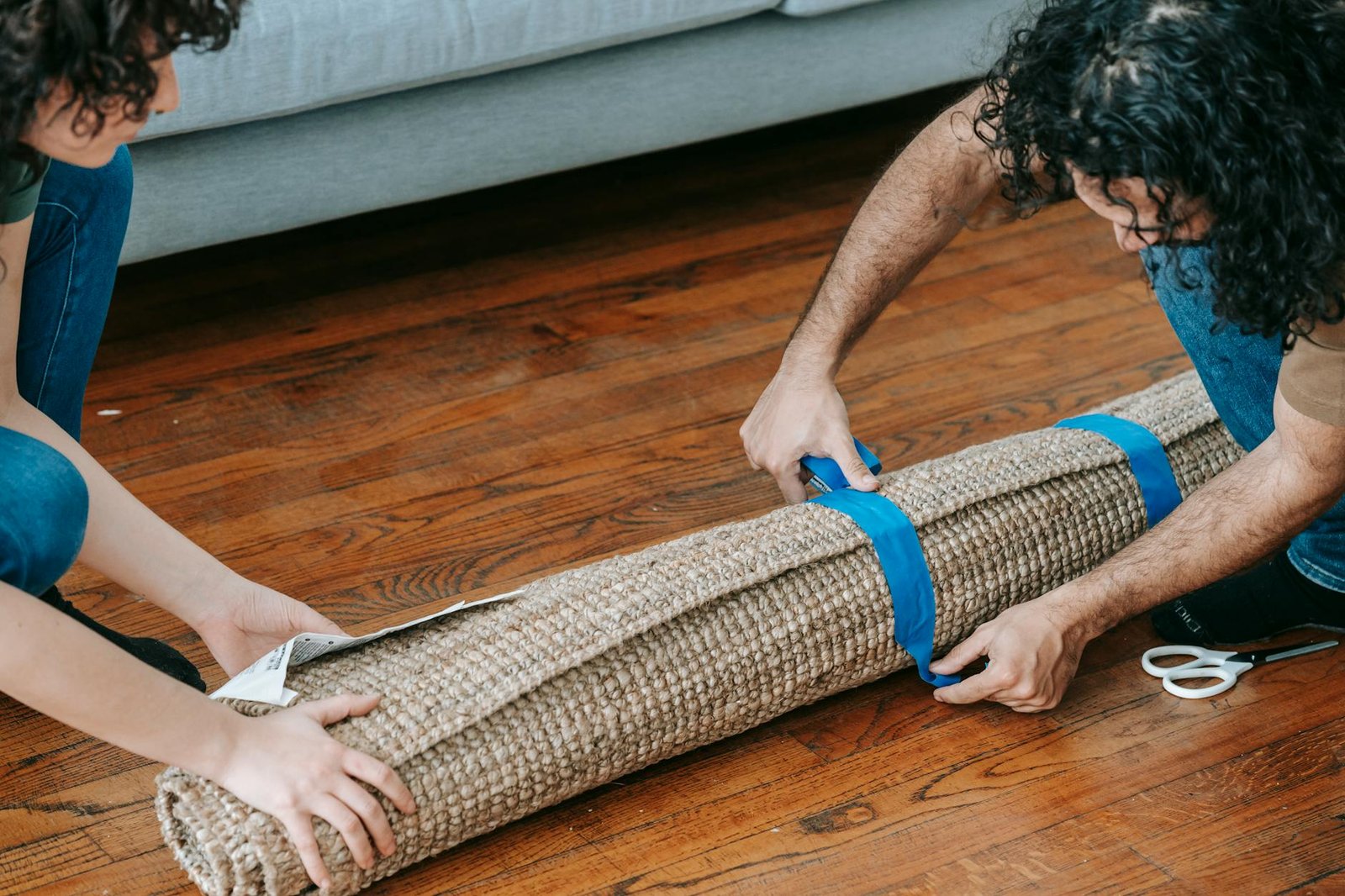
A small room rarely feels disappointing because of square footage alone. More often, the problem is scale. The sofa is too deep, the dining table has too many chairs, or every piece is so tiny that the room feels temporary instead of finished. That matters financially. If you are selling, furnishing a vacant unit, or setting up a short-term rental, people tend to judge the room quickly, often from photos first. In NAR’s 2025 staging data, 83% of buyers’ agents said staging made it easier for buyers to visualize a property as a future home, and buyer agents also rated listing photos as highly important to clients. (nar.realtor)
The living room is still the room agents stage most often, and nearly three in 10 agents reported that staging was associated with a 1% to 10% increase in the dollar value offered in some cases. That does not mean furniture changes square footage or guarantees a higher appraisal. It means presentation can affect how buyers respond, how quickly they book a showing, and how strong an offer feels. Appraisals, by contrast, are independent value opinions based on the property and comparable sales. (nar.realtor)
- The best small-room furniture is usually not the smallest furniture. It is the largest piece that still leaves an obvious walking path.
- Use one anchor piece sized to about 60% to 70% of the wall or zone it sits on, then keep the rest lighter and fewer.
- Run every room through the SCALE Filter: Sightline, Clearance, Anchor, Lift, Edit.
- If your timeline is short, such as staging a sale or furnishing a temporary unit, renting the right-size pieces can be cheaper than buying the wrong ones.
- A better layout can improve buyer or tenant perception, but it does not replace repairs, accurate pricing, or appraisal basics.
The rule in one sentence
In a small room, the main furniture piece should feel intentional, not dominant. A practical starting point is this: size your anchor piece, usually the sofa, bed, or dining table, to about 60% to 70% of the wall or visual zone it anchors, then preserve one clear traffic lane that never gets pinched by furniture. That usually means an apartment-size sofa instead of a sectional, a round dining table instead of a long rectangle, and a queen bed with slimmer companions instead of a king surrounded by bulky case goods.
By following this principle of using smaller furniture pieces, you will save yourself from making the two most common, costly blunders in buying decor items. The first major error is purchasing items that are too large to fit into the space you have available (the result being a sense of visual clutter or over-stuffed situation), while the second major error is purchasing furnishings that are too small for the space available (the result being an improvised appearance). The smaller the room, the fewer number of items, shallower depths of the furniture, narrower widths of the arms of the furniture, and the greater the visibility of the floor surrounding and underneath the furnishings in that room.
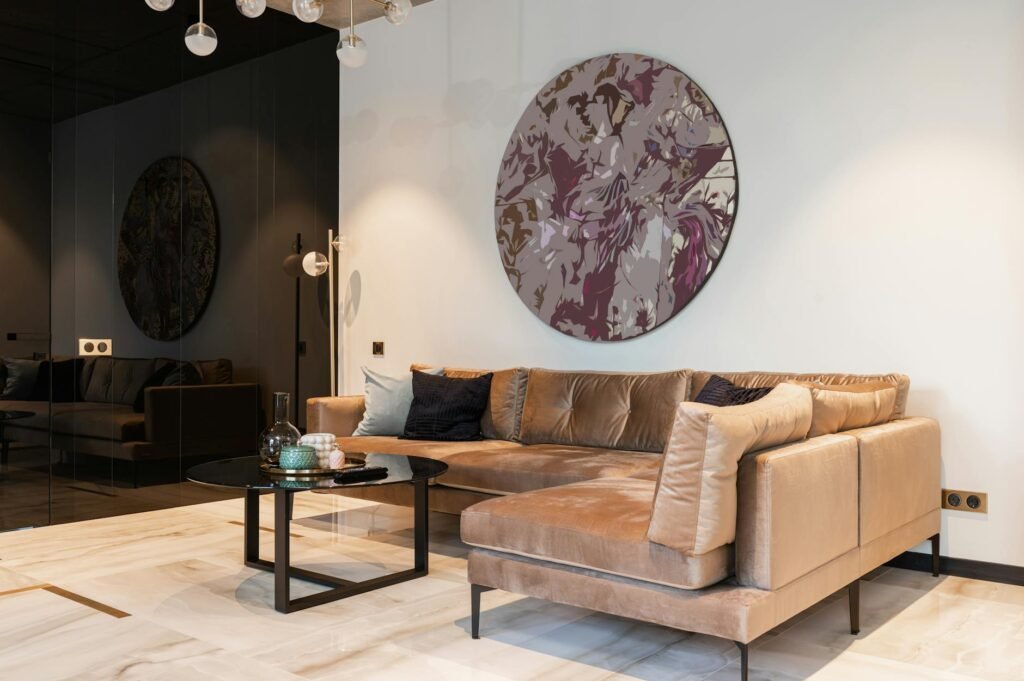
Use the SCALE Filter before you buy or rent anything
To make the rule usable, a simple audit helps: the SCALE Filter. It gives you a fast way to reject pieces that look good in a showroom but will fail in a tight room.
- Sightline: Stand at the doorway and identify the longest line of view, usually toward a window or the far wall. The first tall or bulky piece should not break that line immediately.
- Protection for primary walking areas is most important. Typically, there should be around 30 to 36 inches of area to walk on a primary route. People should be able to move through a room without turning sideways, so there should also be enough table clearance for that.
- Anchor: Pick one main piece that fills about 60% to 70% of its wall or zone. If it is much larger, the room feels cramped. If it is much smaller, the room can feel underfurnished.
- Lift: Favor pieces with legs, open bases, lower backs, and visible space underneath. They keep the room from looking bottom-heavy.
- Edit: One anchor, one secondary piece, and one flexible piece is often enough. In a small living room, that might mean a sofa, one chair, and nesting tables, not a full matching set.

What the rule looks like in real rooms
| Space | Better-scale choice | Usually too big | Why it reads larger | Rental-friendly move |
|---|---|---|---|---|
| 10′ x 12′ living room | 78″ to 86″ sofa with slim arms | 95″+ sectional plus recliner | Keeps one visible traffic lane and more open floor | Rent one apartment-size sofa and two small ottomans |
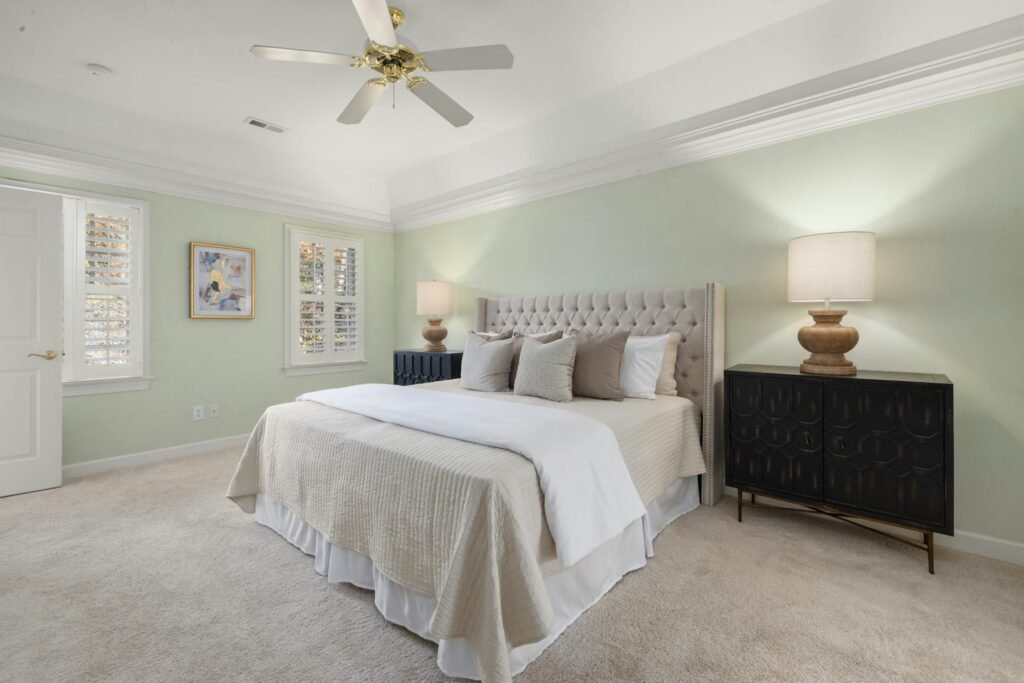
| 9′ x 10′ bedroom | Queen bed, low headboard, compact nightstands | King bed with bulky nightstands and bench | Lets the bed anchor the room without overwhelming the perimeter | Rent the bed and skip the footboard |
| 8′ x 8′ dining nook | 36″ to 42″ round table with armless chairs | Long rectangular table with four heavy chairs | Round edges protect circulation and soften the room | Rent a cafe table for listing photos |
| Studio zone | One proper sofa or one proper bed, not several small fillers | Loveseat, accent chair, bench, console, and extra storage tower | Fewer footprints make the space look intentional | Rent one anchor piece instead of a full set |
| Entry or office corner | Wall-mounted desk or narrow desk with open leg base | Executive desk with return | Preserves visual depth and keeps floor visible | Rent only the task piece you need |
A realistic numbers example
Suppose you are listing a 675-square-foot one-bedroom condo, and the living room measures 11 by 12 feet. After subtracting a doorway swing and a floor vent, the longest clear wall is 126 inches. Using the rule, your target sofa width is about 76 to 88 inches. The seller’s current 97-inch sectional leaves only about 22 inches at the tightest pinch point, so the coffee table ends up sitting in the traffic lane. A hypothetical one-month rental package built around an 82-inch sofa, a 30-inch round coffee table, and two small side tables costs $900, plus $250 for delivery and pickup. If the condo is listed at $325,000, even a 1% improvement in the accepted offer would equal $3,250. NAR’s May 2025 release reported that 29% of agents saw a 1% to 10% increase in the dollar value offered from staging in some cases, and the median cost for a staging service was $1,500. That does not prove this condo will sell for more. It does show why paying for better scale can be a rational presentation expense instead of a cosmetic splurge. (nar.realtor)
Quick math: clear wall width × 0.65 gives you a strong starting point for sofa or console width. Then check the walkway with painter’s tape before you spend money.

Why the smallest furniture is not automatically the best answer
Instead of removing one large piece for multiple small ones, it is better to make only one piece smaller but still have a similar effect that you desire; therefore, the area does not seem larger. However, the extra pieces cause more clutter, and you have to visually process the multiple legs, more edges, and more interruptions visually. Usually, they will look less cluttered and expensive than buying a love seat, two small chairs, and numerous small side tables that were not purchased due to size constraints.
Research on spaciousness is mixed, which is useful because it keeps you from falling for design slogans. A PLOS ONE study found that furnishing affected spaciousness judgments in different ways depending on how the room was presented, while a classic study on room shape found that more rectangular rooms were often perceived as larger than square rooms of equal size. The practical takeaway is not that empty rooms always look bigger. It is that long, uninterrupted lines matter, and overfurnishing usually works against them. (journals.plos.org)
Common mistakes that make a small room feel cheaper
- Buying based on seat count instead of room size, especially with sectionals and dining sets.
- Ignoring depth. A sofa can be the right width and still be too deep for the room.
- Using a full matching furniture set because it feels safe, even though every piece has the same heavy visual weight.
- Pushing all furniture to the walls, which often creates dead space in the center instead of better flow.
- Choosing square coffee tables in narrow rooms where a round or oval top would move traffic better.
- Blocking windows with high backs, tall shelving, or dressers that cut natural light.
- Keeping storage furniture in the room that is really there to hold overflow from somewhere else.
- Filling every empty corner. Some visible floor is not wasted space. It is what makes the room feel breathable.
When the first plan is still not enough
Furniture sizing can occasionally be a problem, but it can also be due to other design challenges including an unusual door opening; low baseboard heating; a window that limits furniture placement; a closet that gets in the way; or having too many items within a single box. The perfect couch will help with the issues listed above, however it will not completely address all issues in that space. This occurs because people tend to spend too much on a so-called magical item as opposed to what is practical.
- Remove one function from the room if you can. A living room that is also an office, gym, and storage room will always look overworked.
- Store one sentimental oversized piece off-site during a sale listing instead of designing the entire room around it.
- Swap floor lamps for wall sconces or plug-in sconces when floor area is tight.
- Use nesting tables, stools, or a C-table instead of three permanent side pieces.
- If you must keep a king bed, lighten everything around it: lower headboard, floating nightstand, and one dresser placed elsewhere.
- If the room will be photographed for sale or for a rental listing, style it for the camera first and everyday extras second.
When furniture rental is the smarter money move
If you’re working with a short timeframe or have a room in transition (meaning an empty unit between tenants), renting furniture is probably going to be a smart decision. Examples of circumstances where you’ll want to rent include but are not limited to: a vacant rental property, finding tenants for a staged property, moving into or out of a unit, or setting up your home before committing to buying large pieces of furniture.
When you compare the cost of renting a well-sized sofa for 30-90 days ($300) to the cost of purchasing a large piece, incurring delivery costs, and selling it at a loss because it did not work in your room ($700), renting is almost always going to be more economical.
- Rent if you are furnishing mainly for listing photos, showings, or a short occupancy period.
- Rent if you expect to move again within a year and do not yet know the next room sizes.
- Rent if you are testing whether a room works better with a sofa, desk, or dining setup before buying long-term pieces.
- Buy when the piece fits this room and your likely next room, and you have measured both.
- Pause the purchase entirely if you still cannot map a clean traffic lane. Layout uncertainty is usually a bigger risk than price alone.
How to pressure-test the plan before you spend money
Because buyers and tenants often encounter a room first through listing images, do not judge layout only from the best chair in the room. Judge it from the doorway and from your phone camera. NAR’s 2025 findings underline how important photos and video are to buyer response. (nar.realtor)
- Measure the clear wall, not the full wall. Subtract doorway trim, vents, radiators, and any spot where furniture cannot actually sit.
- Tape the footprint of each candidate piece on the floor. Painter’s tape is cheaper than return shipping.
- Take four photos: from the doorway, from the main seating position, from the room’s far corner, and at listing-photo height on your phone.
- Walk the room carrying a laundry basket or grocery bag. If the route feels annoying, it will probably look cramped too.
- Ask one disinterested person what they notice first in the room. If they say the bulk, the blockage, or the tight path, the piece is too large.
Better-looking rooms can improve market response, but do not confuse presentation with valuation mechanics. CFPB explains that appraisals are independent assessments and that valuations generally rely on the home’s features and comparable local sales. If a deal depends on value, review condition issues and comps, not just decor. (consumerfinance.gov)
Bottom line
The most practical piece of small-space furniture is not a small piece; it is an oversized piece that allows for easy movement through and across the area, does not clutter up the sightline between you and a window, and enables the room to be easily readable in photographs. If you apply the SCALE Filter to assess whether you want to purchase or rent an item, you will typically prevent yourself from making the most common small-space furnishings blunder: spending money on furniture that negatively contributes to the functional performance or aesthetic value of the room.
FAQ
Is smaller furniture always better in a small room?
No. Furniture that is too small can make a room feel scattered and temporary. A better target is one properly sized anchor piece, usually around 60% to 70% of its wall or zone, with fewer supporting pieces around it.
Can furniture rental be worth it before selling a home?
Often, yes. If the home is vacant or the current furniture is clearly out of scale, a short rental can be cheaper than buying replacement pieces. NAR reported a $1,500 median cost for staging services in 2025, while 29% of agents said staging was linked to a 1% to 10% increase in the dollar value offered in some cases. That is not a promise of return, but it is a reasonable benchmark for comparing cost and potential upside. (nar.realtor)
Does staging change a home appraisal?
Not directly in the way many sellers hope. CFPB explains that appraisals are independent assessments and that valuations generally compare the home’s features with similar local sales. Good presentation may help buyer response, but square footage, condition, features, and comparable sales are still central to valuation. (consumerfinance.gov)
Should I use a sectional in a small living room?
Only if the room has very little through-traffic and the sectional still preserves a clean main lane. In many small rooms, an apartment-size sofa plus one flexible chair does the job better.
What is the fastest way to tell if a piece is out of scale?
Tape the exact footprint on the floor, then photograph it from the doorway. If the taped shape already looks like it is taking over the room, the real piece will not improve the situation.
References
- National Association of Realtors: 2025 Profile of Home Staging – https://www.nar.realtor/research-and-statistics/research-reports/profile-of-home-staging
- National Association of Realtors: NAR Report Reveals Home Staging Boosts Sale Prices and Reduces Time on Market – https://www.nar.realtor/newsroom/nar-report-reveals-home-staging-boosts-sale-prices-and-reduces-time-on-market
- National Association of Realtors: Consumer Guide, Staging Your House for a Sale – https://www.nar.realtor/the-facts/consumer-guide-staging-your-house-for-a-sale
- Consumer Financial Protection Bureau: What are appraisals and why do I need to look at them? – https://www.consumerfinance.gov/ask-cfpb/what-are-appraisals-and-why-do-i-need-to-look-at-them-en-167/
- Consumer Financial Protection Bureau: Why did I receive different valuations during the mortgage loan application – https://www.consumerfinance.gov/ask-cfpb/why-did-i-receive-different-valuations-during-the-mortgage-loan-application-process-en-1875/
- PLOS ONE: The Effect of Furnishing on Perceived Spatial Dimensions and Spaciousness of Interior Space – https://journals.plos.org/plosone/article?id=10.1371/journal.pone.0113267
- Environment and Behavior: The Perception of Room Size – https://journals.sagepub.com/doi/10.1177/0013916584163005