
TL;DR
- A bedroom feels like a private suite when the bed is the clear focal point, the lighting is soft and layered, and everyday clutter is hidden.
- Use the S.U.I.T.E. Test in this article before you buy anything: Sleep cues, Uncluttered sightlines, Intentional lighting, Textiles with weight, and Enclosed storage.
- Spend in this order: bedding, lighting, privacy at the windows, hidden storage, then art and accents.
- If your budget is tight, avoid buying more small decor. Fewer, larger fixes usually look calmer and may cost less in the long run.
- A dark, quiet, cool room supports better sleep, so the most successful bedroom staging often overlaps with basic sleep-friendly design. (nhlbi.nih.gov)
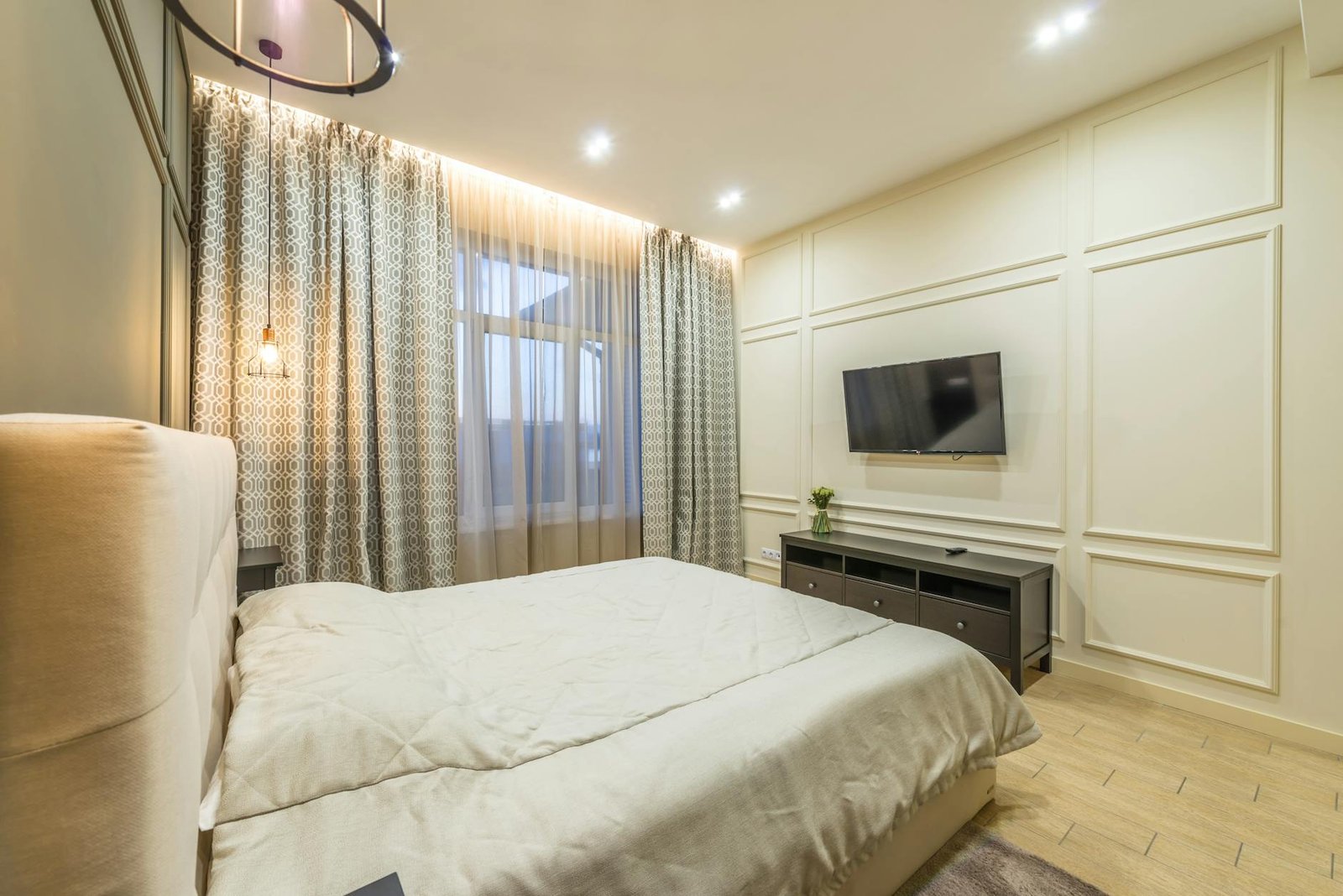
A bedroom begins to resemble a suite when it ceases to function as a storage site, laundry area, office overflow, and charging station all at once. Having a beautiful picture for 5 minutes isn’t the point. The objective is to create a room that feels intimate and tranquil when you enter before bedtime, then can easily be reset each morning.
That matters visually, but it also overlaps with what sleep experts recommend. Bedrooms generally work better when they can be kept dark, quiet, and comfortably cool, with fewer light cues pushing your brain to stay alert. (nhlbi.nih.gov)
The primary error that many individuals make is investing in decorative items before they have repaired their bedroom. For instance, adding a bench at the foot of your bed will not change how the bedroom looks if there is nothing else in there (such as a naked light bulb, laundry that you can see, or blinds that make it look really open). If you want your bedroom to feel like a restful retreat, you need to address the bed, lighting and visual connection to other areas of your home prior to adding any additional decorative items.
This article is for decorating and budgeting purposes. If your room has mold, persistent chemical odors, or sleep problems that continue even after you improve the space, get help from a qualified contractor or clinician. (epa.gov)
Start with the S.U.I.T.E. Test
Evaluate the room with this five-part S.U.I.T.E. Test before spending a dollar. Score yourself with 0, 1, or 2 points per category. A room receiving 8 to 10 points will generally only require editing for a look. Rooms receiving 5 to 7 points will require a focused reset. Rooms receiving 0 to 4 points should not be decorated with new decor yet; they require function first.
- S – Sleep prompts: 0 for a bright room, 1 if the brightness can be controlled, or 2 if the room can fully accommodate darkness, quietness, and a feeling of comfort on a nightly basis.
- If there are no visual distractions in your home, your site line gets a score of 0. If surfaces have been partially cleared out but still have items on them, you would get a score of 1. If your floor is mostly visible, with only the necessary items on the surfaces, you will receive a score of 2.
- I. Purposefully applied lighting: 0 for any single overhead fixture, 1 for an adequate useful lamp; 2 for multiple sources of light, including a bedside lamp(s) with lower-level ambient evening lights.
- T (Textiles) – Weight: 0 – = If the bed appears to be “thin” or “not finished”. 1 – – If either your bedding or rug adds “weight”. 2 – – If the bed appears to be full compared with the furnishings in the room and there’s enough soft surfaces in the room that can help absorb visual hard surfaces.
- E – Enclosed storage: 0 if laundry, chargers, and miscellaneous items stay out in the open; 1 if some are contained; 2 if daily mess has a hidden home and the room resets quickly.
For lighting, warm bulbs usually read calmer than cool daylight bulbs in a bedroom. The Department of Energy notes that warm light is generally preferred for living spaces, while cooler light is better for task-heavy areas. In practical terms, that means bedroom lamps usually look better in a warm indoor range rather than a bright blue-white tone. (energy.gov)
Reset the room in the order that saves money
- To create a feeling of a suite, the starting point is to subtract the number of items that belong in the room. Work bags, unopened package piles, extra chairs with clothes on them, workout equipment, and decorative items that you don’t notice can all be removed from the space.
- Make the bed the most dominant visual feature in the room again. If possible, it should be placed on the wall that has the most strength, and not be positioned oddly next to a window or be squeezed between two heavier pieces of furniture for example storage. The bed should be the first thing you see when looking at the room and everything should be secondary to the bed.
- Construct the bed in such a way that it appears purposeful. Use at least one correct coverlet, quilt or duvet together with appropriate sleep pillows and matching shams or pillow case covers to give day time appearance to your bedroom. In most cases, this will give you a bigger statement than placing additional pieces of furniture in your bedroom.
- Next, modify your lighting. Add bedside lamps, plug-in wall sconces, or replace out the bulbs in existing fixtures for warmer bulbs. You’ll want your bedroom’s lighting scheme to include a bright location for doing chores, as well as a softer area for relaxing at the end of the day.
- Hide the routine mess. Closed hampers, under-bed bins, a drawer organizer for chargers, and a lidded catchall on the nightstand will do more for the room than buying another throw pillow.
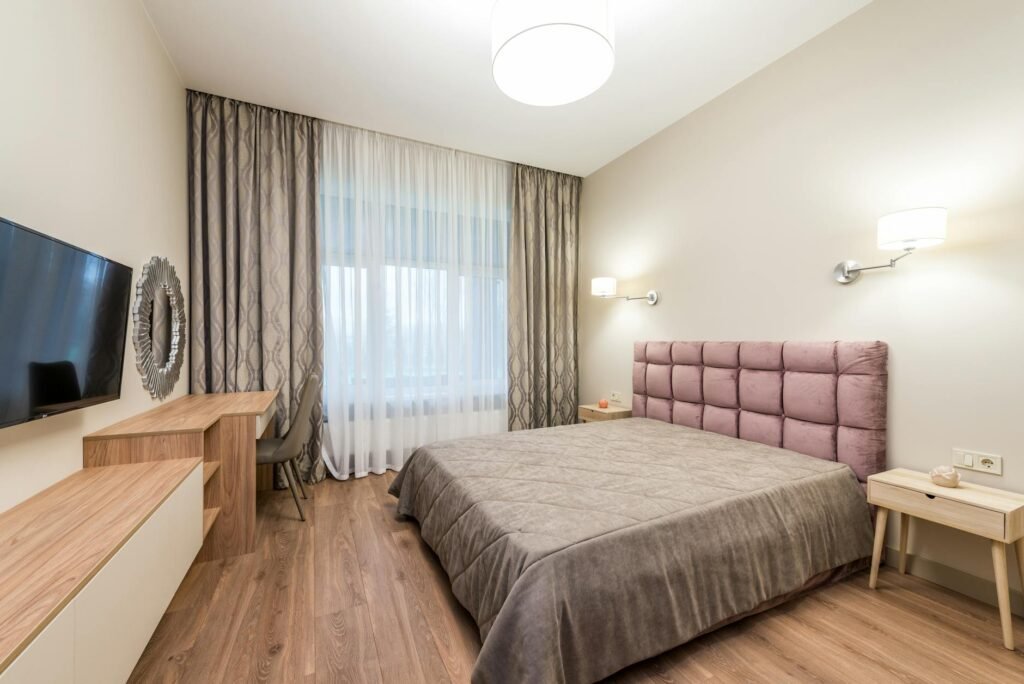
- Create a softer boundary using longer and wider curtains than the actual window frame, a properly sized rug, and one large piece of art instead of many small pieces placed around your room. This will give your space a much more complete look.
If your reset includes paint, adhesives, or new pressed-wood furniture, build ventilation time into the plan. EPA says indoor levels of several organic compounds often run 2 to 5 times higher than outdoors, especially during and after certain activities, and pressed wood products can be a meaningful source of formaldehyde in homes. That does not mean you cannot refresh the room. It means low-emission choices and fresh air matter. (epa.gov)
What to fix first if your budget is tight
| If the room feels… | Likely cause | Best first spend | Good budget range | Skip for now |
|---|---|---|---|---|
| Bare and not restful | Thin or unfinished bedding | Duvet, quilt, or coverlet plus pillow covers | $80-$220 | Bench, extra art, decorative ladder |
| Harsh and clinical | Cool bulbs or overhead-only lighting | Two bedside lamps or warm replacement bulbs | $30-$180 | LED strips, novelty fixtures |
| Busy and stressful | Visible laundry and open storage | Closed hamper and under-bed bins | $30-$120 | More baskets that still leave items visible |
| Exposed and unfinished | Weak window treatment | Curtains mounted high and wide | $50-$180 | More throw pillows |
| Cold and echoey | Too few soft surfaces | Larger rug or an extra textile layer | $70-$250 | Small tabletop decor |
A practical spending rule is to put roughly half to 60% of your budget into bedding, lighting, and window treatment, about 20% to 30% into hidden storage, and only the remainder into art and accessories. Bedrooms usually look more expensive when the fixes are structural and visible from across the room, not when the money gets diluted across ten little purchases.
A realistic $650 bedroom reset
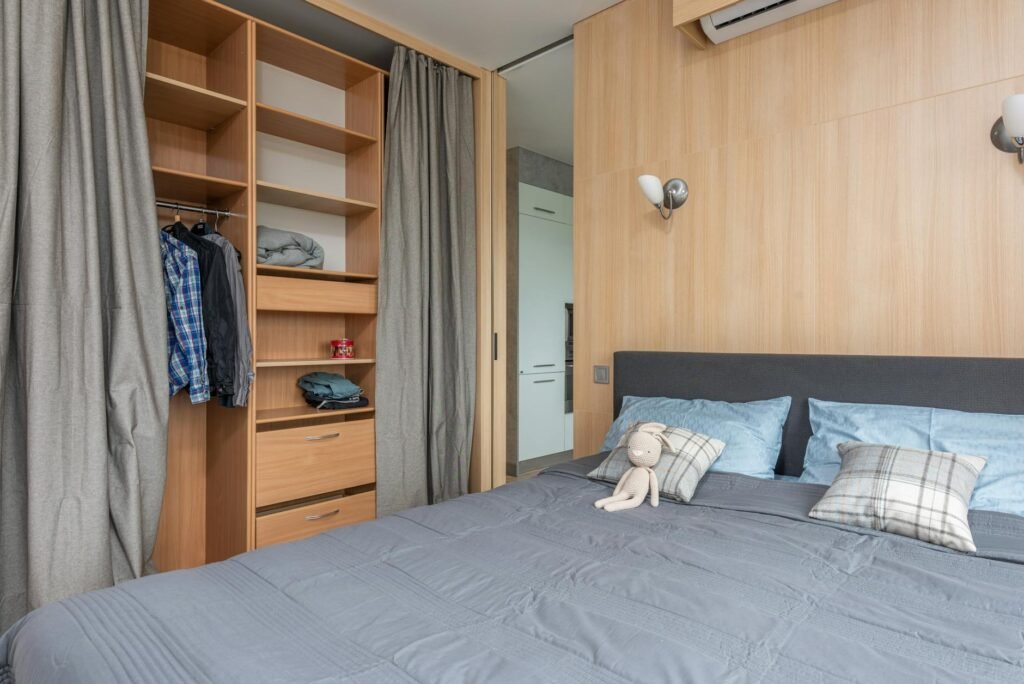
Consider a renter with an 11-by-13-foot bedroom, a queen bed, one mismatched lamp, cheap blinds, a plastic laundry basket in plain view, and a small collection of random decor on every surface. The budget is $650. The goal is not to imitate a hotel. It is to make the room feel quieter, more private, and more grown-up every single day.
- Blackout curtain panels and rod: $118
- Two matching bedside lamps and warm LED bulbs: $124
- White duvet cover, insert, and two shams: $159
- Closed hamper and two under-bed bins: $64
- 6-by-9 washable rug: $145
- One oversized framed print or textile: $40
Total: $650. Notice what is missing from that list: no bench, no extra dresser, no pile of accent pillows, and no assortment of tiny decorative objects. The curtains add privacy and visual height. The paired lamps make the bed feel centered. The rug anchors the room. Hidden laundry removes one of the fastest ways a bedroom starts to feel temporary or chaotic. The art stays simple and large so the room looks edited, not busy.
If the budget were only $250, the order would change slightly but not the strategy. Start with warm bulbs or a lamp, better bedding, a closed hamper, and curtains if privacy is poor. Those moves will usually outperform most paint colors, accent tables, and trend-driven accessories.
The cues that make a bedroom feel private, not just pretty
- Control the first sightline from the door. When you enter, the eye should land on the bed or a calm wall, not a hamper, open shelving, or tomorrow’s outfit.
- Create a landing zone on each side of the bed if possible. Even a slim shelf gives the room a more intentional, suite-like function.
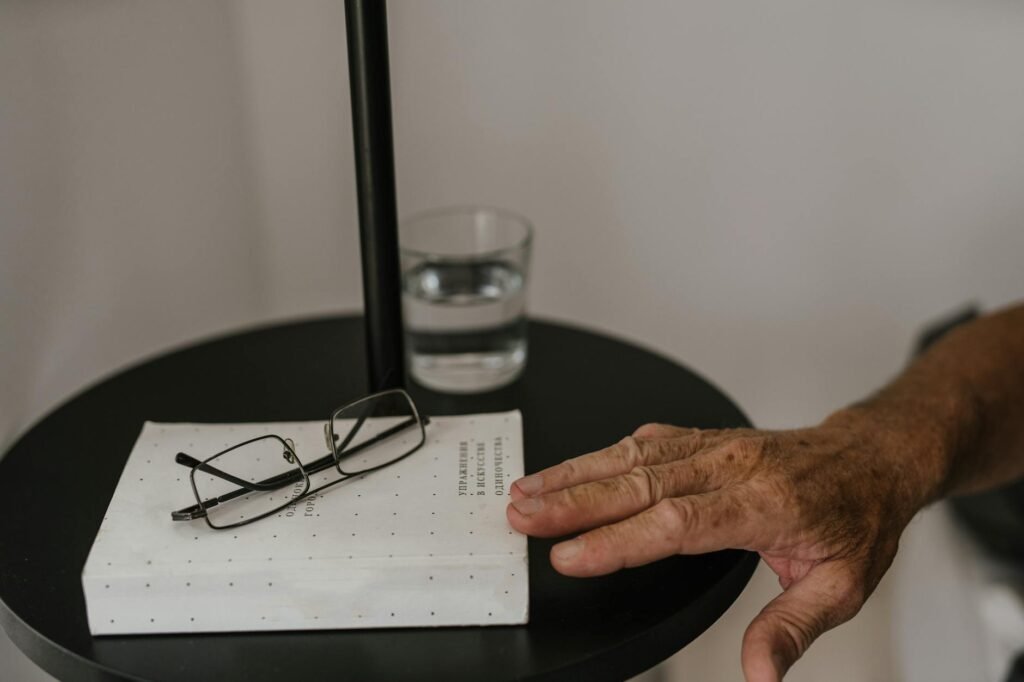
- Limit visible nightstand items. A lamp, a book, and water look calm. A tangle of chargers, receipts, skincare, and loose change does not.
- Use symmetry where it counts. Matching lamps or similar-height nightstands create more order than matching every single furniture piece.
- Keep the palette low-contrast. The room can still have depth, but it should come from texture and shape more than from a lot of competing colors.
Common mistakes that make the room feel cheaper, not calmer
- Buying more furniture because the room feels unfinished, when the real problem is poor lighting and visible clutter.
- Using a rug that is too small to visually anchor the bed.
- Relying on one bright overhead fixture for everything.
- Mixing too many wood tones, metals, or bold colors in a small room.
- Letting the nightstands become storage surfaces instead of landing spots.
- Displaying open laundry, retail packaging, spare linens, or charging cables in plain sight.
- Using very cool bulbs that read more like office lighting than bedroom lighting. Warm light typically feels better in this setting. (energy.gov)
- Adding lots of tiny decorative pieces instead of one or two larger items with real visual weight.
When the first plan is not enough
Even after you stage a room to be more restful, some rooms will continue to not feel restful. It is likely that your issue with the room’s anxiety is more a factor of structure than decor. For example, if the room has excessive street noise, a bed that is not well located or there is no closet…or if you have a partner on a totally different schedule you may find that even though the room looks great in pictures it still lacks a sense of privacy.
- If noise is the issue, soft goods help only a little. Try blackout curtains with some heft, a door sweep, weather stripping, or a white-noise machine before spending on more decor.
- If storage is the issue, the answer may be one larger closed piece, seasonal rotation, or a purge, not prettier containers.
- If the room is shared, use separate bedside lighting, duplicate charging setups, and clearly assigned drawers so one person’s routine does not spill across the whole room.
- If you are renting, lean on plug-in sconces, removable blackout liners, and freestanding closed storage rather than permanent upgrades.
It is also worth being realistic about sleep. A dark, quiet, cool bedroom helps, but it does not fix every sleep problem. If you still struggle despite a well-staged room, or if snoring, breathing issues, or chronic insomnia are part of the picture, the next move is medical advice, not more pillows. (nhlbi.nih.gov)
And if new furniture leaves a strong chemical smell, do not ignore it. EPA notes that pressed wood products made for indoor use can be a source of formaldehyde, so airing out the room and improving ventilation is a sensible backup plan after a furniture upgrade. (epa.gov)
How to pressure-test the room before you spend more
- Take a photo from the doorway during the day and again at night with only lamps on. If the eye still lands on clutter, fix storage before buying decor.
- Run the 10-minute reset test. Can the room return to staged condition in 10 minutes or less? If not, your systems are too fussy.
- Check the nightstand rule. Each side should hold only the daily essentials you genuinely use.
- Walk the room in bare feet. If the path from door to bed to closet feels cramped, remove a piece of furniture before adding another.
- Spend one evening using only your bedroom lighting, not hallway spill or overhead glare. If the room feels flat or too bright, lighting is still unfinished.
- After paint or new furniture, monitor odor and ventilation. If the room smells sharp or chemical, keep fresh air moving and wait before declaring the project done. (epa.gov)
The bottom line
Peaceful private rooms do not usually come from the addition of extra decor to a room but rather through editing, soft lighting, lack of visual stimulation & ease of use over time. When a bedroom is staged properly it will be more visually appealing, feel more like it’s your own, & typically be less expensive than doing a makeover based on impulse purchases.
Do I need matching furniture to get a suite-like bedroom?
No. Matching lamps matter more than matching every furniture piece. If the nightstands are similar in height and visual weight, the room can still feel balanced without buying a full set.
What is the minimum budget for a noticeable improvement?
In many rooms, $150 to $300 is enough to create a clear change if you spend it on the right things: warm bulbs or lamps, better bedding, a closed hamper, and stronger curtains if privacy is weak. That is usually enough to change the feel of the room even before any paint or art.
Are blackout curtains worth it if I am not a light sleeper?
Not always, but they are often one of the highest-impact upgrades because they add privacy, softness, and visual weight while helping block outside light. If streetlights, early sunrise, or shift-work sleep are an issue, they become even more useful. Sleep guidance from NHLBI and MedlinePlus supports keeping the bedroom dark when possible. (nhlbi.nih.gov)
Can I make a very small bedroom feel like a suite?
Indeed, the approach is different. Instead of using more items, simply cut back on the clutter. Use a single shelf for the nightstand; use a wall-mounted light or a plug-in light; use under-bed storage; and go with a larger piece of art as opposed to multiple smaller accent pieces. Floor space is an important part of any luxury room in a space-challenged environment.
What colors work best for this look?
When using low-contrast colours, the following are usually compliments; warm white, soft taupe, stony colour grey, soft muted blue-green, light grey and dusty olive are four great choices for an accent colour. A more relaxed approach is also available using a limited colour palette whilst allowing for textural variety to give an impression of depth through bedding, drapery and flooring.
References
- NHLBI, Healthy Sleep Habits – https://www.nhlbi.nih.gov/health/sleep-deprivation/healthy-sleep-habits
- NHLBI, How Sleep Works: Your Sleep/Wake Cycle – https://www.nhlbi.nih.gov/health/sleep/sleep-wake-cycle
- MedlinePlus, Can’t sleep? Try these tips – https://medlineplus.gov/ency/patientinstructions/000853.htm
- U.S. Department of Energy, Lighting Principles and Terms – https://www.energy.gov/energysaver/lighting-principles-and-terms
- U.S. EPA, Volatile Organic Compounds’ Impact on Indoor Air Quality – https://www.epa.gov/indoor-air-quality-iaq/volatile-organic-compounds-impact-indoor-air-quality
- U.S. EPA, What should I know about formaldehyde and indoor air quality? – https://www.epa.gov/indoor-air-quality-iaq/what-should-i-know-about-formaldehyde-and-indoor-air-quality
- U.S. EPA, Addressing Indoor Environmental Concerns During Remodeling – https://www.epa.gov/indoor-air-quality-iaq/addressing-indoor-environmental-concerns-during-remodeling