
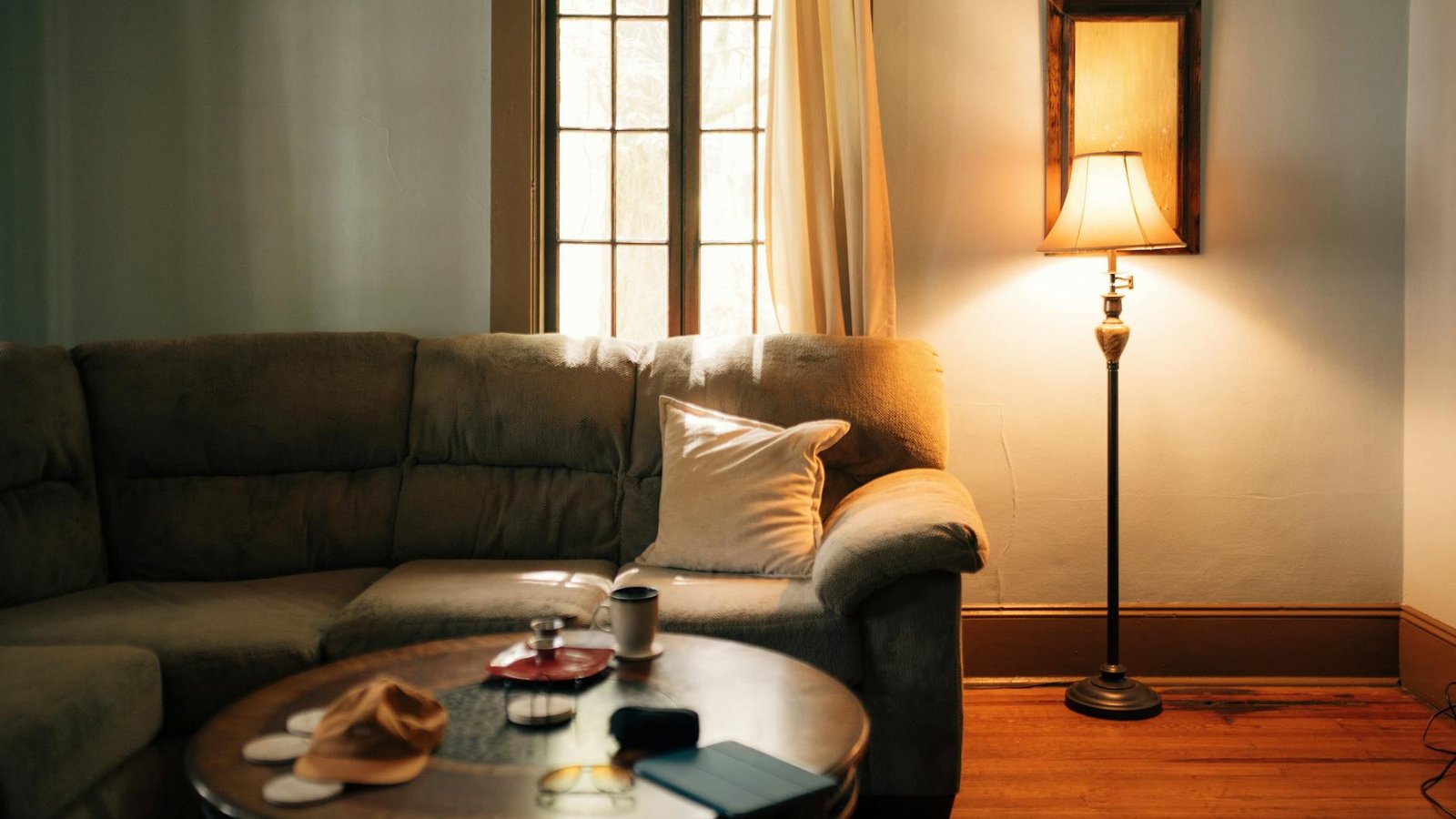
Simply put, a room cannot be considered expensive unless all the pieces have been arranged thoughtfully. It is even better news for homeowners looking to make their homes feel more ‘expensive’ when they are able to create an elegant home without becoming trapped in the whirlpool of unrelated and haphazard minor purchases that don’t really provide them with a solution.
The easiest method of improperly utilizing your decorating budget is by purchasing accent pieces before figuring out the room’s infrastructure. It’s advised to establish four factors in this order: texture, scale, symmetry and void space – once these items have been correctly established, cheaper quality furnishings will seem more intentional and planned. Conversely, if any of these factors have not been established or are improperly established, all quality furnishings will seem to be temporary in nature regardless of their cost.
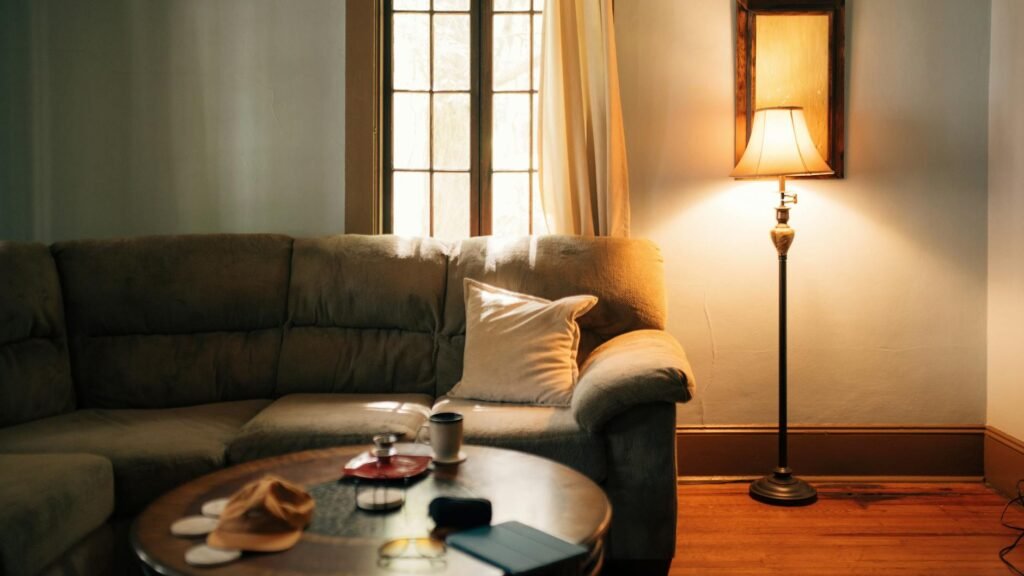
TL;DR
- Texture adds depth, but it should come from a few repeated materials, not from piling on random decor.
- Scale is usually the biggest budget leak. A too-small rug, tiny art, or undersized lamps can make a whole room feel cheap.
- Symmetry gives the eye a resting point. One well-balanced moment often does more than a dozen accessories.
- Negative space is part of the design, not empty failure. Leaving some surfaces and floor area open makes better pieces stand out.
- Lighting changes how every finish reads. DOE says warm light is generally preferred for living spaces, and 2700 – 3600K is commonly recommended for indoor general and task lighting. (energy.gov)
Why the “expensive” look is usually a planning problem
Luxury isn’t necessarily about how rare something is, but rather about how much control you have over that thing. Texture will ensure that a neutral space does not appear flat. Scale ensures that the furniture is in proportion to the size of the room. Symmetry creates a sense of calmness, while negative space prevents the room from appearing too furniture-laden.
All four of these components work together to create an intentional room design, as opposed to just an assembled room.
Lighting amplifies all four. The Department of Energy notes that warm light is preferred for living spaces and that 2700 – 3600K is generally recommended for most indoor general and task lighting applications. DOE also notes that color rendering matters because it affects how finishes and colors appear. In plain terms, a good lamp and the right bulb can often improve a room faster than another decorative object. (energy.gov)
Use the TSSN Room Audit before you buy anything
After my analysis, I provide you with a quick diagnostic for the given subject matter using the TSSN Room Audit: Texture, Scale, Symmetry and Negative Space. Each category can be rated using a score from 1 – 5. The purpose of this analysis is to identify problem areas, not for achieving “perfection,” thus eliminating “blind shopping.”
- Texture: A score of 1 or 2 will be given if there’s primarily only one flat finish visible. However, if there is a combination of at least three different types of materials used within the space (fabric, wood, ceramic, metal, stone and glass), and these materials have been consistently incorporated throughout the space, then a score of 4 or 5 will be awarded.
- Scale: If the rug, artwork, chandelier, or lamps look visibly smaller than the furniture grouping they serve, score it low. If the major anchors feel proportionate from the doorway, score it high.
- Symmetry: If the space does not contain a visual center of gravity, you should give it a lower score; however, if the area is organized by having either one or two balanced moments such as lamps on either side of the couch, or nightstands on opposite sides of the bed, give it a higher score.
- Negative space: If every surface is full and traffic paths feel tight, score it low. If shelves, tabletops, and floor edges have breathing room, score it high.
Texture: spend where light and hands land
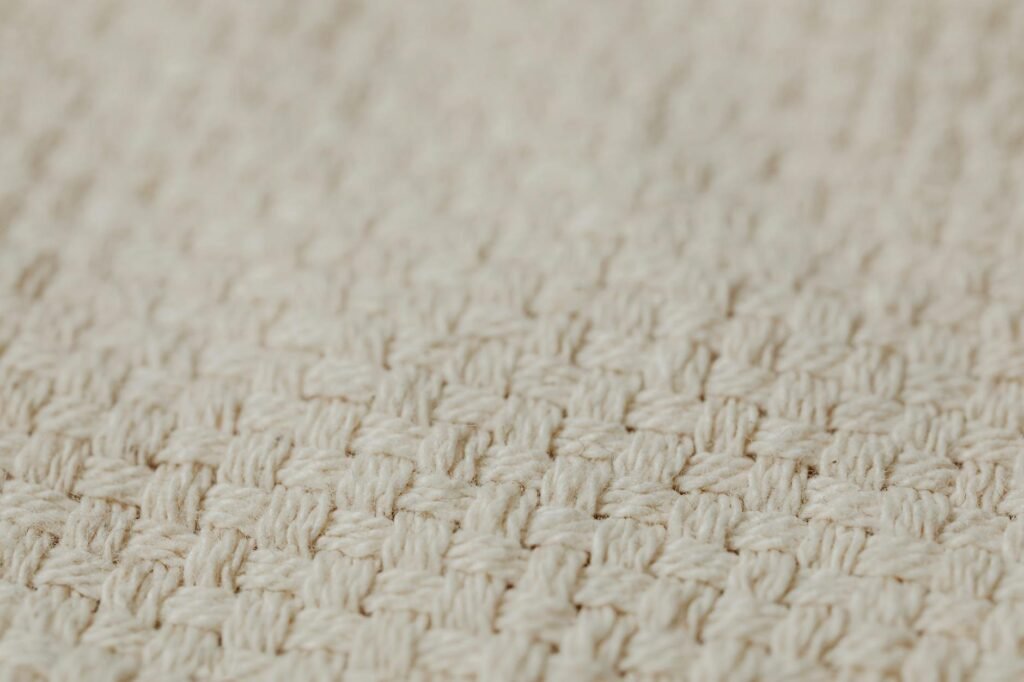
Nothing makes a room feel fl at like every surface refl ecting light in the same way: smooth sofa, smooth walls, smooth side table, slippery accessories. Bring an inexpensive fix in with three texture families in the same sightline. A simple mix would be a soft textile, a natural grain, and one structured or reflective finish, like linen curtain, wool or woven rug underfoot, oak or walnut table, ceramic lamp, maybe one brass or black metal accent.
Here’s what I mean by the budget rule – the things that you’ll be purchasing first have to be the things around your main points of contact or light catcher point in your design; this generally includes the rug, drapery, lampshades, cushions and one solid surface (such as a coffee table or console) that can be seen from most angles.
You do not need to buy five different types of decorative materials in a room; you only need two or three that are used repeatedly enough to create a cohesive and deliberate look.
If you are buying storage furniture, shelving, or new built-ins, ask what the core material is. EPA says some pressed wood products used in cabinetry, furniture, shelving, and drawer fronts can be significant sources of formaldehyde in homes. EPA also recommends minimizing higher-emitting products when possible, considering solid wood or low-emitting finishes, sealing surfaces where appropriate, and using plenty of ventilation during and after remodeling work. That is a design issue, but it is also a value issue if you are furnishing a room that people actually have to live in. (epa.gov)
Scale: fix the big misses before the little ones
The majority of dollars lost in any Space can be attributed to Scale. When rvgs are undersized, or the artwork is undersized, then people will oftentimes try and compensate with excess pillows, baskets, tabletop items, etc., creating an overall busier Space, but one that still does not improve visually. Rather than trying to create a visual balance by adding decorative filler items after the fact, use the Anchor Before Accent Rule to establish size for rug, primary lighting, largest piece of artwork, and maximum drape height first, before you purchase decorative filler items.
A simple test will help determine whether large objects properly belong in a particular space. From the entrance way, do the largest elements create an impression of confidence or do they create an impression of being ‘placeholders’? If there is hesitation, stop purchasing smaller accessories for the room. Upscale rooms typically have less total number of available items and they also typically have larger items with more proportionality.
A realistic $1,800 living room reset
Consider a composite example: a 12-by-16-foot living room with an 84-inch sofa, a 5-by-8 rug, two short lamps, and several small frames above the sofa. The owners think the room needs a new couch, but the scale problem is elsewhere. Instead of replacing the sofa, they reallocate $1,800 this way: $520 for an 8-by-10 rug, $240 for a pair of taller lamps, $180 for fuller 96-inch curtain panels, $220 for one larger art piece, $280 for a sturdier wood coffee table, $140 for better pillow covers and a throw, $120 for warmer LED bulbs and dimming accessories, and $100 left as a buffer. The room now has stronger anchors, better texture, and less visual noise, with no furniture set purchase and no renovation.
Symmetry adds calm without making the room feel staged
Having symmetry doesn’t mean everything matches. Symmetry also means that every room should have a single readable ‘centre.’ In a living room, that could be a sofa and matching lamps or two chairs that create balance around a fireplace. For bedrooms, this would generally be a bed and two matching nightstands beside it. An item in the room with symmetry makes it look more expensive, but it also helps your eyes follow around the room more easily.
If you’re feeling stiff in the room, use my One Pair, One Break rule. Create one pair and then break it with one thing that’s not symmetric – off-center a plant, put a sculptural chair on one side, bring in a large vase. That way you go for controlled without becoming showroomee.
Negative space is the luxury move most people skip
Empty areas that surround furniture, art, and other items are referred to as the “negative space”. Negative spaces aren’t simply unused areas; they provide a way for the room to breathe. When decorating small budgets, rooms often appear cluttered due to excessive amounts of filled shelves, items placed on every wall, and corners being “finished” with items such as a plant, basket, or stool. Cluttered rooms are less expensive to decorate than rich looking ones.
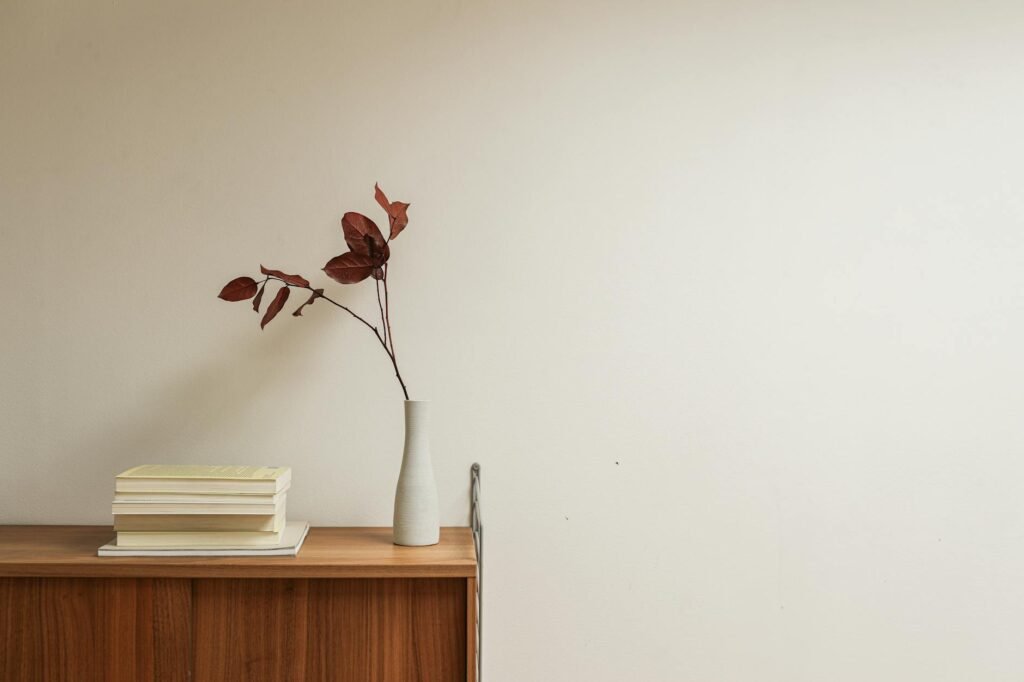
Use a 70/30 surface rule as a starting point: keep roughly 30% of major visible surfaces intentionally open. On a console, that might mean one lamp, one tray, one stack of books, and a clear stretch of surface. On a shelf, it means some open shelf length, not wall-to-wall objects. Also protect the room’s pathways. NC State Extension’s home safety checklist recommends enough space to walk through a room with clear passageways for traffic and keeping cords away from traffic areas. A room that looks expensive but is annoying to move through is not actually working. (content.ces.ncsu.edu)
Decision table: what to fix first
| If the room feels… | Broken lever | Best first move | Spend more only if… |
|---|---|---|---|
| Flat and cold | Texture | Add one natural-fiber rug, one textured fabric, and one hard material with grain or depth. | The anchors are already the right size. |
| Small and awkward | Scale | Upsize the rug, art, or lamps before adding anything decorative. | The room still lacks presence after the bigger elements are corrected. |
| Busy and random | Symmetry | Create one balanced focal moment with a pair of lamps, chairs, or nightstands. | The room still feels visually noisy after editing surfaces. |
| Cluttered but oddly unfinished | Negative space | Remove 25 – 30% of visible decor and restyle what remains. | You truly need closed storage, not just less stuff. |
| Harsh at night | Lighting | Shift living-area bulbs toward warm LEDs; DOE says 2700 – 3600K is generally recommended for indoor general and task lighting. (energy.gov) | The room still reads flat after the light quality improves. |
The buying order that protects your budget
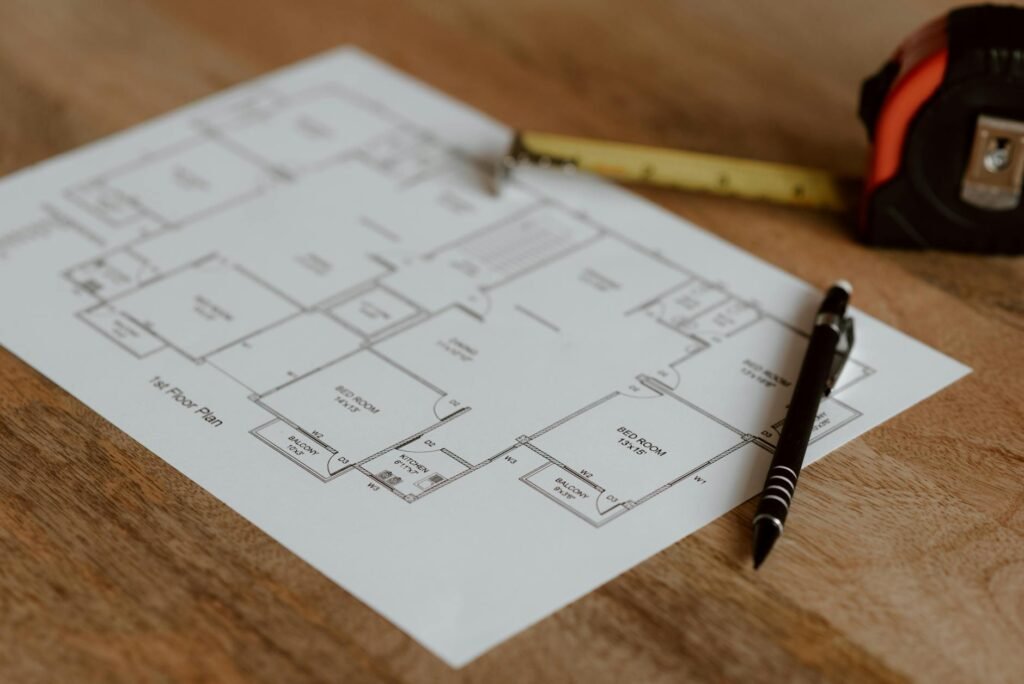
- Measure first. Record room length, width, wall widths, window height, and the footprint of your main furniture before you browse.
- Choose anchors next. Decide on rug size, largest art size, main lamp height, and curtain length before buying smaller decor.
- Layer texture after scale. Add textiles and hard-surface contrast where the eye lands first: sofa, floor, windows, coffee table.
- Create one symmetrical moment. Do not try to balance every corner.
- Edit before you accessorize. Remove enough decor that the edges of tables, shelves, and floor area are still visible.
- Vet the seller like you would any meaningful household purchase. FTC advises checking multiple review sources, not relying on star ratings alone, comparing the full cost including shipping and fees, reading the return policy, and keeping records of what you ordered and what the seller promised. Paying by credit card can also help if the item never arrives. (consumer.ftc.gov)
Common mistakes that make a room look expensive online and cheap in person
- Buying a rug that floats under only the coffee table, then trying to disguise the issue with more accessories.
- Hanging several small art pieces where one larger piece would create cleaner scale.
- Using only matching set furniture, which can flatten the room instead of giving it structure.
- Filling every tabletop and shelf so the room reads crowded from the doorway.
- Using cool, bright bulbs in living areas. DOE says warm light is generally preferred for living spaces, and brightness should be compared in lumens, not watts. (energy.gov)
- Trusting social ads or star ratings without checking review quality, return terms, and seller history. FTC specifically warns not to rely on star ratings alone because some reviews are fake or misleading. (consumer.ftc.gov)
- Ignoring materials in pursuit of a look. EPA notes that pressed wood products and some finishes can contribute to indoor air pollutants, so ask what the piece is made of if you are buying large furniture or storage. (epa.gov)
When the formula is not enough
If the basics have been taken care of and the room still appears to be “off,” the issue is most likely the architecture or practical side of the room not decorating issues. This includes things such as low ceilings; overhead light that is either overly bright or poorly placed; vents that are badly placed; playrooms that also serve as bedrooms or living spaces in a shared rental; and where no changes to flooring or built-in features can be made. In these instances, do not try to create the illusion of luxury by adding additional elements.
Use backup moves instead. In a rental, go bigger with soft goods: fuller curtains, a larger rug, better lamps, and fewer accessories. In an open-plan space, create one defined vignette instead of trying to style the entire room evenly. If the problem is poor overhead light, solve that with layered lamps and warmer bulbs before buying art. If you are repainting or adding cabinetry, pay attention to ventilation and lower-emitting products during the work. (epa.gov)
If your update involves rewiring fixtures, mounting heavy mirrors, or installing built-ins, use qualified professionals. If anyone in the household has mobility or balance concerns, prioritize clear traffic paths and lighting over decorative density. (content.ces.ncsu.edu)
How to pressure-test the room before you spend more
- Take one photo from the doorway and convert it to grayscale. If the room still looks balanced, the composition is working.
- Tape proposed rug and art sizes on the floor and wall for a full day. If the taped size feels obvious and calm, it is probably right.
- Test the room at night. If wood tones look gray or skin tones look tired, revisit bulb temperature and brightness. DOE recommends warm light for living spaces, and ENERGY STAR notes that brightness is measured in lumens. (energy.gov)
- Walk the room carrying a laundry basket or grocery bag. If you have to angle around furniture, the room needs subtraction, not styling. Clear passageways matter. (content.ces.ncsu.edu)
- Before checkout, screenshot the cart, delivery date, return terms, and final total. FTC advises keeping records and checking the seller’s promises before you buy. (consumer.ftc.gov)
Bottom line
The quality of a high-end room is determined primarily by its use of proportions, restraint, and repetition, rather than by total expenditure. Use the TSSN Room Audit as a starting point to establish how to move forward in achieving high quality, satisfying decor within budget. Also be sure to achieve scale/inches before incorporating accents/colors to enhance the finish of any area. Ensure you are adding texture in only those areas where it is essential and build at least one symmetrical moment before leaving sufficient negative space to give your high-end room the breathing room it needs. Establishing this sequence will assist with the quality/appearance of finished products while preventing your decoration budget from disappearing into the impulse purchase of decor.
Can a room look high-end with a big-box-store budget?
If the anchor elements are appropriately chosen then a simple couch with the right area rug, completed with well-sized draperies, adequate light fixtures and minimal decorations will far exceed the appearance of an expensive couch placed in a badly proportioned space.
What matters more first, rug size or sofa quality?
If the sofa is still functional and reasonably shaped, rug size usually comes first. Scale errors affect the whole room, while one average-quality sofa can still work inside a strong composition.
How much negative space is too much?
An echoey room, badly filled storage and an underfurnished room can occur if you have edited too much from your space. The objective is to create visible room for creating space through stops, without making space for the purpose of having it.
Does symmetry mean everything has to match?
No. One paired moment is often enough. Matching every item can make a room feel flat. A controlled room usually mixes one clear symmetrical arrangement with a few softer asymmetrical elements.
What is the safest way to buy furniture online for a room refresh?
Use the exact model number to comparison shop, check multiple review sources, do not rely on star ratings alone, read shipping and return terms, keep records, and pay by credit card when possible. FTC recommends those kinds of steps because reviews can be fake or misleading and delivery terms matter. (consumer.ftc.gov)
Are cool daylight bulbs always a mistake?
Not always. DOE notes that cooler light can be useful for visual tasks because it creates higher contrast, but warm light is generally preferred for living spaces. For most living rooms and bedrooms, warmer bulbs are usually the better starting point. (energy.gov)
References
- FTC Consumer Advice: Online Shopping – https://consumer.ftc.gov/online-shopping
- FTC Consumer Advice: How To Evaluate Online Reviews – https://consumer.ftc.gov/articles/how-evaluate-online-reviews
- U.S. EPA: What should I know about formaldehyde and indoor air quality? – https://www.epa.gov/indoor-air-quality-iaq/what-should-i-know-about-formaldehyde-and-indoor-air-quality
- U.S. EPA: Addressing Indoor Environmental Concerns During Remodeling – https://www.epa.gov/indoor-air-quality-iaq/addressing-indoor-environmental-concerns-during-remodeling
- U.S. Department of Energy: Lighting Principles and Terms – https://www.energy.gov/energysaver/lighting-principles-and-terms
- U.S. Department of Energy: LED Lighting – https://www.energy.gov/energysaver/led-lighting
- ENERGY STAR: Learn About Brightness – https://www.energystar.gov/products/learn-about-brightness
- NC State Extension: A Housing Safety Checklist for Older People – https://content.ces.ncsu.edu/housing-safety-checklist-for-older-people