
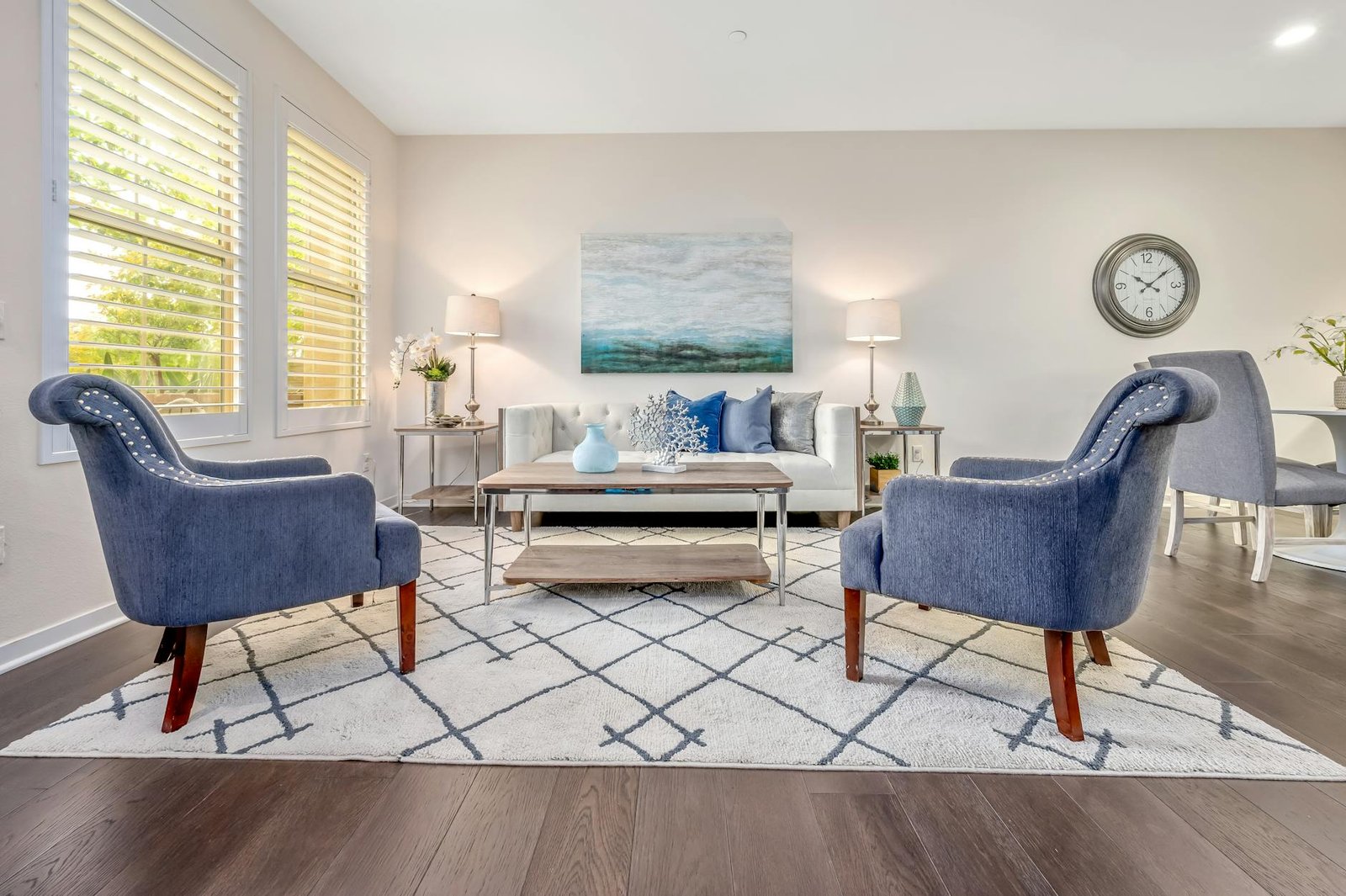
The reason some people do not want to buy a beautiful home can be attributed to the problem with illuminating a space. A seller can put too many decorative items into a room, thereby competing with the visual aspects of the property, such as the windows, height of the ceiling, and amount of storage available. Though the property could be objectively appealing from an aesthetic perspective, if all rooms in the house are competing for the eye at one time, it is impossible to make a clear mental image to retain.
That matters because staging is supposed to make ownership feel easy. The National Association of REALTORS® says 83% of buyers’ agents believe staging helps buyers visualize a property as their future home. In the same 2025 research, 29% of agents said staging increased the dollar value offered by 1% to 10%, 49% said it reduced time on market, and the median cost of a staging service was $1,500. If you spend that kind of money, the room should highlight the house, not compete with it. (nar.realtor)
TL;DR
- The costliest staging mistake is visual competition: too much furniture, decor, and personality fighting the home’s best features.
- Use the House-Not-Props Scorecard before photos and showings. If buyers notice the styling before the light, layout, or storage, edit harder.
- If your budget is tight, put money into decluttering, whole-home cleaning, curb appeal, minor repairs, depersonalizing, carpet cleaning, and paint touch-ups before extra accessories; those are the improvements agents most commonly recommend. (nar.realtor)
- Staging can matter financially, but it is not magic: NAR says 83% of buyers’ agents say staging helps buyers visualize a home, 29% of agents reported a 1% to 10% boost in dollar value offered, and the median staging-service cost was $1,500. (nar.realtor)
- If the house still shows badly after editing, the real issue may be condition, odor, layout, or price rather than staging alone. (nar.realtor)
The real problem is staging for style instead of clarity
Listings are viewed in a very different way from how design judges view homes. Buyers are just trying to get a couple of basic answers: How does this space compare to what I saw in the listing (smaller, larger)? Is there enough light (sunlighting) in this space? Where will I put my sofa? Do I have enough storage? And lastly, do I think any of these items are going to cost me a lot of money to repair? When staging blocks answers to these questions, memory of the experience is lost, and buyers don’t leave with three good things; they leave with an unsure feeling that the home seemed too busy.
This is especially easy to get wrong now because buyers show up with polished-media expectations. NAR reported that 58% of agents said buyers were disappointed by how homes looked compared with TV portrayals, and 77% said TV shows created unrealistic or higher expectations. The tempting response is to add more styling. The better response is to reduce noise so the home’s best features come through clearly in photos and in person. (nar.realtor)
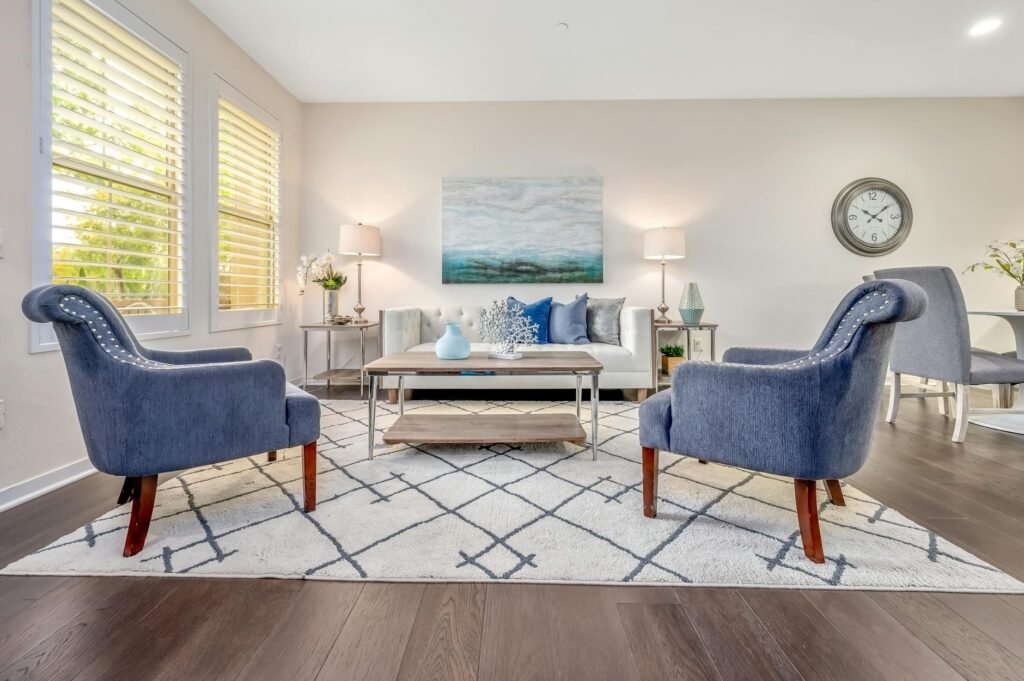
Use the House-Not-Props Scorecard
If you’re considering purchasing another pillow or renting an accent chair, take an inventory of every major room in your home using this scorecard first. Stand in the door for five seconds and then rate that room based solely on what someone new to your home would see without any extra information.
| Check | 0 points | 1 point | 2 points | Reset move if low |
|---|---|---|---|---|
| First thing your eye lands on | A decor item or personal object | A mix of decor and room feature | A room feature such as windows, fireplace, view, or ceiling height | Remove or shrink the loudest object |
| Traffic flow | You must sidestep furniture | Walkway exists but feels tight | You can cross the room naturally | Take out one piece of furniture |
| Room purpose | Hard to tell how the room is used | Purpose is visible but cluttered | Purpose is obvious at a glance | Strip it back to one clear function |
| Surfaces and storage | Counters, shelves, or closets look full | Some editing done but still crowded | Most surfaces are clear and storage looks comfortably used | Pack, store, or box 25% to 30% more |
| Photo read | Phone photo looks busy or dark | Main feature shows but the background fights it | Photo immediately shows space, light, and layout | Retake after clearing decor and improving lighting |
An 8-10 score indicates the space is functioning as it should be; A 6-7 score indicates a higher level of editing on the photos should be done. A score of 5 or lower would indicate it’s staged for taste/ not saleable. For many homes, a fast way to re-set the space, is to remove one furniture piece, decrease visible accessories (approx. 1/3) and conceal anything that indicates a specific owner (ie., sports memorabilia) and presents as a generally usable space.
A realistic seller math example
A hypothetical 4-bedroom house that is going to list at around $525,000 and has a $2,200 pre-listing budget. Flashy Option A is $1,400 spent on rented furniture and accessories, $500 spent on trendy art and textiles, and $300 spent on plants and tabletop styling. While the house seems to photograph well, the living room still has the oversized sectional blocking the fireplace, the entrance has scuffed paint, the halls feel dark, the kids’ rooms are overflowing, and there are too many items in the primary closet.
The second option lacks the glamour of Option A which is to do _$350_ for the full clean, _$250_ for carpet cleaning, _$500_ for painter touch-ups to our neutral re-painted hallway/entry way, _$250_ for short-term additional storage rental, _$150_ for brighter bulbs throughout the home, _$200_ for handyman repairs throughout the home, _$500_ for staging consultation/final accessory edit. Same budget, different priorities. The second option will not look as magazine-worthy as the first but it would give potential buyers a better impression of the bright entry way, larger looking hallway, clearly defined furniture placement & usable storage.

That order of spending lines up with what agents most often recommend before listing: decluttering the home, whole-home cleaning, improving curb appeal, minor repairs, depersonalizing, carpet cleaning, and paint touch-ups all ranked ahead of splashier ideas in NAR’s 2025 staging data. More than half of sellers’ agents also said they did not stage homes before listing but instead recommended decluttering or correcting property faults. (nar.realtor)
Where limited budgets usually work harder
| Situation | What buyers notice | Best first spend | Optional upgrade |
|---|---|---|---|
| Oversized furniture blocks the room | The room feels smaller than the square footage suggests | Remove or store one major piece | Pay for a stager consultation on layout |
| Too many accessories, books, and countertop items | Buyers notice decor before layout | Box up small items and clear surfaces | Hire a cleaner after the edit so photos stay crisp |
| Family photos and highly specific taste are everywhere | Buyers struggle to picture themselves living there | Depersonalize and swap in a few neutral pieces | Use partial staging in the main living areas |
| Scuffs, dingy paint, or worn carpet distract the eye | The home reads as work, not value | Spend on touch-ups, cleaning, and carpet service first | Add a small staging budget only after condition issues are addressed |
| An empty or awkward room has no clear purpose | Buyers cannot judge scale or use | Define one purpose with correctly sized basics | Use partial physical staging or disclosed virtual staging |
The observation is clear: The buyer may misinterpret a staging issue for a condition issue if it is their first purchase as a stage because of how unkept/unclean grout, dimming colour, whole cupboards, and dark areas are perceived to be work and not aesthetics for the house.
If you can only stage part of the house, start with the living room, then the primary bedroom, then the kitchen. Those were the rooms buyers’ agents ranked as most important in NAR’s 2025 staging findings. (nar.realtor)
The 90-minute reset before photos and showings
- Start at the front door and take one phone photo of each major room. If the photo shows objects before it shows space, the room is over-edited.
- Clear small items first. Books, trays, countertop gadgets, framed photos, toiletries, hobby gear, and extra chairs create visual noise faster than large furniture does.
- Remove one oversized piece from every crowded room. An empty corner is usually less damaging than blocked circulation.
- Clear kitchen and bathroom counters aggressively. Keep only a few large, useful items so the surfaces read as generous, not busy.
- Open all window coverings, turn on every light, and make bulb color consistent.
- Neutralize odors. Avoid cooking strong-smelling food before a showing, wash pet bedding, and remove litter boxes, pet bowls, and bulky pet gear.
- Pack away private and personal items such as family photos, medications, paperwork, jewelry, firearms, and politically or religiously specific decor.
- Do one last pass for scale. Dining tables rarely need every chair; beds do not need ten pillows; shelves should have visible empty space.
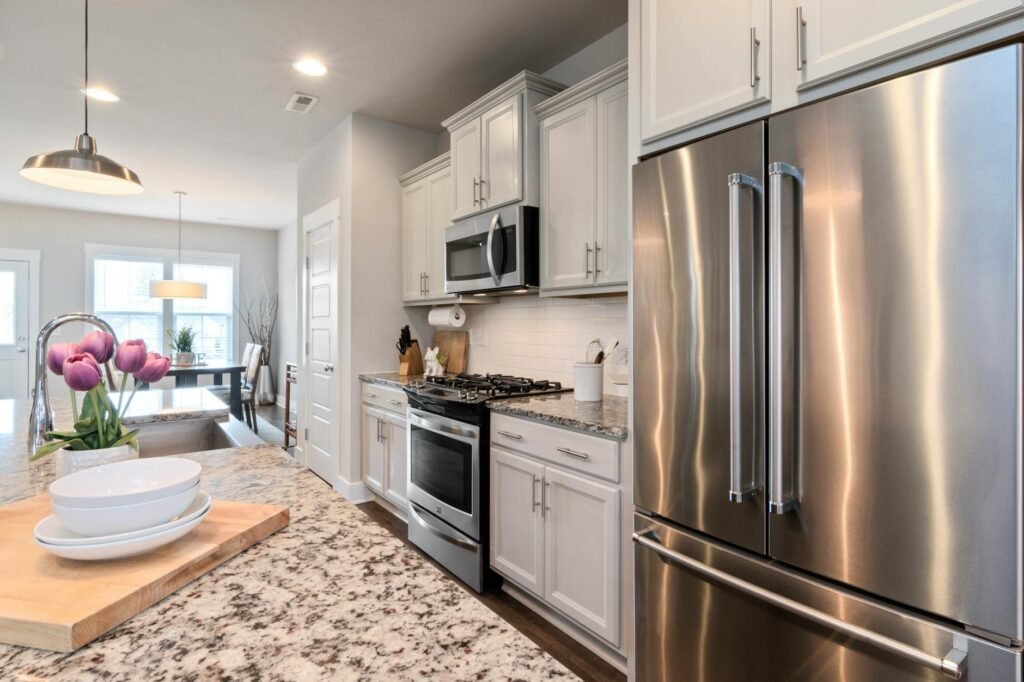
These basics may sound ordinary, but they are the parts buyers actually experience. NAR’s seller checklist specifically tells sellers to clear kitchen and bath counters, neutralize odors, open window treatments, turn on all lights, secure valuables and medications, and take pets with them during showings. NAR’s staging guide also warns against overcrowding, bold distracting decor, and highly personal displays. (nar.realtor)
Do this before photography, not after. In NAR’s 2025 data, photos were highly important to buyers’ clients and much more or more important to sellers’ clients, which means clutter that survives the photo shoot can shape first impressions long before a showing is scheduled. (nar.realtor)
Common staging mistakes that blur the house
NAR’s consumer guide specifically flags overcrowding rooms, neglecting cleanliness, revealing personal information, ignoring high-traffic areas, and using bold decor that distracts buyers as common staging mistakes. (nar.realtor)
- Buying more decor before removing enough stuff.
- Using furniture that is one size too large for the room.
- Trying to fill every corner, shelf, and wall.
- Creating multiple focal points in one room.
- Leaving closets stuffed, which makes storage feel scarce.
- Choosing bold paint, loud wallpaper, or trendy art that dominates listing photos.
- Keeping visible family photos, collections, or politically or religiously specific items.
- Ignoring lighting, smell, and cleanliness because the furniture looks good.
- Photographing before the edit is done.

When staging is not enough
An outdated style may be one of the first things you remember if you live in an outdated house. Other items that could make you think of something outdated might include a pet odor being too strong; the flooring being worn out; having an old system like a furnace; having a roof that’s nearing the end of its life; having loud traffic nearby; or having set prices that assume additional work isn’t needed on the home. In situations like that, by adding new items to your space, you might actually cause more harm by signaling your house, not having the same level of polish, than you could have done otherwise.
NAR’s pre-sale guide says sellers should get cost estimates for major repairs even if they do not plan to do the work, because buyers may factor those expenses into negotiations. If feedback keeps returning to the same defect, the better backup plan may be a repair, a credit, a clear estimate, or a price reset rather than more staging. (nar.realtor)
If a full staging package is not the answer, you still have middle-ground options: pay for a one-time stager consultation, do partial staging in the living room and primary bedroom, add a floor plan for awkward rooms, or use virtual staging carefully. NAR notes that virtual enhancements that materially alter the property should be disclosed so buyers get a truthful picture of the home. (nar.realtor)
How to pressure-test your staging before you list
- Run a five-second recall test with someone who has never seen the house. Ask what they remember. If they name objects before features, edit again.
- Shrink the listing photos to thumbnail size on your phone. The room should still read as bright, open, and easy to understand.
- Stand in the doorway and trace the walking path. If you would warn a visitor not to bump something, the room is too full.
- Check closets and cabinets. Storage should look comfortably used, not stuffed.
- Do a night test. Turn on every light and look for dark corners, mismatched bulbs, or shiny clutter that distracts from the room.
- Track showing comments in categories such as clutter, smell, light, maintenance, layout, and price. If the same category appears twice, treat it as a signal, not just one buyer’s opinion.
NAR’s DIY staging guidance suggests closets should look half full rather than packed, and its showing checklist recommends opening window treatments and turning on all lights. Those are useful pressure tests because they help you see the home the way a buyer sees it. (nar.realtor)
Bottom line
There is no point in staging your home so buyers admire your sense of style; the goal is for them to be able to recall the home well enough to make an offer. Staging for lighting, layout, flow, storage, and quality are the things that often lead to offers from buyers. If a buyer leaves your house talking about your wallpaper, vase, and/or dramatic chair, then you may have staged a mood instead of staging a property. Therefore, good staging should be somewhat forgettable on purpose, directing attention to the elements of light, layout, flow, storage, and condition without drawing attention to itself.
This article is informational, not legal, tax, appraisal, or pricing advice. Listing practices, disclosures, and photo rules can vary by state, MLS, and brokerage. Review your plan with a licensed real estate agent, and use an attorney if you have questions about disclosures or contract terms. (nar.realtor)
Is home staging worth it if homes in my area are still selling quickly?
Often, yes, but the first dollars should go to editing and prep, not luxury decor. NAR found that 83% of buyers’ agents said staging helps buyers visualize a home and about half of sellers’ agents said staged homes sold faster, but many sellers’ agents said they recommended decluttering or correcting faults instead of full staging. (nar.realtor)
Which rooms matter most if I can only stage a few?
Start with the living room, then the primary bedroom, then the kitchen. In NAR’s 2025 data, buyers’ agents ranked those rooms as the most important to stage, and sellers’ agents most commonly staged the living room and primary bedroom. (nar.realtor)
Is virtual staging enough for an empty house?
It can help online marketing, especially when an empty room feels hard to size, but it is not a license to mislead. NAR says materially altered photos should be disclosed. For difficult rooms, a disclosed virtual image plus a floor plan or one physically staged room is usually more credible than heavily enhanced photos alone. (nar.realtor)
Should I repaint everything white before listing?
Not necessarily. NAR’s pre-sale guidance says cosmetic updates are not required, though cleaning and storing away clutter can help, and its staging guide suggests painting where needed in neutral shades. If the current color is dark, scuffed, or polarizing, repainting key areas can be worthwhile; if the color is acceptable and the room is clean and bright, touch-ups may be enough. (nar.realtor)
How much should I spend before listing?
There is no universal number, and staging does not guarantee a higher sale price. NAR reported a median cost of $1,500 for a staging service and $500 when the seller’s agent handled staging, but budget order matters more than the headline amount. Cleaning, decluttering, repairs, lighting, and storage usually deserve the first dollars because they improve both photos and in-person showings. (nar.realtor)
References
- National Association of REALTORS®: NAR Report Reveals Home Staging Boosts Sale Prices and Reduces Time on Market – https://www.nar.realtor/newsroom/nar-report-reveals-home-staging-boosts-sale-prices-and-reduces-time-on-market
- National Association of REALTORS®: Consumer Guide – Staging Your House for a Sale – https://www.nar.realtor/the-facts/consumer-guide-staging-your-house-for-a-sale
- National Association of REALTORS®: Consumer Guide – Seller Checklist, 15 Things to Do Before Every Showing – https://www.nar.realtor/the-facts/consumer-guide-seller-checklist-15-things-to-do-before-every-showing
- National Association of REALTORS®: Consumer Guide – Preparing to Sell Your Home – https://www.nar.realtor/sites/default/files/2025-01/consumer-guide-preparing-to-sell-your-home-2025-01-28.pdf