

Most sellers misdiagnose the problem. They assume the house needs newer decor, trendier art, or a full furniture rental. Often, the faster fix is subtraction: fewer personal items, fewer small objects, fewer furniture pieces, and fewer surfaces asking buyers to process your life. That matters because staging is not just cosmetic polish. In NAR’s May 6, 2025, home staging report, 83% of buyers’ agents said staging made it easier for buyers to envision a property as a future home, and 49% of sellers’ agents said staging reduced time on market. The same report found 91% of sellers’ agents recommended decluttering before listing. (nar.realtor)
Use the CLEAR Score before you start packing boxes at random
Be practical! Each visible object should be scored based on the CLEAR filter. Give a score of 1 point for each yes. Remove any items with a total score of 3 or above before taking photographs. If an item scores 2, look to reduce or simplify it. Items that have a score of 0 or 1 can typically remain in place.
- C – Crowds the room: Does it make the room look smaller, tighter, or more awkward from the doorway?
- L – Looks personal: Does it tell your story so specifically that a buyer stops seeing the room itself?
- E – Eats up surfaces: Does it turn a usable counter, vanity, console, or dresser into visual noise?
- A – Awkward in photos: Does it block sightlines, create dark corners, or look bulky on camera?
- R – Ready to pack: If you are moving it anyway, is there any reason for it to stay out now?

| CLEAR score | Decision | What to do |
|---|---|---|
| 0-1 | Keep | Useful, quiet, and proportionate. Leave it alone. |
| 2 | Reduce | Keep one version, pack the duplicates. |
| 3 | Remove before photos | Pack it now, donate it, or move it to storage. |
| 4-5 | Remove immediately | It is shrinking the room or distracting from the home itself. |
This approach is more effective than giving someone an ambiguous directive like “declutter the entire house” since it creates a requirement for making decisions. The seller typically doesn’t have to remove that much from his or her entire home; rather, it’s a matter of removing enough from sight lines, surfaces, and rooms where you set price expectations for your property.
What to remove first, room by room
| Room | Remove first | Usually safe to leave | Why it matters |
|---|---|---|---|
| Living room | Extra chairs, bulky recliners, hobby gear, stacks of books, collections, too many pillows, floor lamps in every corner | One sofa, one or two chairs, one coffee table, a simple lamp, one or two quiet accessories | This is the room buyers read first for scale and comfort. |
| Primary bedroom | Laundry hampers, exercise equipment, extra dressers, family photo clusters, chair dumps, loud bedding | Bed, matched nightstands, restrained lamps, neutral bedding | Buyers use this room to judge calm, size, and storage. |
| Kitchen | Small appliances crowding counters, mail piles, fridge magnets, knife blocks, extra stools, decor signs | One coffee maker or toaster oven, one bowl, one soap dispenser | Crowded counters make the kitchen feel smaller and older. |
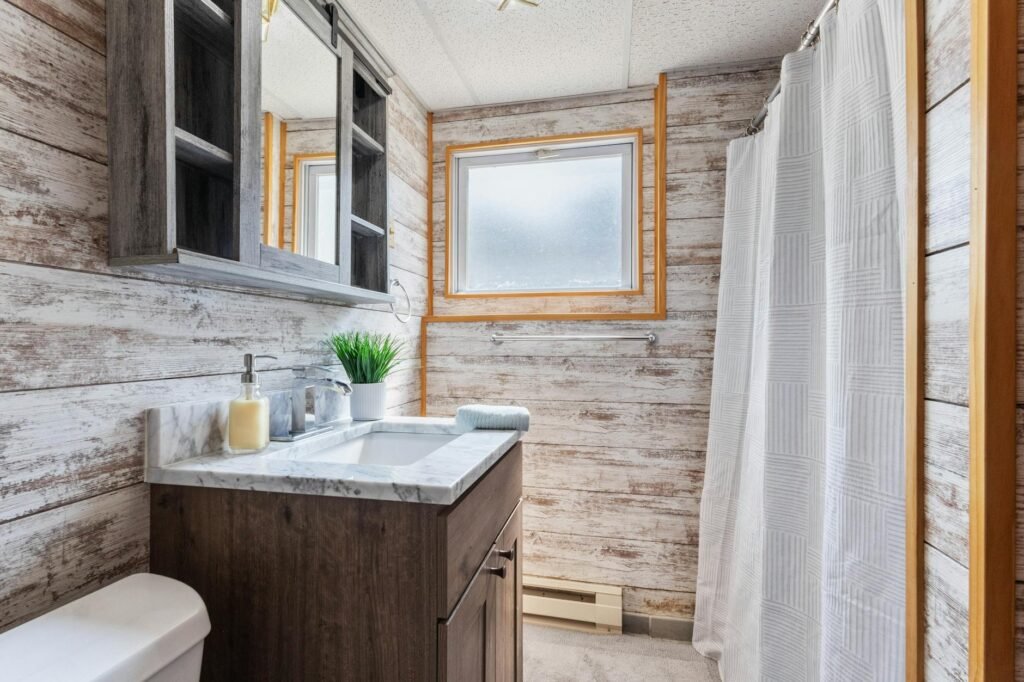
| Bathroom | Products, medications, razors, scales, worn mats, extra baskets, cleaning supplies | Fresh towels, soap, one plant or simple tray | Bathrooms signal cleanliness fast. |
| Entry or office nook | Charging stations, paperwork, shoes, backpacks, pet items, piles of unopened mail | One bench or slim console, one tray | This area sets the tone for the rest of the home. |
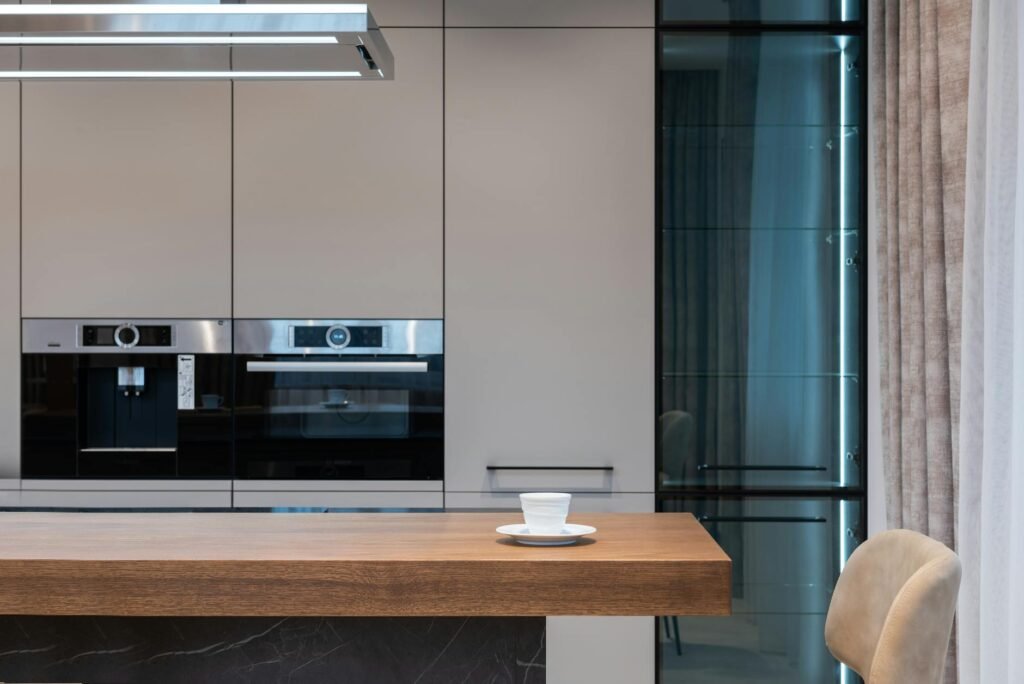
Do not strip the house to zero. Buyers still want the room to feel livable. NAR’s showing checklist tells sellers to clear kitchen and bath counters but leave larger functional items like a coffee maker or toaster oven and neatly put the rest away. That is a good rule for most occupied homes: mostly clear, not sterile. (nar.realtor)
The removal list that usually pays off
Personal-story decor
The first item on this list should be identity icons of who you are, such as: family photo walls, monogrammed items, clusters of diplomas, children’s artwork, sports memorabilia, displays with religious items, political items, shelves of vacation souvenirs, and room signs that explain how the room is used. The buyer may not be offended by any of your items, but they will take approximately three seconds to identify who you are through these things, as opposed to what is in the room.
Volume creators
After removing items that take away from how visually dense a room looks (ex. duplicate end tables, excess dining chairs, oversized sectionals, extra barstools, unused bench, display ladder, baskets of blankets, etc.), it becomes quite clear that sellers often over-edit accessories, while under editing furniture. Buyers do not count these items – they simply feel their bulk.
Surface spill and privacy risks
Finally, clear the items that make the house feel busy or exposed: countertop appliances you do not use daily, bath products, loose cords, paper stacks, nightstand clutter, pet bowls, open cleaning supplies, jewelry, financial mail, prescription bottles, firearms, and small electronics. NAR’s seller showing checklist specifically advises hiding jewelry and prescription medications, securing firearms, and putting away devices. The FTC likewise advises keeping documents with personal or financial information in a safe place and shredding them when discarded. And if you have indoor cameras, smart speakers, or digital photo frames, treat them as part of the clutter audit too. NAR notes that connected devices can keep collecting data during showings, so sellers should review settings and discuss disclosure and privacy with their agent. (nar.realtor)
A realistic seller example: spend on removal, not replacement
Say a couple is listing a $425,000 house that is clean but visually crowded. Instead of buying new art, matching baskets, and trendy throw pillows, they spend $180 on boxes and tape, $240 on a one-month storage unit, $85 on a donation pickup, and $60 on fresh white bath linens. Total prep spend: $565.
If a simpler presentation helps them avoid even a 1% price haircut, that is $4,250 on this list price. That does not mean decluttering guarantees a 1% gain. It means a few hundred dollars spent on subtraction is often easier to justify than random decor purchases. For context, NAR’s 2025 staging data put the median cost of using a staging service at $1,500, versus $500 when the seller’s agent personally staged the home. (nar.realtor)

Common mistakes that make a home feel smaller
- Packing trinkets but leaving too much furniture. One oversized piece usually hurts more than ten small accessories.
- Hiding clutter in closets, cabinets, laundry shelves, and the garage instead of actually reducing volume. If a door springs open or a shelf is crammed, buyers read that as a storage problem.
- Buying new decor before removing old decor. The room rarely needs more objects.
- Trying to make every surface empty. Controlled normality looks better than a house that feels abandoned.
- Forgetting the refrigerator, vanity, and desk. NAR’s showing checklist specifically notes buyers may look inside the refrigerator and judge what they see. (nar.realtor)
- Leaving out mail, medication, firearms, jewelry, or personal records during showings. That is not just clutter. It is a security and privacy issue. (nar.realtor)
When the clutter edit is not enough
Some homes do not have a decor problem. They have a condition problem, a scale problem, or a photo problem. If rooms still look dark, worn, oddly sized, or vacant after you declutter, do not keep rearranging baskets. Change the next variable. NAR reports that photos were much more or more important to sellers’ clients 88% of the time, compared with 43% for traditional physical staging. That suggests many listings need clean visual editing and strong photography before they need a full styling overhaul. (nar.realtor)
- Remove one more large piece from every crowded main room. If the room still feels tight, your first pass was not aggressive enough.
- Price a short-term storage unit before buying decor. Storage is boring, but it often solves the real problem.
- If the home is occupied, ask about partial staging in the living room, primary bedroom, and kitchen first. Those are the highest-value visual targets. (nar.realtor)
- Replace loud, tired textiles before you replace furniture: bedding, shower curtains, bath mats, and window panels can calm a room cheaply.
- If you worry that visible wear or hidden issues will come back during negotiation, ask your agent whether a pre-sale inspection makes sense. NAR says it is not required, but it can identify issues that may affect asking price and help sellers decide what to repair before listing. (nar.realtor)
How to verify your audit before photos and showings
- Do a doorway photo test. Stand at each doorway, take one phone photo at chest height, and look for the first thing your eye hits. If it is decor instead of space, edit again.
- Run a 30-minute reset. If you cannot clear counters, hide meds and mail, pick up surfaces, and open blinds quickly, there is still too much exposed stuff. NAR says sellers often can get show-ready in less than an hour once they have a system. (nar.realtor)
- Open every closet, pantry, refrigerator, and vanity you plan to show. Buyers may look, and clutter hidden there still changes how they judge storage and cleanliness. (nar.realtor)
- Ask your agent for a ruthless five-item list before photography. Not ten pages of feedback. Just the five items or pieces they would remove first.
- If you are still unsure whether the house is presentation-ready, consider a pre-sale inspection for condition issues and compare the photographer’s first proof set against your phone shots. NAR says a pre-sale inspection is optional, but it can surface issues early. (nar.realtor)
Bottom line
One of the most cost-effective ways to upgrade decor prior to listing is by removing items. Box up personal belongings, eliminating excessive amounts of furniture, clearing surfaces of everything other than what should be on them, securing confidential information, and not accumulating objects to resolve a volume issue. Once everything has been removed and if the home still does not read well, consider obtaining professional assistance (rather than continuing to accumulate more items).
Should I remove every family photo before listing?
In the main living areas, usually yes. The goal is not to erase your life. It is to stop the buyer from seeing your identity before they see the room. That aligns with NAR’s finding that 83% of buyers’ agents say staging helps buyers envision the property as a future home. (nar.realtor)
How empty should kitchen counters be?
Mostly clear, not blank. NAR’s showing checklist says to clear kitchen and bath counters but leave larger functional items like a coffee maker or toaster oven and neatly stow the rest. (nar.realtor)
Is a storage unit worth it for one month?
In general, if a home has occupants with a bunch of clothes and a lot of furniture, yes. You may find that a rented short-term home will cost less than purchasing decor for your current home; nevertheless, if volume rather than style is the main concern for your problem, you might want to consider using an alternative to décor.
Do I need professional staging if I declutter well?
Not always. Start with decluttering, cleaning, and strong photos. If the home still reads awkward, dark, vacant, or underscaled, get a partial staging quote for the main rooms. NAR says the median cost of a staging service was $1,500, and photos were even more important than traditional physical staging for many sellers’ clients. (nar.realtor)
What should I do with smart speakers and indoor cameras during showings?
At minimum, review privacy settings, mute or remove voice assistants you plan to take with you, and ask your agent what must be disclosed in your state. NAR notes that connected devices can continue collecting data during listing activity, and sensitive conversations are best held outside the property. (nar.realtor)
References
- National Association of REALTORS®: NAR Report Reveals Home Staging Boosts Sale Prices and Reduces Time on Market – https://www.nar.realtor/newsroom/nar-report-reveals-home-staging-boosts-sale-prices-and-reduces-time-on-market
- National Association of REALTORS®: 2025 Profile of Home Staging PDF – https://www.nar.realtor/sites/default/files/2025-05/2025-profile-of-home-staging-05-06-2025.pdf?utm.com=
- National Association of REALTORS®: Consumer Guide, Seller Checklist, 15 Things to Do Before Every Showing – https://www.nar.realtor/the-facts/consumer-guide-seller-checklist-15-things-to-do-before-every-showing
- National Association of REALTORS®: Consumer Guide, Preparing to Sell Your Home – https://www.nar.realtor/sites/default/files/2025-01/consumer-guide-preparing-to-sell-your-home-2025-01-28.pdf
- Federal Trade Commission: What To Know About Identity Theft – https://consumer.ftc.gov/articles/what-know-about-identity-theft
- National Association of REALTORS®: Smart Homes, Smarter Questions: What Agents Need to Know About Privacy and Data – https://www.nar.realtor/magazine/real-estate-news/technology/smart-home-privacy-real-estate-agent