
The price tag is not always the reason cheap furniture appears cheap. A room has more than just one feature displaying the “cheapness” of the furniture (small size rug, dimly lit lamp, cheap looking hardware, cluttered space, feel like the furniture was just placed temporarily in the room). The goal when renting should not be to hide how “cheap” the furniture looks, but to create a stylish look out of the ordinary items used in the room by being intentional with the piece you put into the room to stop replacing, hiding, or apologizing for the items you place into your rental unit.
TL;DR
- Start with scale and lighting. A properly sized rug and better lamps usually do more than extra accessories.
- Use the Designer Signal Scorecard before you buy or upgrade any piece.
- If a piece has a good shape but weak details, small upgrades can work. If it’s wobbly, peeling, or badly sized, stop decorating around it.
- Keep upgrade spending below 30% of the price of a clearly better replacement.
- Check your lease before painting, drilling, or making permanent changes, and use renter-safe materials with ventilation when needed.
The expensive look is mostly about signals, not labels
Rooms that appear to be expensive often showcase similar visual clues: clean shaped, correct size, multilayer texture, controlled hue, plus atmospheric ambience. This can easily be achieved even with budget furniture; simply do not try to furnish an entire room at one time. A flat pack console table can achieve a finished look by giving it some negative space around it, placing a nice heavy lamp on top of it, hanging one large artwork above it, and keeping the top free from too many little decorative objects. A high end chair can also appear to be of lesser value if it is too small and located on a small rug.
Use the Designer Signal Scorecard before you spend
You can save yourself from wasting your money on a bad outfit by simply evaluating the piece itself before purchasing, keeping, or upgrading it. Each category receives either 0, 1, or 2 points will total a score out of 10.
| Signal | 2 points | 1 point | 0 points |
|---|---|---|---|
| Shape | Clean silhouette and simple lines | One awkward feature, but still balanced | Bulky, fussy, or visibly clumsy |
| Scale | Fits the wall and room with breathing room | Slightly off, but fixable with styling | Clearly too small or too large |
| Surface | Even finish, aligned seams, no obvious damage | Minor wear or sheen mismatch | Peeling veneer, bubbling laminate, obvious damage |
| Details | Legs, pulls, shades, or trim look intentional | Generic but easy to swap or disguise | Cheap-looking details dominate the piece |
| Stability | Solid, level, drawers or doors work smoothly | Minor wobble or assembly issue | Rickety, unsafe, or frustrating to use |
How to use it: 8 to 10 means keep it and style it confidently. 5 to 7 means upgrade only if your fixes stay below about 30% of the price of a clearly better replacement. 0 to 4 means stop. Move it to a low-priority room, sell it, or skip it entirely. The scorecard matters because styling can’t solve bad scale, bad structure, or a surface that already looks worn out.

A realistic $624 living room reset
Imagine a renter with a blank living room and a hard cap of $650. The common mistake is buying a matching five-piece set on sale and using whatever budget remains on tiny decor. A better plan is concentrated spending: $289 for a clean-lined sofa in a quiet fabric, $119 for an 8-by-10 rug large enough to catch the sofa’s front legs, $78 for two warm LED lamps, $46 for upgraded pillow covers and inserts, $54 for one oversized framed print, and $38 for a tray plus a large bowl. Total: $624.
No luxury purchase exists in that space. The room reads better than it would if the largest visual issues had not first been addressed: flooring has been grounded to the area, sofa has been properly scaled to the room, lighting has been provided with warmth vs. brightness; and less but larger items have been used to accessorize the space. To spend the same budget for additional end tables, small rugs, and small decorative items would generally yield an overlooked and chaotic feel.
The upgrades that give the highest visual return
Start with scale, not accessories
A room that contains intentionally undersized furniture will appear less permanent. For instance, undersized rugs will cause the furniture to “float” in the room (apart from the walls), while undersized art will create an impression of a large sectional being from a waiting-area type space. Additionally, if the coffee table is narrow, low-profile, etc., the seating will appear more economical and less since the table cannot help anchor it. In general, one properly sized rug or piece of oversized artwork can do less for the overall room than three or more small decorative items.
Change what the eye notices first
When evaluating budget furniture pieces, pay particular attention to small details like cabinet hardware, lamp/hardware & pillows. If the frame is sturdy, and the material used for cabinets or lamps is of high quality, replace these accessories and those pieces will feel more like furniture than only a disposable item.
Add texture before you add more color
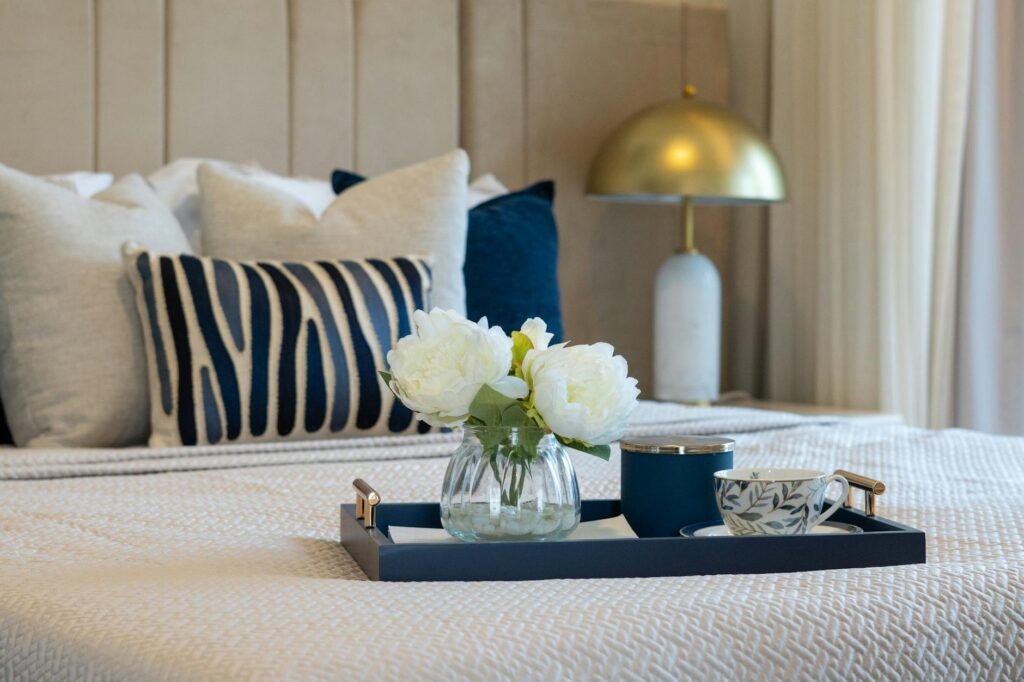
A room with a cheap appearance may be dull. Light reflected off of strategic accents and natural materials adds dimension to the room. Adding texture creates dimension more quickly than adding colour. Examples of texture include linen-patterned pillowcases, woven storage baskets, wooden trays, ceramic lighting fixtures, cotton window coverings, or an un-textured throw to accentuate a different colour. In general, a three or four textured palette will give an impression of a much larger investment than rooms using bright colours and shiny textures.
Use lighting as both a style upgrade and a money move
Lighting is one of the rare upgrades that can improve the room and cut operating costs. The Department of Energy says lighting accounts for about 15% of an average home’s electricity use and that households can save by switching to LED lighting, which also lasts much longer than incandescent bulbs. In practice, two better lamps with warm LED bulbs can soften bargain finishes, add depth, and keep the room from feeling harsh at night. (energy.gov)
Style in fewer, larger groupings
A coffee table that has a single tray, bowl, and book will appear more refined than one that has eight random items. The same principle applies to any other type of furniture, such as a console, nightstand and shelf. If you have a piece that is already basic looking, you cannot use clutter to help you pull it together; you will be highlighting its basicness.
Keep, upgrade, hide, or replace
| Piece condition | Best move | Why it works | Budget rule |
|---|---|---|---|
| Good shape, solid build, weak hardware or lighting around it | Upgrade | High visual payoff with limited spend | Usually keep fixes under 10% to 20% of replacement cost |
| Good shape, wrong color tone or bland surface | Restyle first | Textiles, lighting, and fewer accessories may solve it | Try low-cost styling before altering the piece |
| Okay piece with two or three flaws | Upgrade carefully | Small wins are possible, but costs stack up fast | Do not cross the 30% rule |
| Wobbly, peeling, badly scaled, or visibly worn | Replace or move elsewhere | Cosmetic upgrades will not fix the core problem | Do not spend styling money on a bad foundation |
Rental-safe rules before you touch the piece
Important: This article is general information, not legal or health advice. Lease terms, landlord rules, and local tenant protections vary. Before painting, drilling, mounting, or making permanent changes, read your lease and get permission in writing when needed. If you live in housing built before 1978 and plan to disturb painted surfaces, use extra caution because lead-safe rules may apply. (usa.gov)
- Read the lease first. That sounds basic, but it may be the cheapest money-saving step. Some properties limit painting, wall anchors, wallpaper, shelf installation, or adhesive products. (usa.gov)
- If you’re buying new pressed-wood furniture, look for labeling that shows the finished goods are TSCA Title VI or CARB Phase II compliant when applicable. EPA says covered composite wood products and finished goods are required to be labeled as compliant. (epa.gov)
- If you use paint, adhesives, removers, or refinishing products, ventilate the room well, follow label directions, and buy only the quantity you expect to use soon. EPA notes VOC levels can be several times higher indoors than outdoors and can spike after projects like paint stripping. (epa.gov)
- Avoid sanding, scraping, or cutting into painted surfaces in pre-1978 housing unless you understand the lead-safe rules or hire qualified help. EPA says renovation work that disturbs painted surfaces in older housing can create dangerous lead dust. (epa.gov)
- For online orders, save screenshots of the listing, promised ship date, return window, and all messages with the seller. The FTC recommends keeping records and checking refund policies before you buy. (consumer.ftc.gov)
- When possible, pay with a credit card or through the marketplace’s protected payment system, not by wire transfer, gift card, or payment outside the platform. The FTC says safer payment methods may give you stronger protections if something goes wrong. (consumer.ftc.gov)
One more health-and-budget point: if a new bookcase, cabinet, or desk has a strong chemical smell, don’t rush to style it and close the windows. Let it air out first. EPA says formaldehyde is used in some composite wood products commonly found in furniture, and EPA’s formaldehyde rule requires compliant labeling for covered products. (epa.gov)
When the first plan is not enough
Some items just aren’t going to work for a project. A racking drawer, sagging door, curling veneer, a lack of proper scale, and/or the finish looking beaten up from any distance will result in a slow leak of decorating dollars as you attempt to decorate around these items. For example, a $40 nightstand has become an expensive learning experience when you have purchased new handles, added a lamp, bought a basket, tray, and/or wall decor, and it still does not look right.
- Move a weak piece to a lower-stakes room, such as a closet, office, or guest room, and stop spending on it.
- If you can’t drill or mount anything, create height with floor lamps, tall branches, leaning art on top of a console, or a folding screen.
- If the finish is the only problem, conceal more than you customize. A table skirt, closed baskets, or a long runner can be more effective than a DIY faux-luxury treatment.
- If the piece is top-heavy and children live in or often visit the home, don’t treat safety as optional. CPSC says existing furniture can be secured with inexpensive anti-tip brackets. (cpsc.gov)
- If you keep hitting the 30% rule on fixes, skip the upgrades and buy one sturdier secondhand replacement instead.
Common mistakes that make a room look cheaper
- Buying a full matching set instead of building the room around a few better visual anchors.
- Choosing tiny rugs, tiny art, and tiny lamps because each item feels affordable by itself.
- Trying to create luxury with glossy contact paper or heavy faux finishes that call attention to the shortcut.
- Spending on decor before fixing scale, lighting, and clutter.
- Keeping every inexpensive item visible. Open shelving packed with low-cost decor almost never looks high-end.
- Ignoring the hidden costs of an upgrade, including shipping, inserts, bulbs, tools, hardware, touch-up supplies, and the value of your time.

How to pressure-test the makeover before checkout
- Tape the footprint of the rug, table, or cabinet on the floor before ordering. It’s the fastest way to catch scale mistakes.
- Take a doorway photo and a seated-eye-level photo of the room. Cheap-looking choices often reveal themselves from a distance, not up close.
- Add every cost into one line item: product price, tax, shipping, bulbs, hardware, inserts, adhesive strips, tools, and any return shipping.
- Compare that total with the price of a clearly better used or clearance alternative. If the difference is narrow, buy the better piece instead.
- For marketplace buys, ask for photos of the actual item, not just stock images, and get condition details in writing. The FTC recommends reviewing the seller’s terms, shipping fees, and return policies and keeping copies of messages. (consumer.ftc.gov)
- Keep proof of the order, seller name, return policy, and shipping promise. The FTC says sellers must ship as promised, and if you paid by credit card and get the wrong item or no item, you may have dispute rights. (consumer.ftc.gov)
- Once the piece is assembled, test stability immediately. If it’s tall or top-heavy, anchor it when appropriate, especially in homes with children. (cpsc.gov)
Bottom line
When furniture is inexpensive, but its surroundings do not reveal its flaws, it may appear to have a higher quality than it does. This generally requires the room to be well scaled, well lit, styled with less distraction and visual clutter. Use the scorecard, create a spending cap for upgrades only, and do not attempt to improve pieces that have structural issues or are not the right size. A rental space can have the most luxurious feel if the total look has a polished finish without being an additional expense.
FAQ
What is the first thing to upgrade if my rental furniture looks cheap?
Start with the biggest visible mistake, which is usually scale or lighting. A larger rug, taller lamp, or bigger art piece typically changes the room more than swapping throw pillows or adding extra decor.
Is it worth replacing hardware on cheap furniture?
Yes, if the piece has a good silhouette and feels stable. Hardware upgrades work best on dressers, nightstands, desks, and cabinets. They are rarely enough to fix a badly proportioned or damaged piece.
Should I buy secondhand instead of new budget furniture?
Often, yes, especially for wood case goods like side tables, dressers, and bookshelves. Just verify the condition carefully. For online marketplace purchases, the FTC advises checking photos of the actual item, reading return rules, and keeping messages in writing. (consumer.ftc.gov)
Can I paint or alter furniture in a rental?
Sometimes, but check the lease and the property rules first. USAGov advises tenants to read the lease carefully before disputes arise, and that principle applies here too. If you plan to drill, mount, paint, or disturb older painted surfaces, get permission when needed and use extra caution in pre-1978 housing. (usa.gov)
Are inexpensive pressed-wood pieces ever worth buying?
They can be, especially for low-impact storage or starter furniture, but look for solid assembly, clean edges, and compliant labeling when applicable. EPA says covered composite wood products and finished goods are required to be labeled as TSCA Title VI or CARB Phase II compliant. (epa.gov)
How do I avoid overspending on upgrades?
Use the 30% rule. If the total cost of knobs, paint, tools, liners, inserts, baskets, or styling accessories rises above about 30% of the price of a clearly better replacement, stop and reprice the whole plan.
References
- USAGov tenant rights and lease guidance – https://www.usa.gov/tenant-rights
- FTC online shopping guidance – https://consumer.ftc.gov/online-shopping
- FTC buying from an online marketplace – https://consumer.ftc.gov/articles/buying-online-marketplace
- EPA volatile organic compounds and indoor air quality – https://www.epa.gov/indoor-air-quality-iaq/volatile-organic-compounds-impact-indoor-air-quality
- EPA formaldehyde standards for composite wood products consumer FAQs – https://www.epa.gov/formaldehyde/frequent-questions-consumers-about-formaldehyde-standards-composite-wood-products-act
- EPA lead renovation, repair, and painting program – https://www.epa.gov/lead/lead-renovation-repair-and-painting-program
- CPSC Anchor It furniture tip-over safety guidance – https://www.cpsc.gov/Safety-Education/Safety-Education-Centers/AnchorItgov
- Department of Energy lighting choices to save money – https://www.energy.gov/energysaver/lighting-choices-save-you-money