
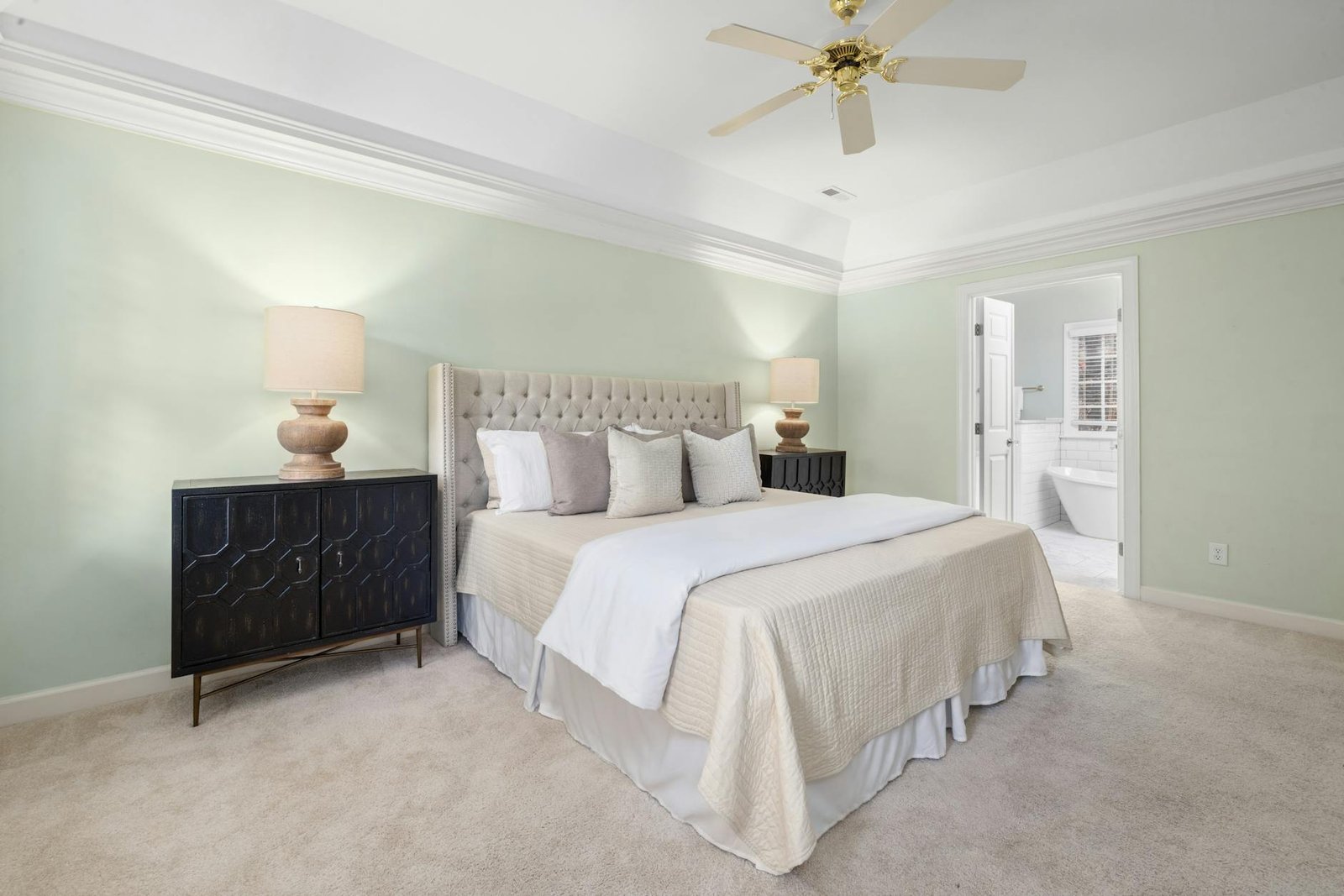
Most sellers who want a luxury look overspend on the wrong things: trendy decor, too many accessories, or roomfuls of rental furniture. Buyers are usually reacting to something simpler. They notice whether the house looks bright, calm, well-kept, and easy to understand in photos. In the National Association of REALTORS® 2025 staging research, 83% of buyers’ agents said staging made it easier for buyers to visualize the property as a future home, and 58% said buyers were disappointed when homes did not resemble the polished spaces they see on TV. (nar.realtor)
That matters because budget staging is not about pretending a house is something it is not. It is about removing the cues that make a listing feel cheaper than its price point: mixed light bulbs, undersized art, crowded surfaces, thin bedding, worn paint, and obvious deferred maintenance. In the same 2025 NAR report, 51% of sellers’ agents said they did not stage homes before listing but did tell sellers to declutter or fix property faults first. That is the right starting point for most households. (nar.realtor)
This article is not intended to provide any legal, tax, appraisal, or brokerage advice and is meant exclusively for informational purposes only. If spending a substantial amount of money is in your plan, it is suggested that you consult with a local licensed real estate professional regarding what the likelihood of return on your investment is based upon staging, repairs, pricing, and/or photography (or a combination thereof) in your environment.
TL;DR
- Luxury on a budget usually means cleaner, brighter, simpler, and more consistent, not more decorated.
- Spend first on light, paint touch-ups, bedding, visible maintenance, and a few larger pieces with the right scale.
- Prioritize the rooms that sell the listing: living room, primary bedroom, kitchen, entry, and the bath that appears in photos.
- If odor, wear, pricing, or bad photography is the real problem, staging is secondary.
- Use the Premium Cue Scorecard and the 12-Photo Audit before buying more decor.
What buyers actually read as “luxury”
In listing photos, luxury usually reads as restraint plus consistency. The room feels larger because the furniture fits. The lighting matches. The finishes do not fight each other. The bed looks hotel-clean. The surfaces are edited, not empty and not crowded. Zillow’s staging guidance emphasizes decluttering, neutralizing strong personal design choices, highlighting natural light, and arranging furniture to show flow rather than just filling space. (zillow.com)
For personal finance purposes, the goal is not to impress every buyer. It is to protect your asking price by making the home photograph well and by reducing the number of “I’ll need to fix that later” deductions buyers make in their heads. NAR’s 2025 survey is a good reality check here: some agents reported modest pricing lifts from staging, while many reported no direct dollar effect. That is why staging is best treated as value protection and marketing support, not a guaranteed windfall. (nar.realtor)
Use the Premium Cue Scorecard before you buy anything
Score the rooms with listings before you start shopping. Entry, living Room, Kitchen, Main Bedroom, and main bathroom should all be anticipated for photographs. To see at a glance if you need editing, upkeep, or actual purchase of materials, use the Premium Cue Scorecard.
| Cue | 0 points | 1 point | 2 points | Cheap fix first |
|---|---|---|---|---|
| Light | Dark corners, burned-out bulbs, mixed bulb colors | Bright enough, but one obvious mismatch or weak corner | Even, flattering light across the whole room and adjoining sightline | Match bulbs, open curtains, add one lamp or a brighter shade |
| Scale | Furniture or art is clearly too small or too crowded | One scale problem pulls the room down | Furniture size feels intentional and walkways stay open | Remove one piece, replace several small items with one larger item |
| Finish | Scuffs, chipped paint, dirty grout, worn hardware, broken plates | Mostly fine, but one maintenance issue is noticeable in photos | Nothing pulls attention away from the room itself | Touch up paint, caulk, grout, hardware, and switch plates |
| Soft goods | Wrinkled bedding, flat pillows, mismatched towels, bare windows | Functional but thin or tired textiles | Crisp, full, coordinated, hotel-clean look | Upgrade bedding, towels, curtain panels, and pillow inserts |
| Restraint | Cluttered, personalized, too many accessories | Mostly clear but still busy on key surfaces | Edited, calm, easy to read in one glance | Clear surfaces, remove personal photos, cut accessories by half |
Rate your rooms out of ten (with 8-10 indicating you likely require an edit instead of a trip to the shops; 5-7 suggesting some targeted purchases might make all the difference and 0-4 being a signal for you to stop purchasing decor and to improve your room’s condition, layout or clutter before you do). This approach will help you to avoid making one of the most common budget-staging errors, which is purchasing new pillows when buyers are likely to notice the dingy trim and inconsistent lighting.
Spend where buyers actually look first
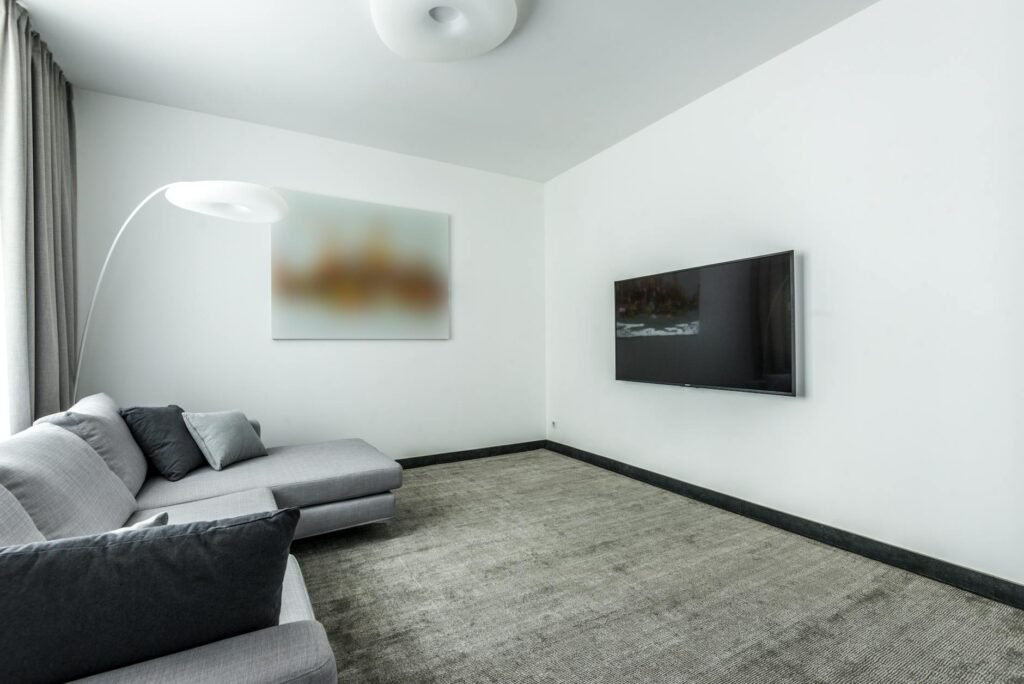
When money is tight, do not spread it evenly across the house. NAR says the rooms most commonly staged are the living room, primary bedroom, dining room, and kitchen, with the living room and primary bedroom far ahead of children’s or guest bedrooms. That is a useful budget rule: stage the rooms that drive listing photos and first impressions; keep secondary rooms clean, simple, and lightly furnished. (nar.realtor)
| Detail | Typical DIY spend | Why it looks higher-end | Best rooms | Skip when |
|---|---|---|---|---|
| Matching warm LED bulbs and better lamp placement | $60 to $180 | Makes rooms photograph cleaner and more expensive immediately | Whole house, especially living room, kitchen, halls | Skip if bulbs already match and corners are bright |
| Paint touch-ups or one-room repaint | $80 to $350 | Erases wear and makes trim look maintained | Entry, living room, primary bedroom | Skip if walls are fresh, neutral, and scuff-free |
| Crisp bedding and matching bath textiles | $120 to $300 | Creates hotel-like polish fast | Primary bedroom and baths | Skip if your current linens already look full and clean on camera |
| One oversized art piece or mirror | $75 to $250 | Fixes cheap-looking scale problems better than multiple small items | Entry, dining room, living room | Skip if art already fills the wall correctly |
| Visible finish fixes: pulls, switch plates, caulk, grout refresh | $50 to $220 | Reads as care and maintenance, not makeover theater | Kitchen and bathrooms | Skip if finishes are already cohesive and clean |
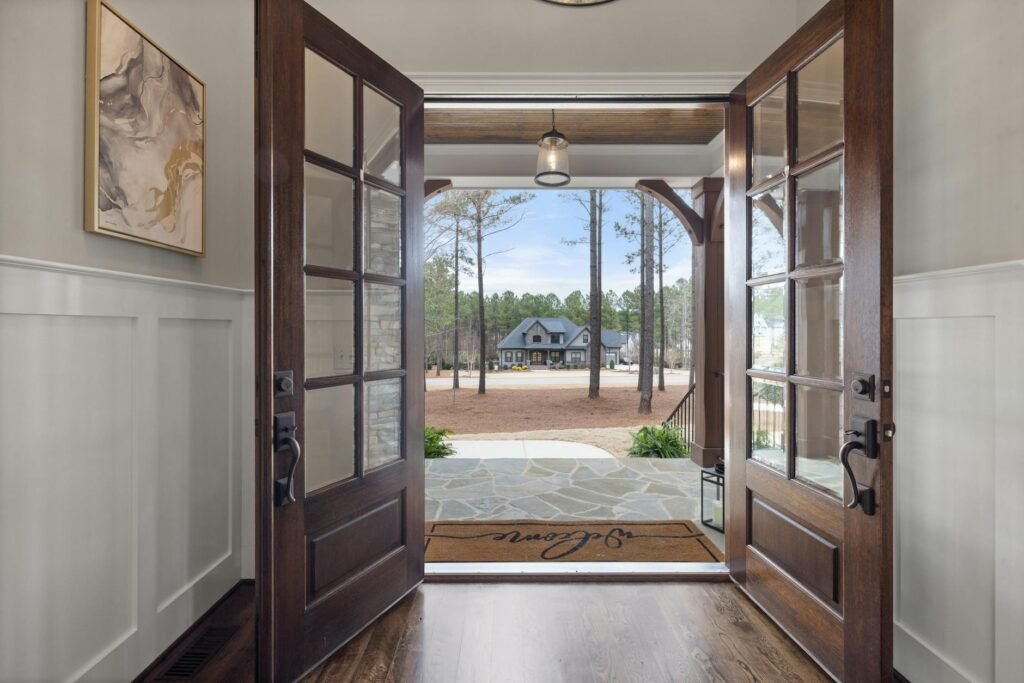
| Front-door reset: mat, planters, hardware polish | $40 to $150 | Improves the first photo and first 10 seconds of a showing | Entry and porch | Skip if curb appeal is already sharp |
Notice what’s Missing: An Entire Room Furniture Challenge, Experimenting with Colors & Lots of Tiny Decor Items All Would Have Been Considered as Forms of Wasting Money in Budget Staging (these Categories Waste More Money)……. BUT BUDGET STAGING LOOKS BEST WHEN THE BUDGET STAGING IS ALL ABOUT THE BUDGET STAGE AS EDITING AND MAINTENANCE (w/ Some Strategic & Visual Upgrades).
A realistic $1,500 staging budget
NAR reports a median spend of $1,500 when sellers used a staging service, compared with $500 when the seller’s agent personally staged the home. If you are self-staging, $1,500 can be enough to make a visible difference in a mid-priced listing if you keep the money concentrated instead of trying to decorate every room. (nar.realtor)
Consider a 2,200-square-foot four-bedroom home expected to list at $625,000. The sellers have solid furniture, but the phone photos show dark lamps, scuffed walls, undersized art, and a primary bedroom that looks flat. Instead of renting furniture for the whole house, they cap staging at $1,480 and aim only at the details that make the home feel better cared for and easier to read in photos.
- Deep clean, windows, and odor reset: $250
- Matching LED bulbs and two better lamps or shades: $140
- Paint and trim touch-ups in the foyer and family room: $300
- New bedding, pillow inserts, and fresh bath textiles: $260
- Larger art and an entry mirror bought secondhand: $180
- New pulls, outlet plates, caulk, and grout refresh: $150
- Porch planters and a new doormat: $110
- Contingency for last-minute fixes: $90
The mathematics are straightforward. The dollars fix visible friction on listing photos, the first walk-through of the space, and the rooms that most influence perceptions of value in the home. They are not spending money to make every square foot look designed.
The small details that make a listing feel expensive
Lighting consistency beats fancy fixtures
Lighting is the fastest way to raise or lower the visual ceiling of a room. Use the same bulb color within each room, replace weak or burned-out bulbs, open every window treatment that helps the view, and light dark corners before photos. Zillow specifically calls out lighting, natural light, and working fixtures as staging essentials, and the Department of Energy says residential LEDs use at least 75% less energy and can last up to 25 times longer than incandescent bulbs, which makes them a practical staging swap rather than just a cosmetic one. (zillow.com)
Scale is where budget staging usually fails
Budget staging often looks cheap because the pieces are too small. A tiny rug floating under a coffee table, miniature art over a king bed, or four little objects scattered across a large island can all make the room feel under-furnished. Zillow advises arranging furniture to fit the room and show flow rather than overwhelm it. In practice, one oversized mirror, one properly scaled rug, or one large branch arrangement usually reads better than six small decorative purchases. (zillow.com)
Textiles should look hotel-clean, not heavily decorated
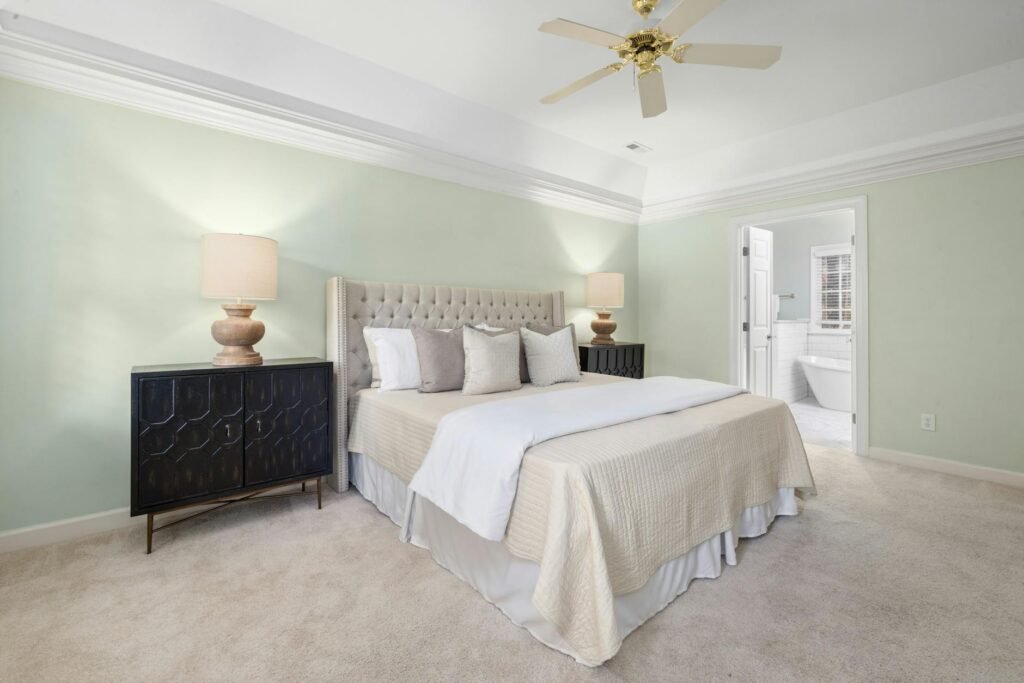
If you can upgrade only one soft surface, start with the primary bed. Crisp white or oatmeal bedding, fuller pillows, an ironed coverlet, and two matching lamps can make an ordinary bedroom feel materially better. Do the same in baths with thick matching towels and a clean shower curtain. Zillow’s selling guidance specifically recommends staging the bedroom with crisp white linens, and NAR’s 2025 data shows the primary bedroom is one of the most important rooms sellers actually stage. (zillow.com)
Finish the surfaces buyers read as neglect
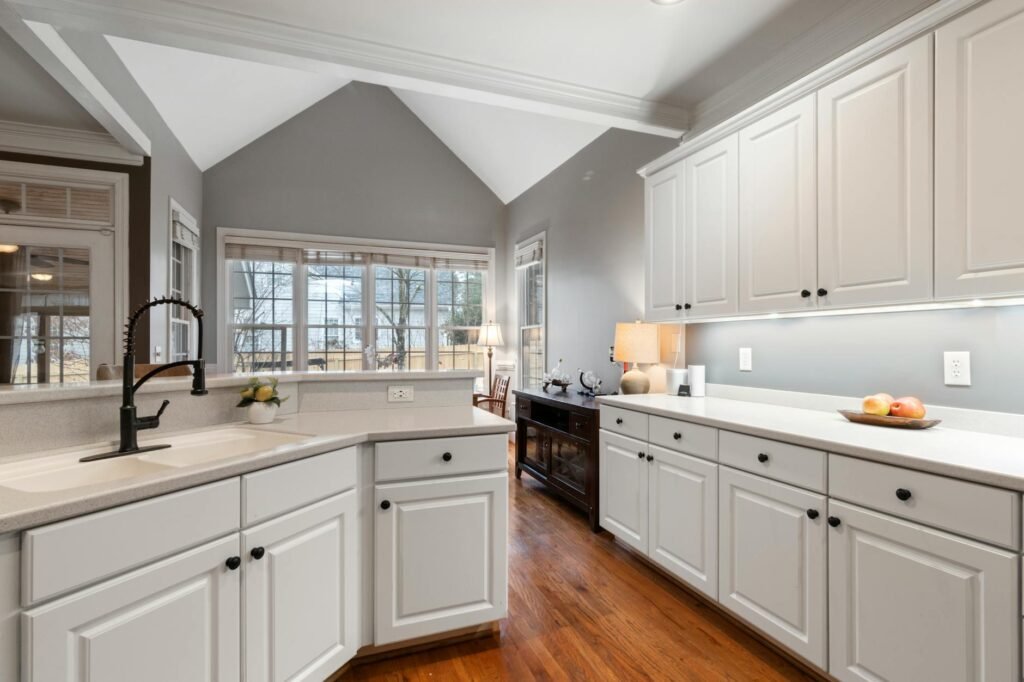
The most convincing higher-end details are usually maintenance details: fresh caulk, bright grout, a faucet without mineral buildup, matching cabinet hardware on the sightline, intact switch plates, and scuff-free trim. Zillow’s 2024 seller research says interior painting was the most common improvement sellers made, and Zillow also notes that fresh paint is a relatively affordable way to make a home look newer, cleaner, and better maintained. (zillow.com)
Edit harder than you decorate
High-end rooms are not crowded. Clear about 70% of visible surface area, remove family photos, reduce the number of chairs in rooms that feel tight, and take a meaningful share of clothes out of closets so storage looks generous. Zillow’s staging guidance emphasizes decluttering, depersonalizing, and creating a neutral canvas so rooms appear larger and buyers can picture themselves there more easily. (zillow.com)
When staging alone is not enough
Staging will not rescue a listing that is overpriced, poorly photographed, visibly worn, or carrying odor issues. NAR’s data shows many agents treat staging as part of a broader prep plan that includes decluttering and fixing property faults, not as a substitute for them. Zillow also stresses high-quality photos and digital listing tools because buyers often decide online which homes deserve an in-person showing. (nar.realtor)
- Fix smell, grime, stains, and visible repair issues before you buy any decor.
- Improve light and repaint the worst-offender rooms before touching secondary spaces.
- Physically stage only the rooms that sell the listing: living room, primary bedroom, kitchen, entry, and one strong bath.
- If the home is vacant or awkward, ask your agent whether partial staging, a floor plan, or limited virtual staging makes more sense than furnishing the whole house. NAR and Zillow both note that virtual tools can help, especially online. (nar.realtor)
- If the photos still read weak after those fixes, revisit price, concessions, or marketing quality instead of throwing more money at accessories.
Common mistakes that burn the budget
Most wasted staging budgets follow the same pattern: the money goes to decoration before condition, to secondary rooms before priority rooms, or to accessories before photography. (nar.realtor)
- Buying lots of small decor instead of one large piece that corrects scale.
- Mixing cool white and warm bulbs in the same sightline.
- Trying to stage every bedroom equally instead of prioritizing the rooms that sell the listing.
- Keeping too much furniture because it feels wasteful to store or remove it.
- Using trendy peel-and-stick or obviously temporary fixes that look cheap up close.
- Masking odors with candles or plug-ins instead of removing the source.
- Spending on staging and then skipping professional-quality photography.
How to pressure-test the look before photos
- Run the 12-Photo Audit: take a wide phone photo from the doorway of each priority room in daylight and again with lights on.
- Put the photos in a grid and circle the first cheap-looking thing you notice in each one.
- Check for bulb mismatch, exposed cords, tilted art, overfilled shelves, and blank or awkward corners.
- Zoom in on trim, grout, pillows, towel folds, faucet shine, cabinet pulls, and outlet plates.
- Ask one blunt friend and your listing agent three questions: What distracts first? What makes the room feel smaller? What looks tired?
- If the same problem shows up twice, spend there before you buy anything new elsewhere.
- Before publishing altered images, confirm with your agent how your brokerage or MLS wants virtual staging or other edits labeled.
That last step matters. Zillow’s 2024 seller research says sellers place high importance on virtual tours, floor plans, and high-resolution photography, but NAR’s Code of Ethics Article 12 requires a “true picture” in marketing. In plain English, photo editing should clarify a space, not mislead buyers about size, condition, or finishes. (zillow.com)
Bottom line
Budget luxury staging works when it behaves like editing, not shopping. Start with light, paint, cleaning, and visible maintenance. Then fix scale with fewer, larger pieces and finish the rooms that sell the listing: living room, primary bedroom, kitchen, entry, and one strong bath. If you keep the focus on perceived care and photographic clarity, a modest budget can make a house look meaningfully more expensive without pretending it is something else. (nar.realtor)
Frequently asked questions
Is luxury staging only useful for expensive homes?
No. The useful part of “luxury” staging is not the price tag; it is the perception of care, calm, and consistency. NAR’s 2025 staging report covered sellers’ agents working across a wide range of price brackets, not just seven-figure listings. The same visual rules apply whether the house is mid-market or high-end. (nar.realtor)
If I have only a few hundred dollars, what room should I stage first?
Start with the living room, then the primary bedroom. Those are the rooms agents stage most often and the ones most likely to anchor listing photos. If there is money left, improve the kitchen sightline and front entry next. (nar.realtor)
Should I rent furniture or use what I already own?
If you have your own furniture and it meets the criteria of clean, proportionate and not overly personal, use it for home staging. Rent furniture only if the home is empty, the scale is obviously wrong or if the existing furniture is too damaged/big to look good in photos. Often, using some of your own furniture with the addition of rented items for staging will be much less expensive than renting furniture for staging the entire home.
Do I need to repaint every bold room before listing?
Not necessarily. Repaint the rooms that are scuffed, visually loud, or obviously out of step with the rest of the house. Zillow’s research suggests paint condition and finish matter because fresh paint makes a home feel newer and better maintained. A targeted repaint usually beats a whole-house paint job when money is limited. (zillow.com)
Is virtual staging okay for vacant spaces?
Often, yes, especially for vacant rooms that are hard to read online. But keep it truthful. NAR notes that virtual staging can help, and NAR’s Code of Ethics says marketing must present a true picture. Ask your agent how altered images should be labeled in your market before the listing goes live. (nar.realtor)
References
- National Association of REALTORS®, 2025 Profile of Home Staging Snapshot – https://www.nar.realtor/infographics/2025-profile-of-home-staging-snapshot
- National Association of REALTORS®, 2025 Profile of Home Staging (PDF) – https://www.nar.realtor/sites/default/files/2025-05/2025-profile-of-home-staging-05-06-2025.pdf?utm.com=
- Zillow Research, Sellers: Results from the Zillow Consumer Housing Trends Report 2024 – https://www.zillow.com/research/sellers-housing-trends-report-2024-34385/
- Zillow, Home Staging Best Practices for Real Estate Agents – https://www.zillow.com/agents/home-staging-best-practices-for-real-estate-agents/
- Zillow, Best Paint Colors to Sell a House for More Money in 2025 – https://www.zillow.com/learn/best-paint-colors-sell-house/?msockid=3c6be565627560d83ee4f3e063586183
- U.S. Department of Energy, LED Lighting – https://www.energy.gov/energysaver/led-lighting
- Zillow, Your Go-To Checklist for Selling a House – https://www.zillow.com/learn/house-selling-checklist/
- National Association of REALTORS®, The Code of Ethics Article 12 – https://www.nar.realtor/about-nar/governing-documents/code-of-ethics/the-code-of-ethics-article-12