
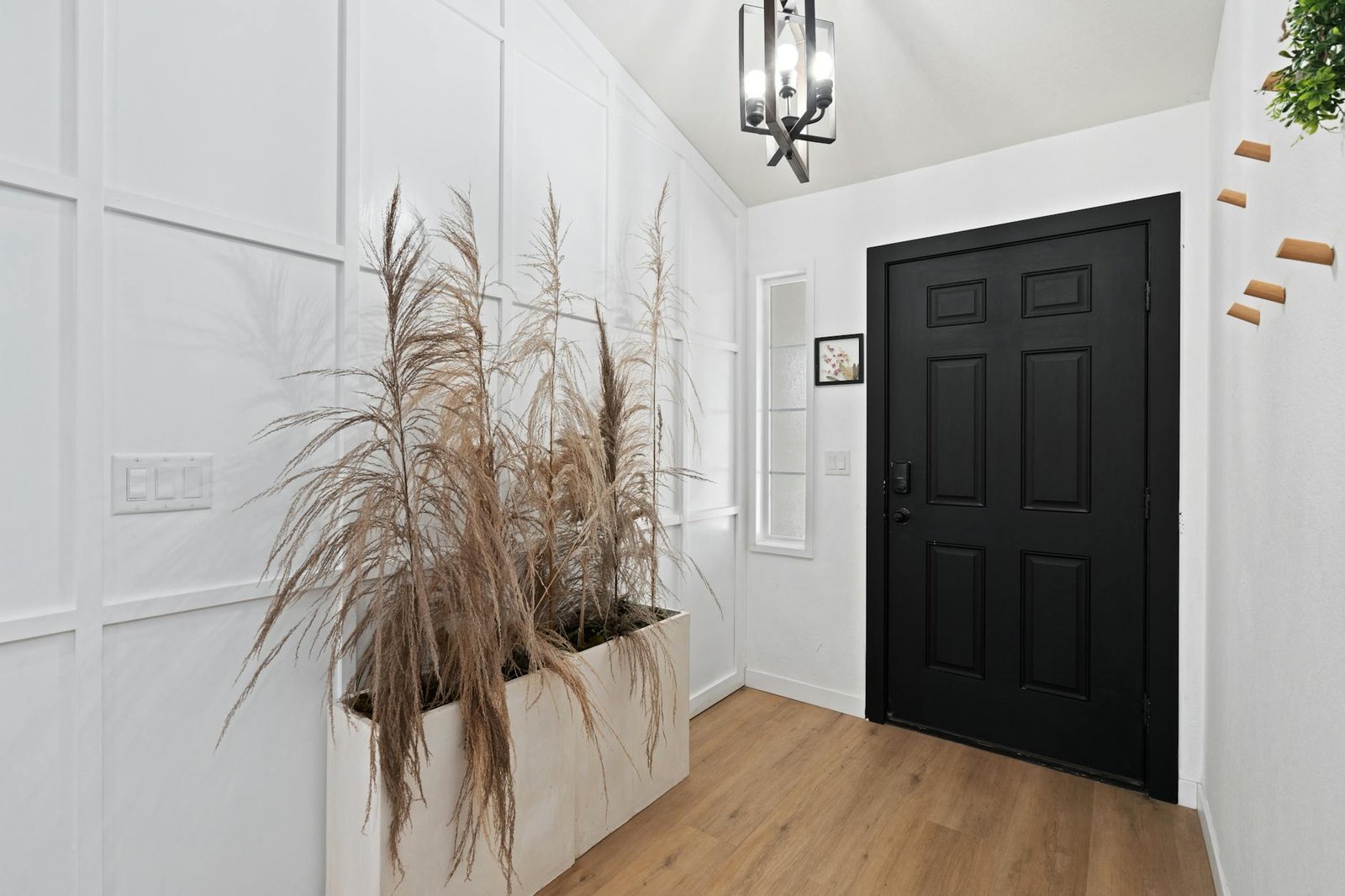
At an open house, the job of decor is not to impress buyers with your taste. It is to slow the silent objections that make them leave too quickly: this feels cramped, this room is confusing, this house will be too much work, this does not feel like me. In the National Association of REALTORS® 2023 Profile of Home Staging, 81% of buyers’ agents said staging made it easier for buyers to visualize a property as a future home, and the living room, primary bedroom, and kitchen ranked as the most important rooms to stage. (cms.nar.realtor)
TL;DR
- Aim for clarity before beauty: better light, better flow, and one obvious purpose per room.
- Use the LINGER Score in this article before you buy anything. Low scores usually mean you should remove furniture, not add accessories.
- If money is tight, put the first dollars into the living room, primary bedroom, and kitchen. (cms.nar.realtor)
- Spend most of the budget on problem-solvers like lamps, bedding, towels, rugs, baskets, and paint touch-up, not trendy filler.
- Hide personal details, secure valuables and medication, and blank or reset smart-home devices before visitors arrive. (nar.realtor)
What actually keeps buyers in the house a little longer
Buyers usually linger when a house feels easy to process. They can tell where furniture fits, understand what each room is for, and imagine their own routines without bumping into the seller’s life. That is why cleaning, decluttering, depersonalizing, and removing pets during showings do so much of the heavy lifting. In NAR’s 2023 report, agents said their most common pre-listing recommendations were decluttering, whole-home cleaning, and removing pets during showings. (cms.nar.realtor)
Open-house decor should work like editing, not decorating. You are reducing visual noise, softening hard edges, and adding enough warmth that the home feels cared for without feeling crowded. NAR’s privacy guide for home sellers also warns that listing photos and in-person traffic can expose more personal detail than sellers expect, which is another reason to remove family photos, visible calendars, mail, device logins, and other revealing items. (nar.realtor)
This article is informational only. Pricing strategy, disclosure duties, and security practices vary by market and state. Your listing agent can tailor prep to local comps, and a real estate attorney can advise on state-specific legal questions when needed. (nar.realtor)
Use the LINGER Score before you buy a single pillow
This is a basic filter for occupied residences and fast refreshes. Each common room must be scored, either as a 0 (not acceptable) through 2 (excellent), on any line shown below. A score between 10 and 12 indicates it is in “open-house-standing” condition. A score between 7 to 9 indicates it still needs to be edited. A score of 6 or less would indicate a problem with the rooms’ designs (layout) and not a problem with how they were actually designed (decor).
| Category | What buyers should feel | Quick fix |
|---|---|---|
| L = Light | The room looks awake, not dim or heavy. | Open blinds, replace dead bulbs, and add one lamp where the room falls flat on camera. |
| I = Identity-free | The room feels like a future home, not a personal scrapbook. | Store family photos, mail, visible calendars, diplomas, papers with names, and prescription items; blank or reset smart displays. (nar.realtor) |
| N = Navigation | The path through the room is obvious and easy. | Remove one chair, bench, basket, or side table before shopping for anything new. |
| G = Goal | The room’s purpose reads quickly. | Pick one use for every flex space: office, guest room, nursery, gym, or playroom. |
| E = Edit | Major surfaces look calm, not busy. | Keep countertops and dressers mostly clear; group small items into one tray or basket. |
| R = Rest | The room feels calm enough to pause in. | Use simple textiles, one living element, and quiet color instead of adding more objects. |
Two patterns keep reappearing. One, sellers tend to get overly emotional for Rooms they think hold special meaning to them – even if it doesn’t look very nice to a prospective buyer. The other is that sellers tend to try to “fix” a lower scoring room with more accessories. If a room has a major flaw in the design of how a piece of furniture is positioned to get across Room A and onto Room B, no amount of decorative accessories (like a candle or bowl of beads) are going to fix that issue.
- Stand in the doorway and give yourself three seconds. Can you tell what the room is for and where your eyes should land?
- Walk the path a buyer would take. If you brush a chair, table corner, or floor basket, remove something.
- Take one photo from the doorway and one from the far corner. If cords, clutter, or personal items jump out on camera, they will jump out in person.
- Rescore only after you remove items. Do not shop while the room is still losing points on layout.
- Use purchases to solve the last 20%: better light, fuller bedding, fresher towels, or a larger-scale focal piece.
The open house decor checklist, room by room
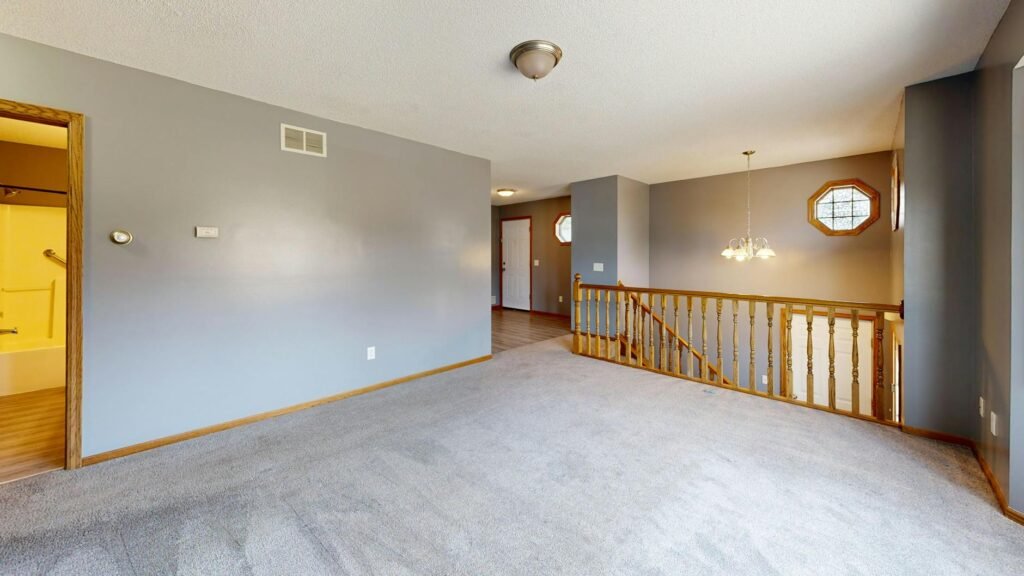
Once the layout works, decorate to support the rooms buyers care about most. NAR’s staging data puts the living room, primary bedroom, and kitchen at the top of the priority list, while agents commonly recommend decluttering, whole-home cleaning, minor repairs, carpet cleaning, depersonalizing, and removing pets during showings. (cms.nar.realtor)
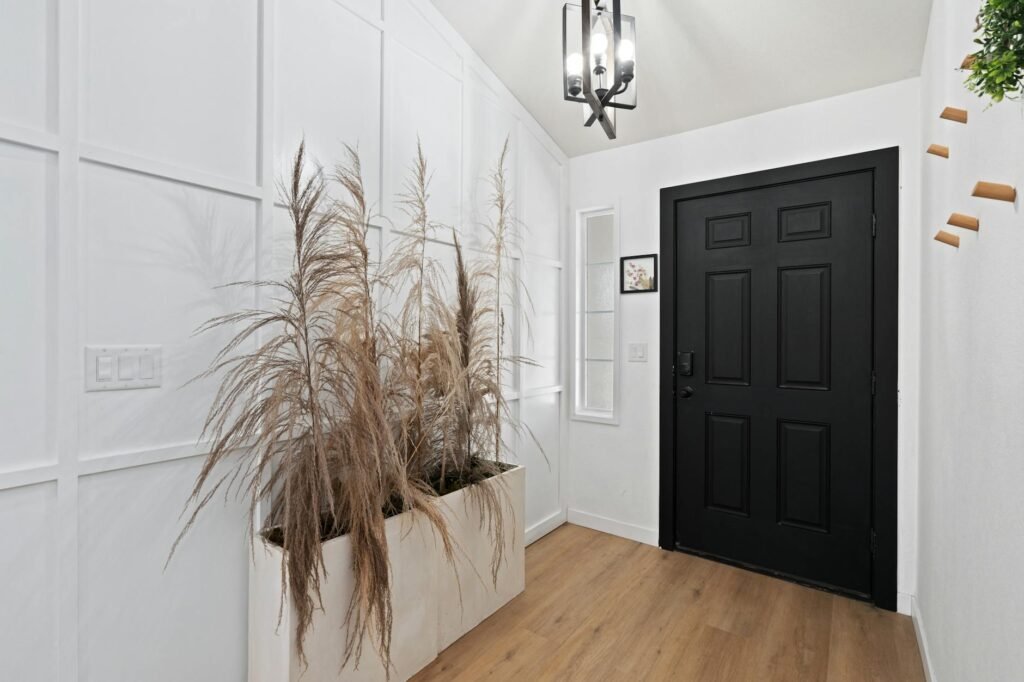
- Entry: Keep the first few feet open. Add a clean mat, one plant or a matched pair of planters, and a mirror or small console only if it does not tighten the path.
- Living room: Build one clear seating area that faces the room’s best feature. Remove extra recliners, hobby furniture, and kid storage that makes the room feel busy. This is usually the highest-value decor zone. (cms.nar.realtor)
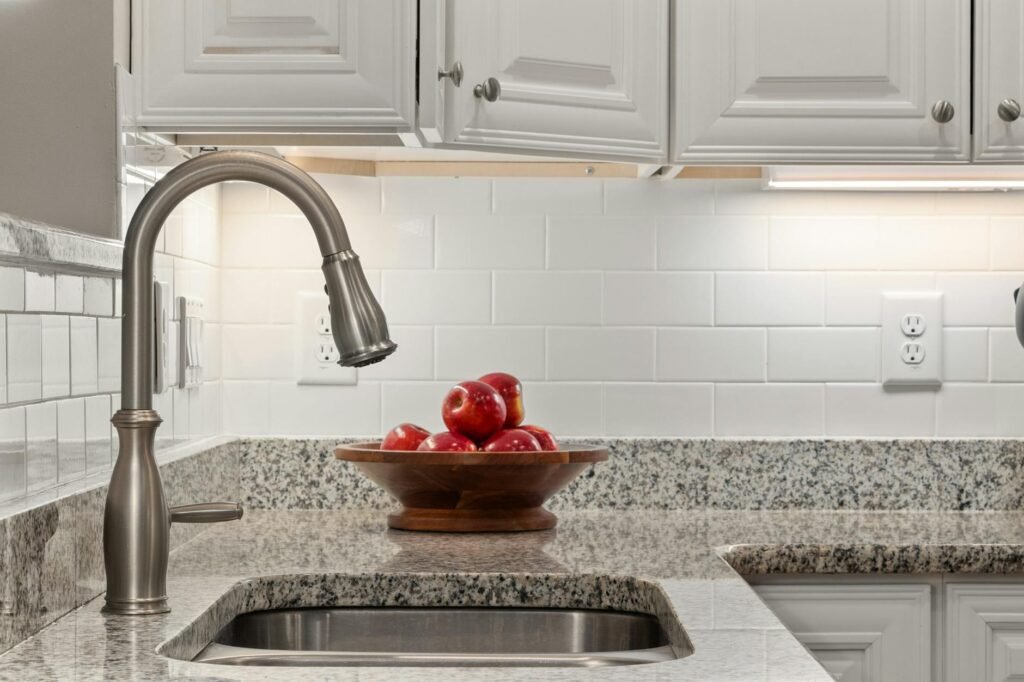
- Clear countertops until you only have a couple things on them that serve some sort of purpose, like a bowl of fruit or cutting board close to the stove. Keep clutter from soap, countertop appliances that are not used every day, pet bowls and paper from the refrigerator out of sight and out of mind.
- Dining area: Set the table only if it helps the room read as larger and more usable. A bulky centerpiece or full place setting often steals space instead of adding polish.
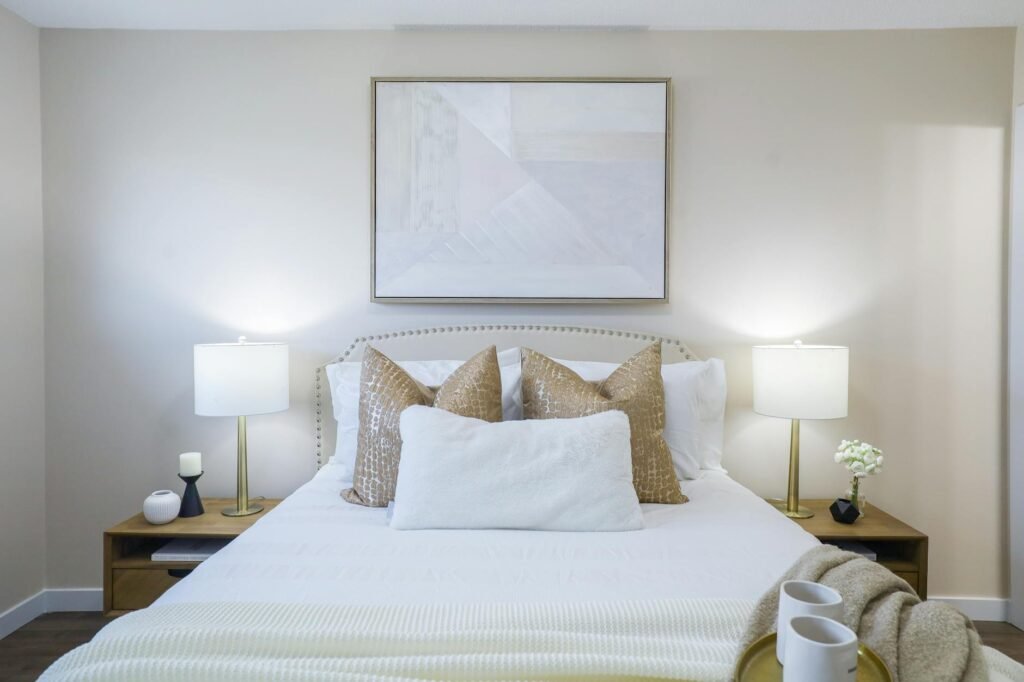
- Primary bedroom: Use matched bedding that fully covers the bed, add two or three pillows at most, and strip nightstands down to a lamp and one small item. The room should read restful, not themed. (cms.nar.realtor)
- Bathrooms: Fresh light-neutral towels, a clean bath mat, a new shower curtain if needed, and clear counters. Put away medication, razors, children’s bath toys, and laundry. (nar.realtor)
- Kids’ rooms and flex spaces: Choose one use only. A half office, half playroom, half storage room makes the square footage feel smaller and unfinished.
- Whole-house privacy reset: Remove family photos, mail, visible calendars, paperwork, Wi-Fi info, device login screens, and anything that makes buyers feel like they are walking through your schedule instead of a future home. Secure valuables and prescription drugs, and blank or reset connected-home devices. (nar.realtor)
- Pets: If possible, take pets and pet gear out of the home on open-house day. NAR found that removing pets during showings is one of the most common recommendations agents make to sellers. (cms.nar.realtor)
A $650 example on a $485,000 listing
Suppose you are listing a lived-in three-bedroom house at $485,000 and you have $650 for open-house decor, or about 0.13% of the asking price. The living room is dark, the entry has no focal point, the primary bed looks flat, and the hall bath is clean but tired. Instead of paying for full-house staging, you spend $180 on two matching lamps, $120 on a white quilt and shams, $85 on towels and a shower curtain, $95 on an entry rug and planter, $70 on oversized art, $45 on cord covers and baskets, and $55 on matching hangers and bins for closet cleanup. The point is not that $650 is magic. The point is that the money is aimed at the exact places where buyers slow down or speed up. (cms.nar.realtor)
For a tight budget, the order matters more than the amount. Spend first on light, bedding, towels, and scale. Spend last on decorative filler. If you cannot afford to touch every room, stage three photo moments and three in-person moments: the front door view, the main living room seat, and the primary bed. Buyers are often more willing to walk through a staged home they first saw online, which is one more reason to spend where both photos and in-person flow improve. (cms.nar.realtor)
| Problem | Better spend | Usually skip |
|---|---|---|
| Dark room | Lamp, fresh bulbs, and opened window treatments | Extra wall art |
| Room feels cramped | Remove furniture or swap in smaller pieces | Another side table |
| Bedroom feels cold | Full bedding, lamp, and one larger rug | Five accent pillows in different colors |
| Bathroom feels tired but functional | Towels, curtain, bath mat, and a caulk touch-up | Countertop decor |
| Entry feels forgettable | Mat, planter, and one clear focal point | A bench that blocks traffic |
| Kitchen feels busy | Hidden storage bins and under-sink organizers | More countertop appliances or staged place settings |
A useful spending rule is 70/20/10. Put 70% of the money into friction-removers, 20% into warmth, and 10% into day-of polish. Friction-removers are lamps, bedding, towels, rugs, paint touch-up, baskets, and hardware. Warmth is one plant, restrained art, or a cleaner coffee table. Day-of polish is hand soap, fresh flowers, or a new doormat. If an item does not make the house brighter, calmer, cleaner, or easier to understand, it is probably optional.
Common mistakes that shorten a walk-through
The fastest way to waste staging money is to confuse stylish with useful. NAR’s 2023 findings also show how TV-influenced expectations can distort the job: 73% of respondents said design and buying shows created unrealistic or increased expectations. Good open-house decor should push back against that urge, not imitate it. (cms.nar.realtor)
- Buying lots of small decor instead of one strong fix like a lamp, rug, or larger art piece.
- Leaving undersized rugs that make the room look chopped up.
- Centering every room on the television even when the window, fireplace, or layout is the actual selling feature.
- Showing too many uses in one room, especially in dens, lofts, and bonus rooms.
- Using heavy fragrance, seasonal themes, or highly specific taste that asks buyers to judge you instead of the house.
- Forgetting the non-decor clutter: cords, chargers, pet crates, trash cans, refrigerator papers, bathroom products, and kids’ schedules.
When decor is not enough
Open-house decor is a multiplier, not a rescue plan. If buyers are reacting to smoke smell, pet odor, worn carpet, cracked grout, chipped paint, heavy drapes, or obvious maintenance issues, accessories are working on the wrong problem. In NAR’s 2023 profile, agents more commonly recommended decluttering, whole-home cleaning, minor repairs, carpet cleaning, depersonalizing, paint touch-ups, and landscape work before listing. (cms.nar.realtor)
There is also a pricing limit. A well-edited house can help buyers imagine living there, but it does not erase an overreaching list price or weak marketing. Staging can help visualization and may help time on market, but it does not guarantee a higher offer. In NAR’s 2023 report, 20% of buyers’ agents said staging increased dollar value by 1% to 5%, while 34% said it had no impact on dollar value; among sellers’ agents, 27% reported a slight decrease in time on market and 21% reported a great decrease. (cms.nar.realtor)
If your first-pass budget is not enough, use a backup plan instead of scattering small purchases throughout the whole house. Stage only the living room, primary bedroom, and kitchen. Ask about partial staging, furniture rental for photos only, or using an agent’s inventory for a few key rooms. NAR reported median spending of $600 when a staging service was used and $400 when the seller’s agent personally staged the home, which is a useful reminder that targeted help can cost much less than a whole-house package. (cms.nar.realtor)
How to pressure-test the checklist before the doors open
The easiest audit is a camera audit. NAR notes that listing photos and video are shared through the MLS and then to brokerage sites and portals where buyers search, and that people entering your home during the sales process are also likely carrying cameras. If a room looks busy, personal, or dim in photos, assume it will cost you both online attention and in-person linger time. (nar.realtor)
- Take doorway photos of every room in both portrait and landscape mode.
- Zoom in on each photo for cords, labels, fingerprints on stainless steel, tiny clutter, and anything with your name or schedule on it.
- Do a silent walk-through with a friend or agent and ask only three questions: What is this room for? What feels dated? Where did you want to leave quickly?
- Rescore the house with LINGER after the photos, not before. Camera truth is tougher than memory.
- On open-house morning, do one final privacy sweep for mail, medication, jewelry, documents, garage codes, smart displays, and voice assistants. NAR recommends stowing sensitive items, and the FTC advises removing personal information and resetting connected devices when selling a smart home. (nar.realtor)
Bottom line
The best open-house decor is usually the decor buyers barely notice. It makes the house feel bright, legible, calm, and cared for. If you score each room, spend on friction-removers first, and protect privacy before the doors open, buyers have a better chance of staying long enough to picture their own life there. That is the whole job. (cms.nar.realtor)
Frequently asked questions
What rooms should I prioritize if I only have a few hundred dollars?
Start with the living room, primary bedroom, and kitchen. NAR’s 2023 staging profile identified those as the rooms buyers’ agents considered most important to stage, which makes them the strongest places to focus a limited budget. (cms.nar.realtor)
How much should I spend on open-house decor?
There is no universal number, but a light occupied-home refresh is often a small fraction of list price and should focus on lamps, bedding, towels, paint touch-up, and cleaning rather than furniture replacement. Use the 70/20/10 rule in this article, then ask your agent whether partial staging or agent-supplied inventory would be cheaper than buying retail pieces you may not reuse. NAR reported median staging spending of $600 through a staging service and $400 when the seller’s agent personally staged the home. (cms.nar.realtor)
Do I really need to remove family photos and personal papers?
Yes. It is partly about depersonalizing and partly about privacy. NAR’s consumer guide specifically advises sellers to put away family photos, visible calendars, mail, login information, and documents with sensitive information, and to secure valuables and prescription medications. (nar.realtor)
Should I leave smart displays, cameras, and voice assistants on during an open house?
At minimum, blank screens, remove personal information, and review device settings. The FTC recommends removing administrative access and personal information from connected-home devices and resetting them when selling a smart home. Applying that logic to an open house, it makes sense to mute voice assistants and make sure thermostats, hubs, and doorbells are not displaying personal data. The mute-and-blank recommendation is an editorial application of the FTC guidance, not a direct FTC open-house rule. (consumer.ftc.gov)
Can decor make up for a house that needs repairs?
Usually not. Decor can help buyers visualize the house, but they still notice condition. NAR’s seller-side data shows agents more commonly recommend decluttering, cleaning, minor repairs, carpet cleaning, paint touch-ups, depersonalizing, and landscape work before listing. (cms.nar.realtor)
Is full professional staging always better than doing it myself?
Not necessarily. If the house is already furnished and the main problem is clutter, scale, or lighting, a focused seller-led reset may be enough. Professional help tends to make more sense for vacant homes, unusual floor plans, higher-end price points, or homes that photograph poorly. NAR’s data also suggests many sellers use staging selectively rather than staging every listing the same way. (cms.nar.realtor)
References
- National Association of REALTORS® – 2023 Profile of Home Staging – https://www.nar.realtor/sites/default/files/documents/2023-profile-of-home-staging-03-30-2023.pdf
- National Association of REALTORS® – Consumer Guide: Home Selling Tips for Privacy and Safety – https://www.nar.realtor/the-facts/consumer-guide-home-selling-tips-for-privacy-and-safety
- Federal Trade Commission – Buying or selling a “smart” home? Read this. – https://consumer.ftc.gov/consumer-alerts/2018/01/buying-or-selling-smart-home-read
- National Association of REALTORS® – Open Houses – https://www.nar.realtor/open-houses