
TL;DR
- Curated living rooms usually have one clear job, one anchor, and enough open space for the furniture to relate to each other.
- This is also a money issue. In 2024, U.S. consumer units averaged $78,535 in total annual spending, while household furnishings and equipment averaged $2,414 and furniture averaged $648. Bad layout decisions can turn real money into visual clutter. (bls.gov)
- Use the C.U.R.A.T.E. Scorecard in this article before buying anything new.
- A bigger rug, better lighting, closed storage, and deleting one bulky piece often do more than adding another chair.
- If you are tempted to use buy now, pay later for decor, remember that BNPL is a form of credit. (consumerfinance.gov)
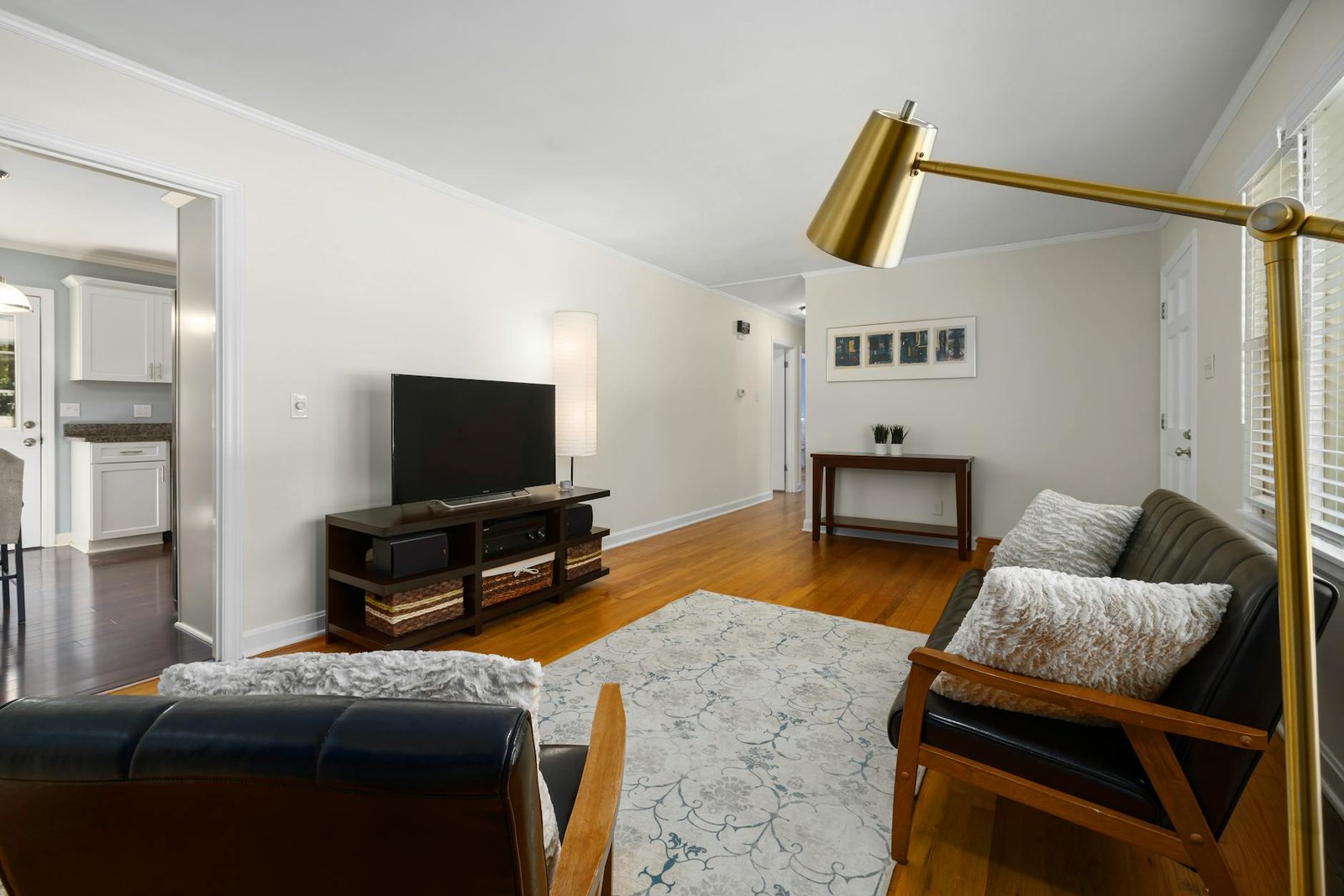
A living room that has been set with a purpose won’t seem expensive at first, but will seem to have been edited. The area rug says it is associated with the sofa stocked on it. The chairs are in relationship to the sofa and therefore a fitting choice. The lamp provides real and functional light. The coffee table is appropriately sized rather than the largest one that would have fit into the cart. Essentially, all of the space that has not been utilized also looks as though it has been edited for purpose.
Rooms that feel like furniture storage usually fail in the opposite way. They have too many full-size pieces, too many duplicate functions, and no visual hierarchy. That matters financially. The Bureau of Labor Statistics says average annual spending hit $78,535 per consumer unit in 2024, and a BLS expenditure table shows all consumer units averaged $2,414 on household furnishings and equipment, including $648 on furniture alone. When a room is overfilled, you are not just losing style. You are paying for items that compete instead of work together. (bls.gov)
More square footage does not automatically solve this. The Census Bureau says the median floor area of a new single-family home sold in 2024 was 2,210 square feet. Plenty of living rooms still feel cramped because the problem is usually planning, not just size. (census.gov)
What curated rooms do differently
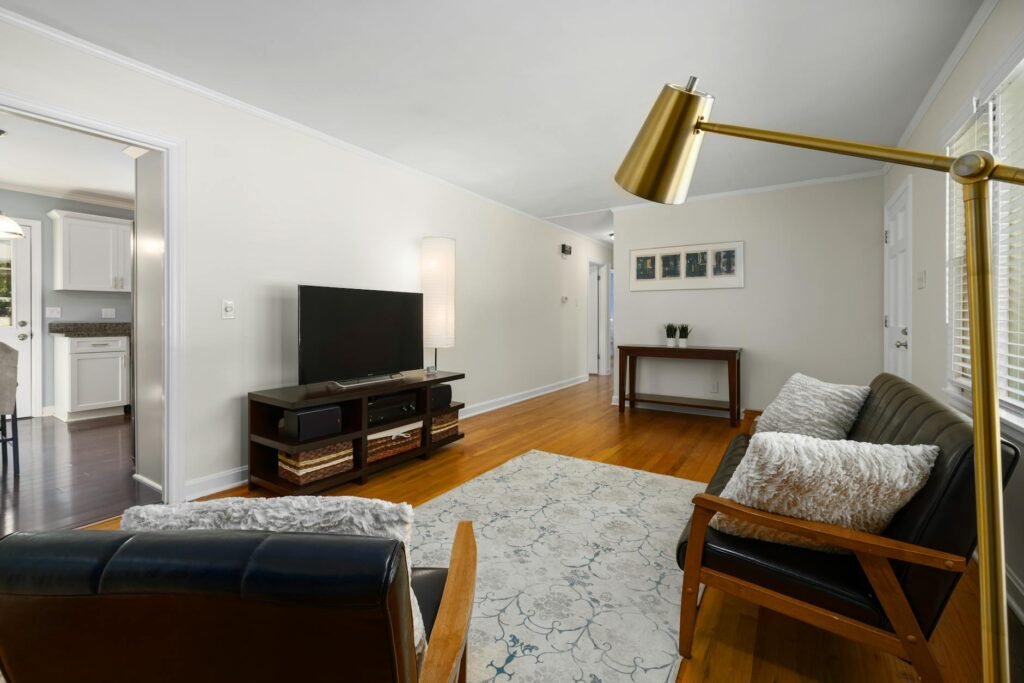
The design rules that matter here are not glamorous. They are circulation, proportion, and anchoring. HGTV guidance on furniture arrangement focuses on leaving comfortable space between seating and tables and preserving room to move through the layout. Architectural Digest makes a similar point with rugs: the rug should anchor the seating zone instead of floating as a small island under the coffee table. (hgtv.com)
- One clear anchor, such as the sofa, fireplace wall, TV wall, or a strong window wall.
- A seating group that faces inward enough to feel connected instead of being scattered along every wall.
- A rug large enough to catch at least the front legs of the main furniture pieces, so the room reads as one zone instead of several fragments. (architecturaldigest.com)
- A main walking path that stays open. A 36-inch route is a useful comfort benchmark borrowed from accessibility guidance, even though that standard is not a decorating rule for most homes. (access-board.gov)
- Fewer bulky pieces with overlapping jobs. Two storage units, three side tables, and four seats in a room that only needs one sofa and two chairs will almost always look parked rather than curated.
- Visible breathing room on the floor, walls, and tabletops. Empty space is part of the composition, not wasted square footage.
Use the C.U.R.A.T.E. Scorecard before you shop
This will allow you five minutes for each category total of ten minutes. You’ll give yourself 0, 1 or 2 points for each of the categories below. A room will typically have an intentional character where it receives a score of between nine and twelve points. A room which scores between six and eight points is most likely borderline in terms of furniture, and therefore requires editing. A room which scores under five has probably become a repository for furniture instead of a usable room.
- Circulation: Is it possible for someone to move through the primary way and not hit their knee on a coffee table or twist sideways? Use approximately 30″ to 36″ as a goal where possible. You would then score either 0 if there is an obstruction, 1 if it feels squeezed by the restriction, or 2 as “easy”.
- U: What is the first task assigned to the room, in one simple sentence? For example, use Room TV- Family w/1 Reading Chair). Assign a score of 0 if it is unclear what the purpose of the room is, 1 if two equal priorities are in competition with one another, and 2 if there is a clear primary function for that room.
- R: Roles: Does every item serve a purpose? For example, A sofa provides primary seating. A media console conceals your electronics. A chair provides you with one additional place to sit. If there are duplicate pieces, give a score of 0; if there are some overlapping pieces, give a score of 1; If every piece serves its purpose and doesn’t overlap in space, give a score of 2.
- Are the pieces of the seating group visually tied together by a rug or similar anchor? If not related at all; give score of 0. If halfway related/divided, score of 1. If all connected; score of 2.
- T – Tall versus short: Are there different heights? If every piece of furniture is similar in height and every surface is identical, the placement will be more similar to a warehouse than a living room. Score your room a zero for having flat furniture, one point for having variances between the different sizes of surfaces, and two points for providing definite layers.
- E – Edit Pressure: Would the room be improved by the removal of one large item and three small decorative items? (score 0 for yes, 1 for not sure, and 2 for no due to every item already being on purpose).
Decision rule: if your score is under 7, do not buy accent decor yet. Edit, remeasure, and fix the layout first.
Spend in this order, not the order stores sell you
Retail pricing pushes you toward the most visible items first: the bigger sofa, the matching chair, the extra console. A smarter sequence is structure first, styling second. Start with layout, then the rug, then lighting, then storage, then the missing seat if you still need one. On the money side, the CFPB recommends comparing any budget with what is actually left in your account after real spending, not wishful spending. That matters here. A room budget should come from actual cash flow, not a checkout financing prompt. And if a retailer offers BNPL, remember the CFPB defines it as a type of installment loan. (consumerfinance.gov)

| If the room looks like this | What it usually means | Best first move | Editorial budget target | What to postpone |
|---|---|---|---|---|
| You have to sidestep around furniture | Too many full-size pieces | Remove one seat or one table before buying anything | $0 to $150 | A larger sectional |
| The seating feels disconnected | The rug is too small or missing | Buy the right-size rug for the main group | $200 to $700 | Extra decor and pillows |
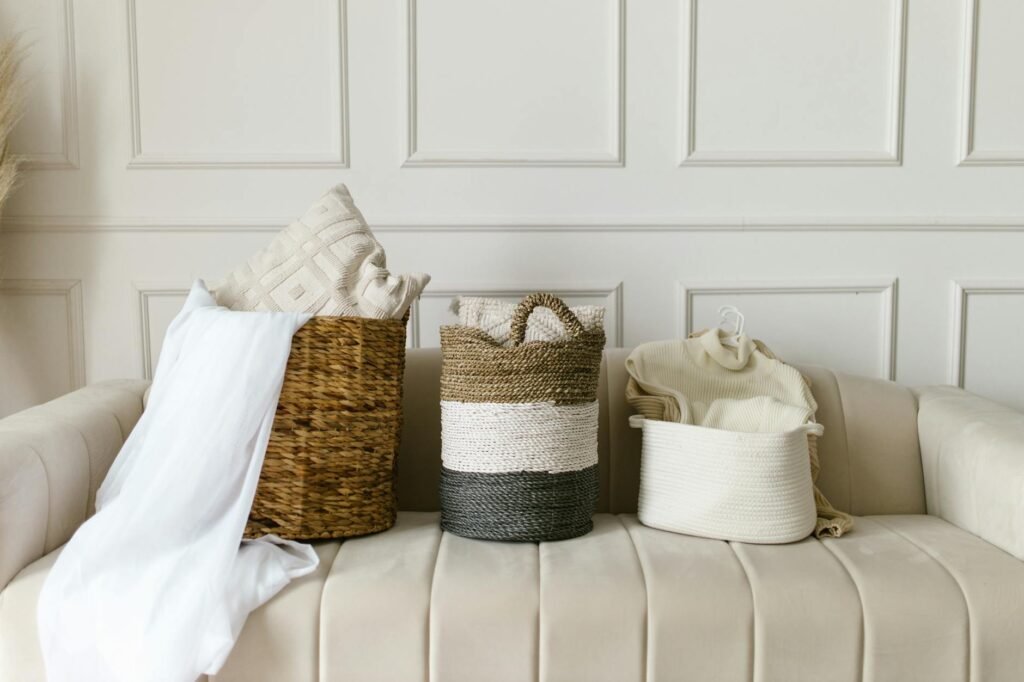
| Daily clutter is always visible | You need closed storage, not more surfaces | Add a media console, lidded baskets, or an ottoman with storage | $80 to $600 | Open shelving |
| The room feels dull at night | Lighting is too flat or too dim | Add one floor lamp and one task lamp | $60 to $250 each | Another accent chair |
| The coffee table feels like an obstacle | The table is the wrong shape or too large | Switch to a smaller round or nesting table | $120 to $350 | A second side table |
A realistic example: a $610 reset that fixes the room better than a $2,000 spree
Consider a living room measuring 12 feet by 18 feet containing a 94-inch sofa, a 68-inch loveseat, recliner, a 72-inch media console, a rectangular coffee table, two end tables and toy overflow on open shelving. All the above furniture is fairly plain looking; however, they are all large-sized; therefore, they are all attempting to perform the same function. There is little open space to move from one door of the living room to the opposite door; the loveseat performs the same function as the sofa, and the coffee table ends up creating an obstacle course. A possible rating for this living room would be 4 out of 12 on the C.U.R.A.T.E Scorecard.
Instead of replacing the sofa, the household sells the loveseat for $250 and the oversized coffee table for $75. Then it buys an 8-by-10 rug for $240, a smaller round coffee table for $180, a floor lamp for $120, and two lidded baskets for $70. Total purchases: $610. Cash back from sales: $325. Net outlay: $285. The room now has one clear seating anchor, better nighttime light, concealed toy storage, and a walk path that feels intentional. That is the core lesson: curated usually comes from subtraction plus a few structural additions, not from constant accumulation.
Common mistakes that quietly make a room look like storage
- Buying the matching set because the bundle price feels efficient. Matching can work, but full-room sameness usually flattens a space and doubles up on bulk.
- Choosing the biggest sectional that technically fits. Fit on paper is not the same as fit in real life.
- Using a tiny rug that sits under the coffee table instead of grounding the seating group. Small rugs make furniture look oversized and disconnected. (architecturaldigest.com)
- Pushing every piece against the walls. That often creates a dead center and awkward traffic instead of more usable space. (hgtv.com)
- Adding more surfaces when the real problem is visible clutter. Open shelves and extra side tables can make a room feel busier, not better.
- Keeping every inherited or hand-me-down piece in the same room out of guilt. Storage value and emotional value are not the same as design value.
- Trying to style your way out of a layout problem with pillows, candles, and small accessories.
Prices in this article are illustrative, not quotes. This article is for general information, not individualized financial advice. If furnishing purchases would push you into revolving credit card debt, interfere with housing costs, or depend on short-term credit offers, pause first. The CFPB says BNPL is a type of installment loan, so treat it like debt, not like free decor. (consumerfinance.gov)
A weekend reset you can actually do
- Measure the room, the doors, and every piece you plan to keep. Write down widths, depths, and the path people actually use.
- Write one sentence describing the room’s first job. Add a second sentence only if the room truly has a second job, such as toy storage or reading.
- Remove 20 percent of the visible accessories and at least one bulky piece for 48 hours. Do not judge the room in the first 10 minutes. Let your eye adjust.
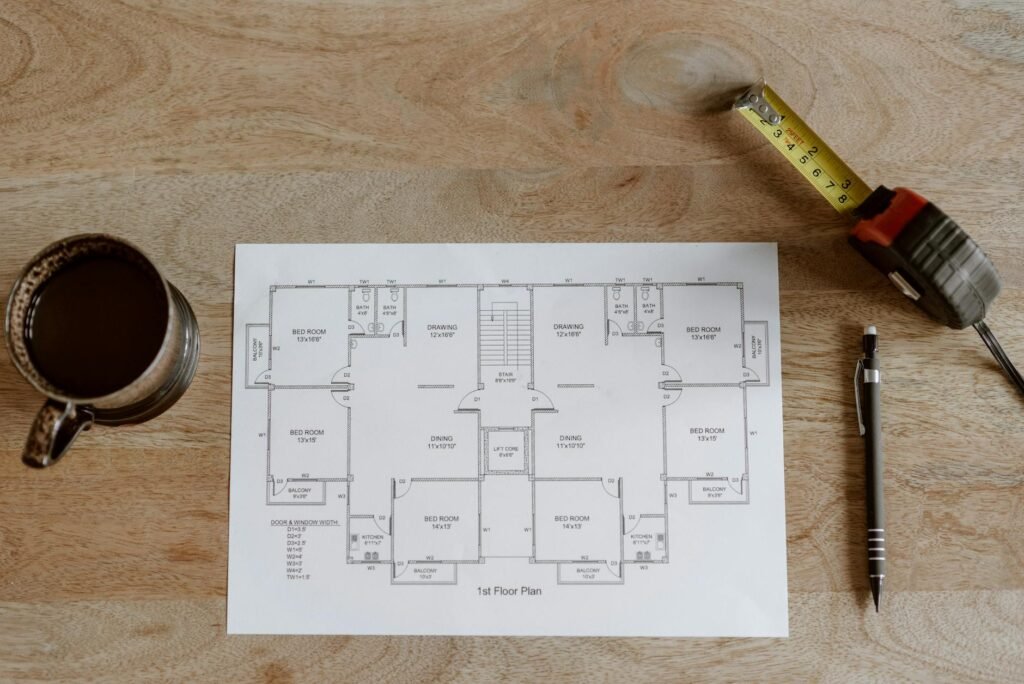
- Use painter’s tape on the floor to test a new rug size or furniture footprint before you order. HGTV specifically recommends taping out arrangements in the room itself before buying. (hgtv.com)
- Rebuild around one anchor: usually sofa first, then rug, then coffee table, then one or two supporting seats.
- Add only the missing functions. If the room is dark, buy light. If clutter is exposed, buy hidden storage. If the room already seats five, do not buy seat six.
- Leave online purchases in the cart for 72 hours and compare the total with what is actually left after your real monthly spending. The CFPB recommends checking bank and credit card history to make sure your budget matches reality. (consumerfinance.gov)
When editing is not enough
No wonder the space doesn’t work as well if you meant to use it for different reasons. Living rooms that serve as a play area, office, guest room, or storage area will never have the same clean, open feel as shown in magazines; but this doesn’t mean you’ve done anything wrong. Instead, you just need more precise solutions than decluttering.
- If the sofa is simply too deep or too long, you may need replacement rather than rearrangement. Layout cannot fix the wrong footprint forever.
- If the room stores daily kid gear, hobby supplies, or work equipment, shift from open storage to fewer, larger closed pieces. Two concealed storage solutions usually look calmer than six visible ones.
- If you rent and cannot hardwire lighting or mount built-ins, use floor lamps, plug-in sconces, nesting tables, and lidded baskets. A rental living room can still look intentional.
- If anyone in the household uses a walker or wheelchair, accessible movement matters more than symmetry. Keep the main path as open as possible; 36 inches is a useful benchmark drawn from accessible-route guidance. (access-board.gov)
- If your budget is near zero, make it a subtraction-first project. Remove, rotate pieces from other rooms, borrow a lamp, or repaint one accent piece you already own.
How to pressure-test the plan before you spend
A good plan should survive real life, not just look good in a cart screenshot. Before you buy, test the room from the doorway, from the sofa, and while carrying something bulky through it. Use tape, boxes, or spare stools to mock the footprint. HGTV recommends mapping layouts on the floor before ordering, and the CFPB’s budgeting guidance is a good second filter: if the purchase only works in your ideal month, it does not really work. (hgtv.com)
- Take photos in daylight and at night. If the room only looks good in one condition, the plan is incomplete.
- Turn one room photo to grayscale on your phone. This quickly reveals whether the room is visually balanced or just full.
- Sit in every main seat. Each seat should have access to light and a place to set down a drink or book. (hgtv.com)
- Ask one hard question before every purchase: what exact problem does this solve, and what existing item is it replacing?
- If the answer is mostly emotional, wait a week. Curated rooms are usually slower rooms.
The bottom line
In terms of creating a curated space, the room looks curated when it doesn’t have an overwhelming amount of furnishings; however, the biggest challenge to achieving this look is to have more than just great taste. Editing, scale and discipline in terms of making purchases can be the major contributing factors. By honestly evaluating the space, removing 1 of the oversized pieces, making some adjustments to the rug or lights, and purchasing only the missing functional items, the room may look less like it’s storage well in advance of the ability to spend a lot of money.
FAQ
Can a living room still look curated if the TV is the focal point?
Yes. The TV is not the problem by itself. The room starts to feel like storage when every piece is pointed mechanically at the screen and nothing else is considered. HGTV’s layout guidance specifically notes that electronics should be accessible without making the room feel like a screening room. (hgtv.com)
What is usually the best first purchase if my room feels off?
Usually either a better-size rug, better lighting, or closed storage. Start with the item that fixes the structure of the room, not the accessory that only decorates it. A properly sized rug is often the fastest visual correction because it anchors the seating group. (architecturaldigest.com)
How wide should walkways feel in a living room?
If you can manage it, roughly 30 to 36 inches for the main path is a practical target. The 36-inch number is a useful benchmark borrowed from accessible-route guidance, even though residential layouts are not the same as public accessibility standards. (access-board.gov)
Is a matching living room set always a mistake?
No, it isn’t about matching. The issue arises when a room is filled with the same size, height, and weight, creating a problem because it is visually overwhelming and lacks differentiation. By using a larger area rug, more appropriate lighting, and fewer companion pieces to differentiate the items in a collection, you can create interesting and unique designs without cluttering the visual space around you with unplanned constant shapes or patterns.
Should I use buy now, pay later for a sofa, rug, or decor order?
Treat BNPL as debt, because that is what it is. The CFPB defines BNPL as a type of installment loan. If the room only becomes affordable by splitting it into payments, that is a sign to slow down unless you already know the payoff fits comfortably inside your real monthly cash flow. (consumerfinance.gov)
What if my living room also has to hide toys, work gear, or hobby supplies?
The solution is generally fewer/larger pieces and concealed storage versus greater number/smaller visible pieces. Functional rooms can have an intentional appearance as long as they have zoning and concealed storage (as opposed to just decoration).
References
- U.S. Bureau of Labor Statistics – Consumer Expenditures–2024 – https://www.bls.gov/news.release/cesan.nr0.htm
- U.S. Bureau of Labor Statistics – Consumer Expenditure Survey home – https://www.bls.gov/cex/
- U.S. Bureau of Labor Statistics – Military status within consumer unit: Annual expenditure means and characteristics, 1 – https://www.bls.gov/cex/tables/calendar-year/mean/cu-vets-2024.htm
- U.S. Census Bureau – Interactive Graphic of New Single-Family Homes in 2024 – https://www.census.gov/construction/chars/interactive/index.html
- Consumer Financial Protection Bureau – Assess your spending – https://www.consumerfinance.gov/owning-a-home/prepare/assess-your-spending/
- Consumer Financial Protection Bureau – What is a Buy Now, Pay Later loan? – https://www.consumerfinance.gov/ask-cfpb/what-is-a-buy-now-pay-later-bnpl-loan-en-2119/
- U.S. Access Board – Chapter 4: Accessible Routes – https://www.access-board.gov/ada/guides/chapter-4-accessible-routes/
- HGTV – How to Arrange Your Living Room Furniture – https://www.hgtv.com/decorating/living-and-dining-rooms/7-furniture-arrangement-tips-pictures
- HGTV – How to Create a Floor Plan and Furniture Layout – https://www.hgtv.com/decorating/design-ideas/how-to-create-a-floor-plan-and-furniture-layout
- Architectural Digest – Rug Sizes: How to Figure Out the Best Area Rug for Your Space – https://www.architecturaldigest.com/story/rug-sizes-how-to-figure-out-the-best-area-rug-for-your-space